
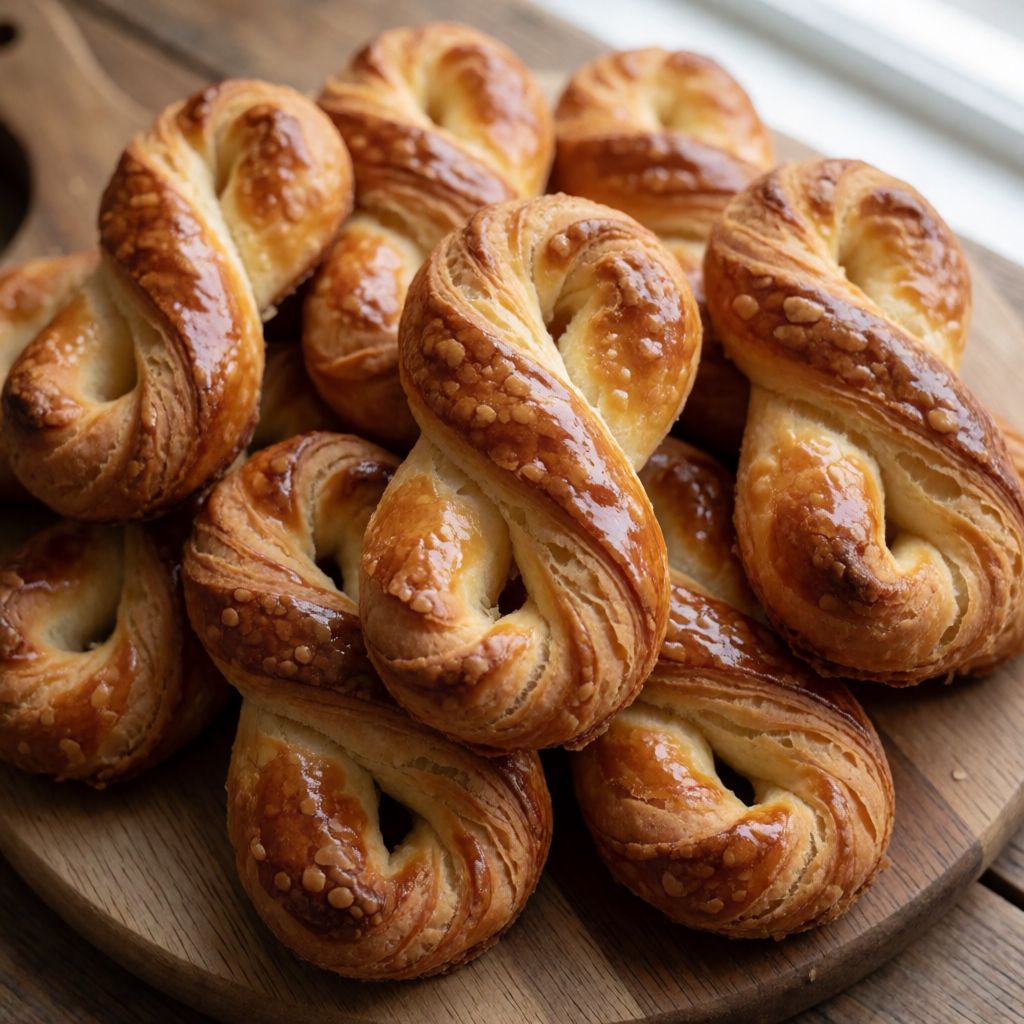
 AI photo
Torcetti with Butter
A classic Italian sweet bread roll, shaped into a loop and rolled in sugar before baking.
Labels are worked out automatically from the ingredients and can be wrong. Check the packaging if it matters to you.
Ingredients
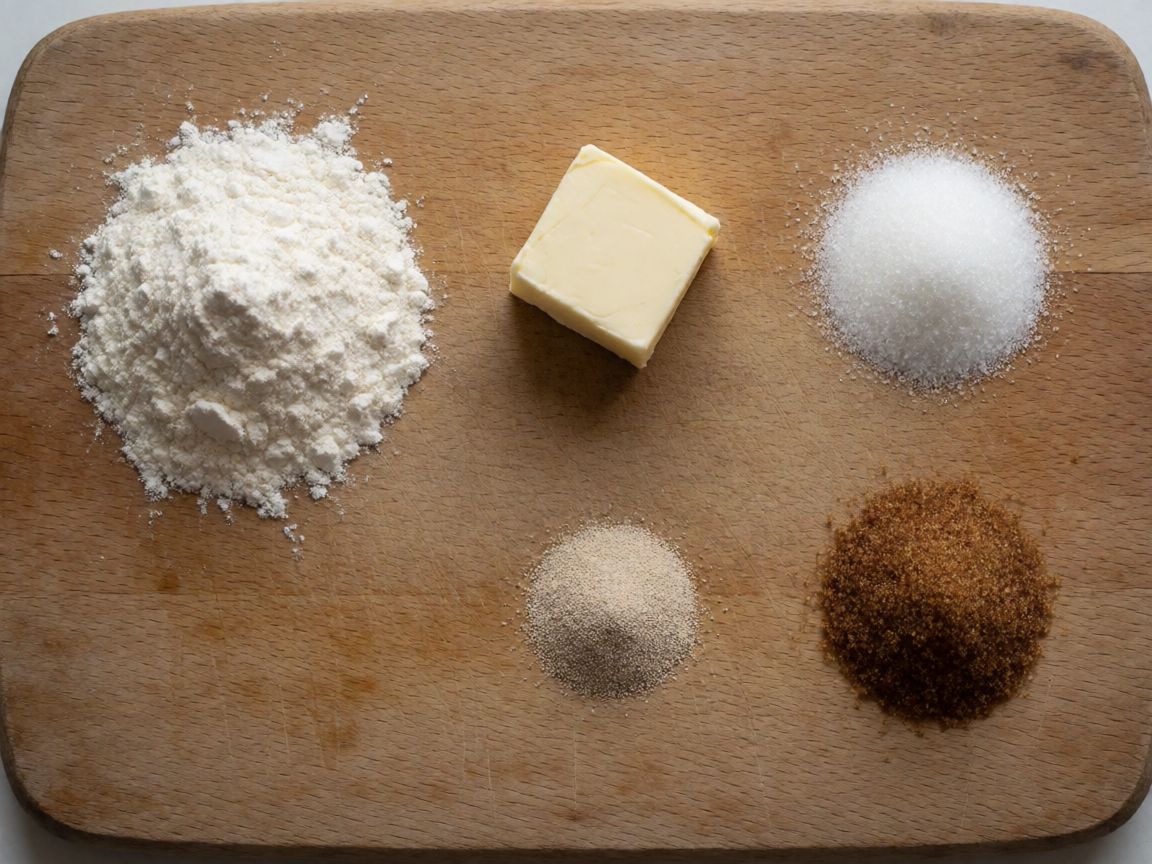
- 110 g Water
- 250 g Plain flour
- 120 g Butter
- 55 g Sugar
- 6 g Yeast
- 3 g Salt
- Brown sugar to taste







Steps
Sift the flour into a large bowl, add the sugar and salt, and mix with a wooden spoon.
In another bowl, dissolve the yeast in the water with your hands, pour the mixture into the flour and start kneading the dough.
Transfer the dough to a work surface and continue kneading until smooth and elastic.
Cover the dough with cling film and leave to rise in a warm place.
60 minTake the butter out of the fridge and let it come to room temperature.
60 minWork the butter into the dough in small pieces, continuing to knead.
Shape the dough into thin strands, join the ends with a slight overlap and press lightly.
Roll each piece in brown sugar on both sides.
Arrange the torcetti on a baking tray lined with parchment paper.
Bake in an oven preheated to 180°C for about 15 minutes.
15 minArrange on a serving plate, leave to cool, then serve.
Torcetti are small Piedmontese rings — rich, buttery bread dough twisted into a loop, rolled in sugar, baked until the crust snaps. Think of them as a cross between a croissant and a biscuit without the lamination: all the richness of butter, none of the fiddly folding. They belong to breakfast tables in the valleys around Turin, not to pastry shelves — a farmhouse answer to "what do we do with dough, sugar and the butter we have too much of."
What decides whether they work is one sequencing trick: the butter goes in after the dough has already risen once, worked in cold pieces into a dough that's already developed its gluten. Some say you should cream butter into flour at the start, the way you'd do a shortcrust — no, because here you want the yeast to build structure first, in a lean, elastic dough, before you weigh it down with fat. Butter coats gluten strands and stops them linking up; put it in too early and the dough stays slack, never gets that pull-apart elasticity, and the rings won't hold their shape in the oven.
The second decision point is the sugar coating, done dry and on the outside, not inside the dough. Rolled in brown sugar before baking, it doesn't just add sweetness — it caramelises on contact with the hot tray, giving the torcetto its shell: crisp, faintly bitter at the edges, sweet underneath. That contrast of crackling crust over soft, buttery crumb is the whole point of the recipe. If you skip it or use icing sugar instead, you get a plain bun with no shell, no contrast, and no reason to call it a torcetto.
Flour: plain flour, nothing stronger. This isn't a chewy bread loaf needing bread flour's extra protein — you want enough gluten to hold a twisted shape, not so much that the dough fights you when you roll it into thin strands. If all you have is strong flour, cut it with a bit of cornflour or just knead a little less; you're after supple, not tough.
Yeast: fresh or dried both work, the amount here (6g on 250g flour) suggests dried. What matters more than the type is the water temperature when you dissolve it — warm enough to wake the yeast, never hot enough to kill it; test it against your wrist, not a thermometer, the way bakers did before thermometers existed in kitchens. "Warm place" for the rise means somewhere draught-free and gently heated, not an airing cupboard turned oven — an off oven with the light on, or near (not on) a radiator, does the job in a UK flat in winter.
Butter: the one ingredient that defines the dish, so don't economise on it with margarine or any spread that's mostly water and emulsifier — you'll lose the flavour and the texture both, because torcetti rely on real butterfat melting slowly in the oven to layer flavour through the crumb, not just sit on top. Let it soften fully at room temperature before you work it in — cold butter won't distribute, it'll tear the dough instead of blending into it. If your kitchen's cold, a few seconds in a microwave on its lowest setting, watched closely, beats waiting an hour for nothing.
Sugar: the 55g inside the dough is for the crumb — soft sweetness, feeding the yeast a little too. The brown sugar for rolling is a separate decision, textural rather than about taste: it's coarser than white sugar and caramelises instead of just melting, which is what gives you that shell. Demerara or raw cane sugar does the same job if that's what's in the cupboard; icing sugar won't, it just dissolves away.
Salt: 3g is there to control the yeast as much as to season — too little and the dough proves wildly and unevenly, too much and it stalls. Don't be tempted to round it up "for flavour."
On shape: twisting the strand into a ring with overlapping ends isn't decoration, it's practical — the join is where the dough is thinnest and crisps hardest, giving you a bite with both soft centre and crunchy point in one piece. Press the overlap firmly or it'll spring open in the oven as the dough expands — that's the one step where a slack hand shows up directly as a flaw on the tray, no guesswork needed to see what went wrong.