
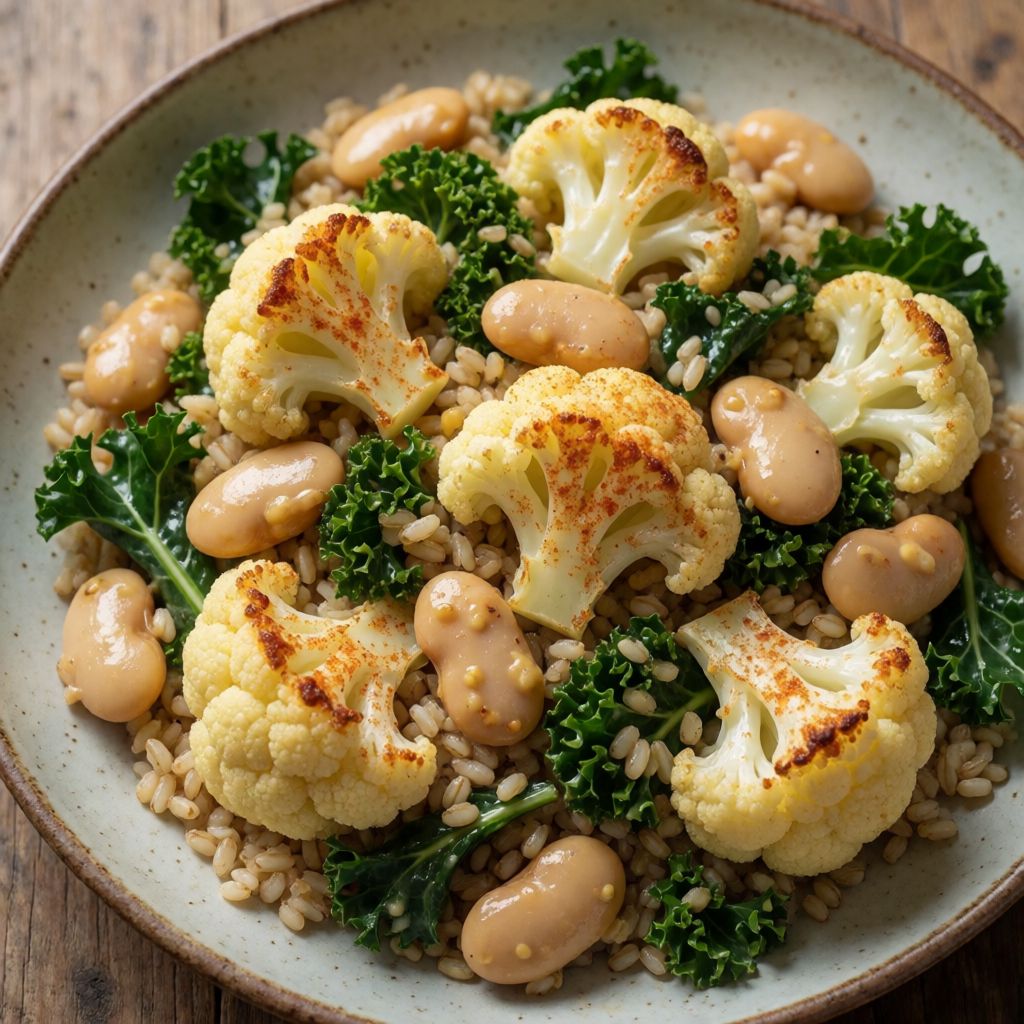
 AI photo
Cauliflower with Butter Beans in Mustard Dressing
Roasted cauliflower with bulgur, kale and butter beans, finished with a tangy mustard dressing and walnuts.
Labels are worked out automatically from the ingredients and can be wrong. Check the packaging if it matters to you.
Ingredients
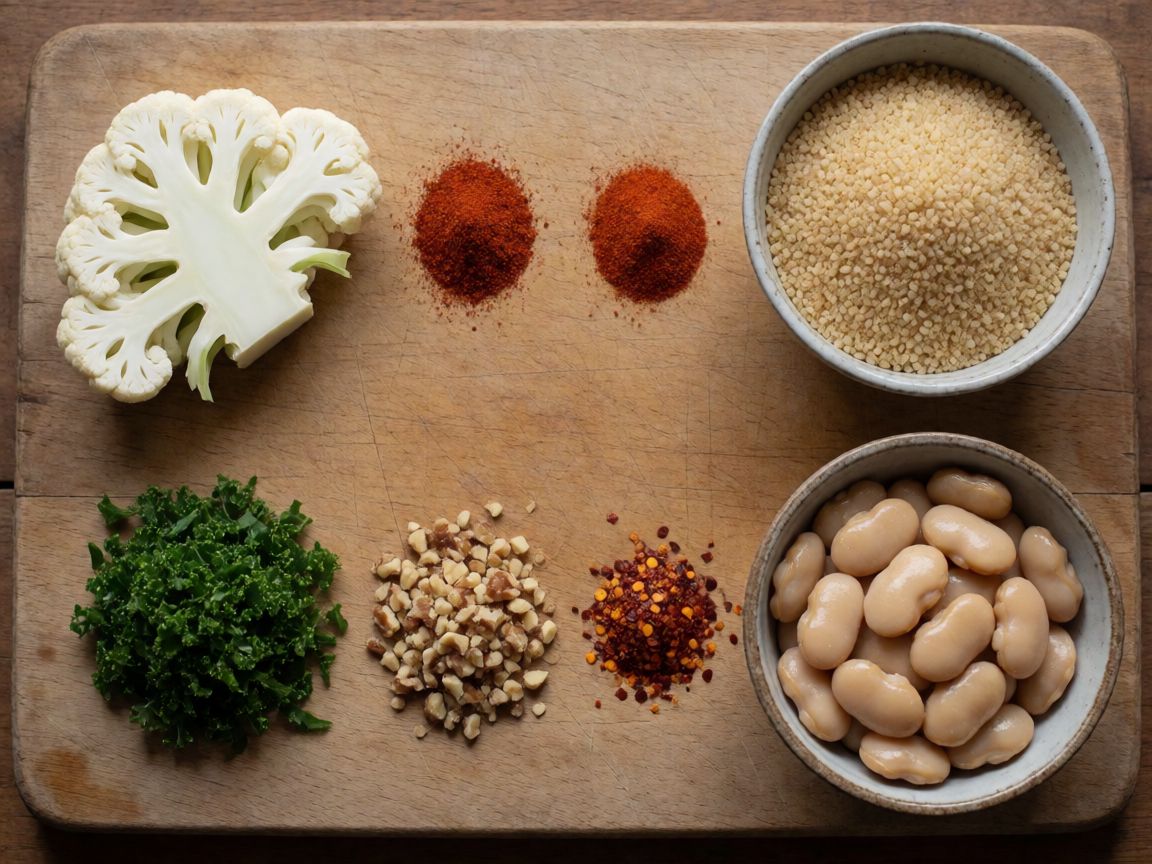
- 1 pcs Cauliflower cut into slices
- 1 tsp Smoked paprika
- 1 tsp Paprika
- 200 g Bulgur wheat
- 200 g Kale finely chopped
- 1 can Butter beans drained and rinsed
- 50 g Walnuts roughly chopped
- 0.5 tsp Chilli flakes
- 1 bunch Parsley finely chopped
- 25 g Butter for cooking, melted
- Salt to taste
- Black pepper freshly ground
- 50 g Mustard
- 1 tbsp Dijon mustard
- 2 tsp Honey
- 0.5 pcs Lemon zest and juice
- 150 ml Crème fraîche
















Steps
Mix the dressing and season well to taste.
Set the dressing aside to let the flavours develop while you prepare the rest of the dish.
Arrange the cauliflower slices on a baking tray lined with parchment paper and brush with melted butter.
Mix the paprika, smoked paprika, salt and pepper, and sprinkle over the cauliflower.
Roast in a preheated oven at 180°C (fan) for about 20 minutes, until the cauliflower is tender and golden.
Meanwhile, cook the bulgur according to the packet instructions and put the kale into a large bowl.
Massage and work the kale with your hands for a few minutes until it softens and becomes pleasant to eat.
Arrange the kale, bulgur and roasted cauliflower on a serving platter.
Spoon the butter beans and mustard dressing over the top.
Before serving, sprinkle with walnuts, chilli flakes and parsley.
This is a cauliflower steak dish pretending to be humble, but the whole thing turns on one decision: you slice the cauliflower instead of breaking it into florets. A slice holds together on the tray, gets a flat face against the heat, and that flat face is where the paprika and butter actually do their work — floret edges just char and dry out before the inside gives up its raw crunch. Cut through the core, not across it, so each slice keeps its stem intact like a little anchor; otherwise it collapses into rubble halfway through roasting.
What decides whether this works is the cauliflower's texture at the end, not the clock. You're waiting for the knife — or a skewer, or the point of a small knife if that's what's in the drawer — to go in with almost no resistance, and for the edges to have gone past gold into something closer to the colour of the paprika itself, a rusty brown at the tips. Some say cauliflower roasts in whatever time the recipe says and you can walk away — no, ovens lie, especially domestic fan ovens which run hot in some corners and sulk in others, so the 20 minutes is where you start checking, not where you stop.
Start with the dressing because it's the one element with patience built in as an actual ingredient. Mustard and crème fraîche mixed together taste disjointed in the first minute — too sharp, too flat — and taste like one thing after ten. You're not waiting for a reaction exactly, more a settling, the honey rounding the mustard's edge and the lemon's acid finding its way through the fat instead of sitting as a separate layer on your tongue. If you've got the time to roast the cauliflower first and dress at the end, that resting happens for free.
Two mustards here, not one, and that's not fussiness — smooth mustard gives you heat and body, Dijon gives you the sharper, more aromatic top note, and the gap between them is bigger than people expect. If you've only got one in the cupboard, use more of it and compensate with a touch more honey and lemon, because what you're chasing is a balance of hot-sharp-sweet-sour, not a specific jar. Crème fraîche itself is just soured cream with more fat and less tang — if you don't have it, full-fat soured cream or even Greek yoghurt loosened with a spoon of oil will carry the dressing, though yoghurt will taste thinner and you may want less lemon to compensate.
The two paprikas are doing different jobs and it's worth knowing which. Sweet paprika is colour and a mild, fruity bitterness from dried peppers — it's there so the cauliflower looks roasted rather than just cooked. Smoked paprika, pimentón, is the same pepper but dried over oak smoke, and it's standing in for what you'd get if this cauliflower had actually sat near a wood fire. Leave it out and the dish is fine but flatter, missing the thing that makes people ask what's in it. Butter for brushing rather than oil because butter browns and carries flavour at a lower point before it burns — any neutral oil with no smell of its own, like a light vegetable or sunflower oil, will do the basic job of stopping the cauliflower drying out and sticking, but you lose that faint nuttiness butter gives as it catches at the edges.
Butter beans are the gentlest of the tinned beans — soft, almost creamy, barely any skin to speak of — which is exactly why they work here instead of fighting the kale and walnuts for texture. Any white tinned bean, cannellini, haricot, will substitute fine; just rinse them well, because the tin liquid is mostly starch and salt and will cloud the dressing if it goes in with them. Kale gets the massage not for theatre but because raw kale is structurally tough — a rigid leaf built to survive frost — and working oil or acid through it by hand with a bit of pressure breaks down those fibres mechanically, the same way salt does to cabbage in a slaw. Some say you need oil in your hands to do it — no, friction and a little salt or a squeeze of the dressing itself does the same job, you're bruising the leaf, not seasoning it yet.
Walnuts go in raw and chopped rough, not fine, because the point is a contrast in bite against everything soft on the plate — the beans, the bulgur, the roasted cauliflower flesh. If walnuts aren't to hand, any toasted nut with some bitterness to it, pecans, even sunflower seeds in a pinch, will do that same job of interrupting the softness, though walnuts carry a slight tannic edge that plays particularly well against the mustard. This whole plate, for four, sits well alongside a Sunday roast as the vegetable side that isn't just boiled and buttered, or on its own as a lunch with bread, since the bulgur and beans give it enough weight to stand without meat.