
 AI photo
Cake No. 2
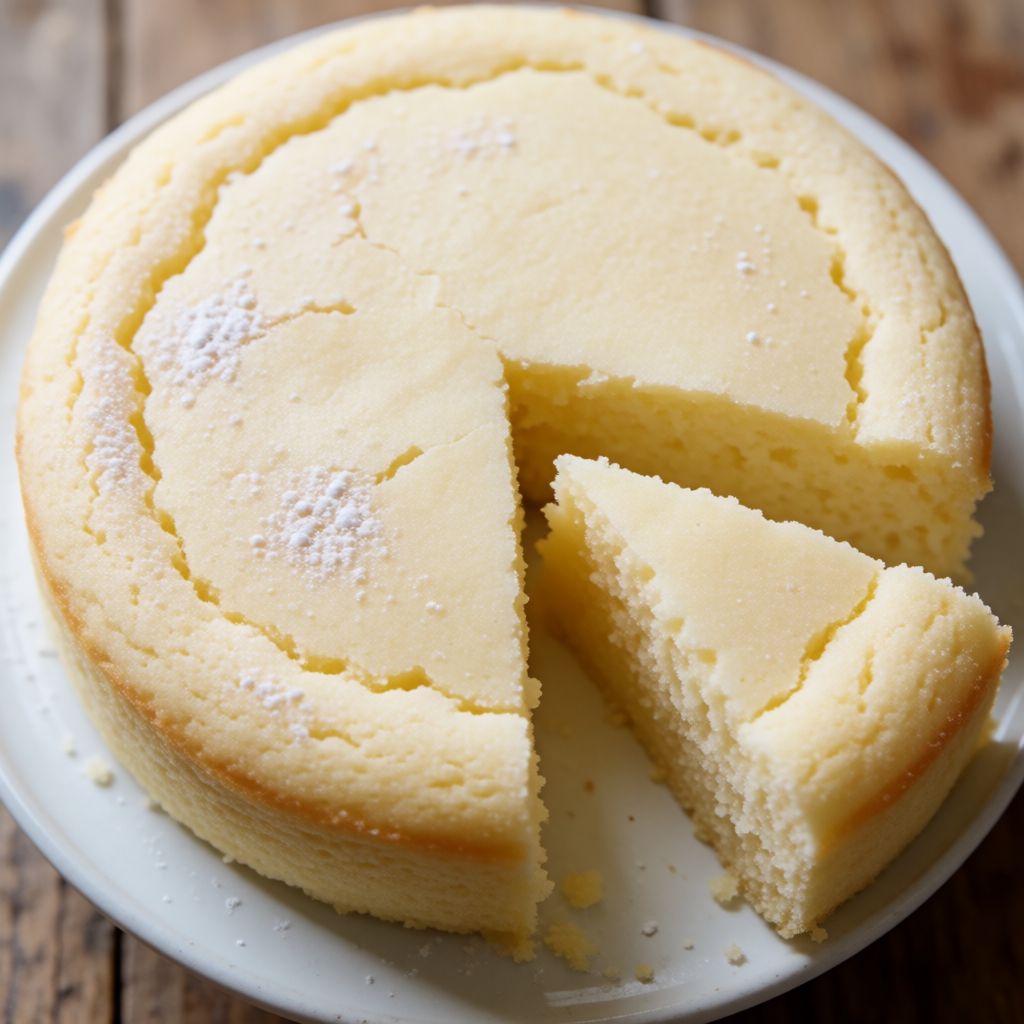
A simple ricotta sponge cake flavoured with lemon zest.
Labels are worked out automatically from the ingredients and can be wrong. Check the packaging if it matters to you.
Ingredients
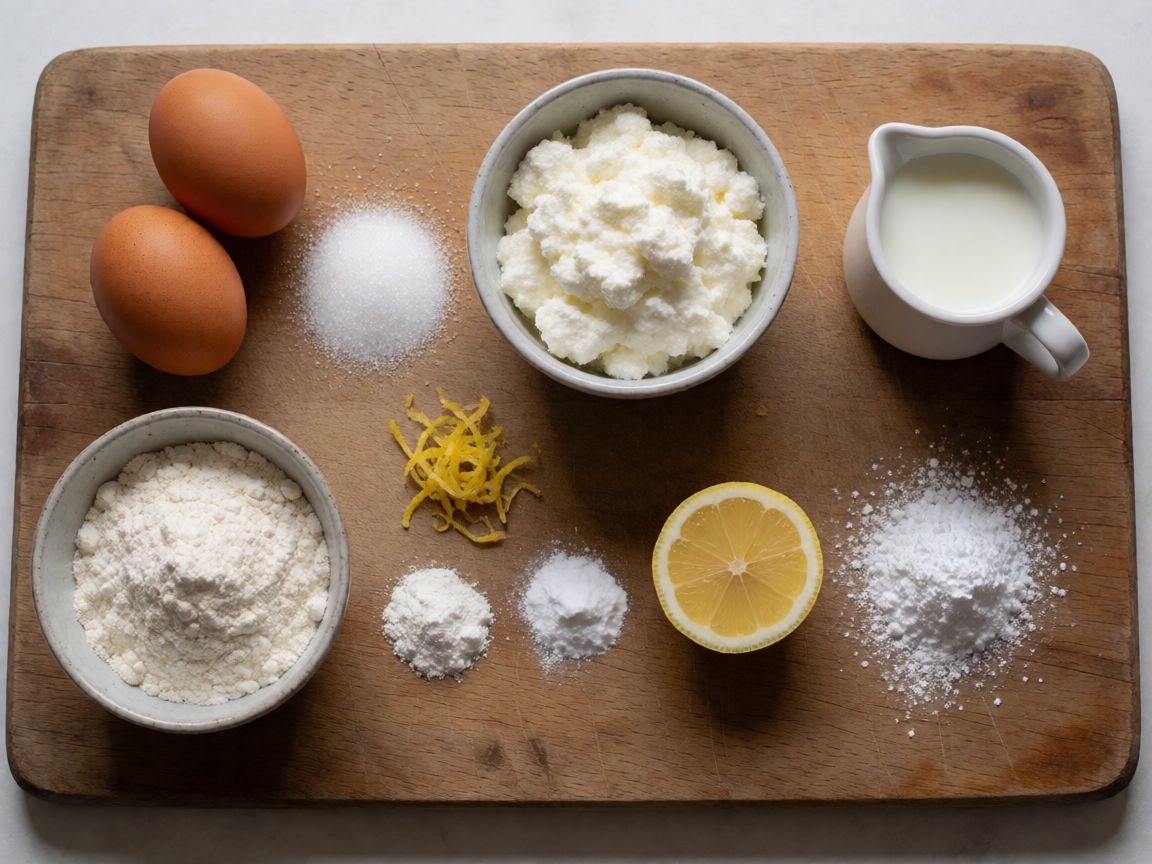
- 2 pcs Eggs
- 200 g Sugar
- 200 g Ricotta
- 20 g Milk
- 20 g Vegetable oil
- 200 g Plain flour
- 16 g Baking powder
- 1 pcs Lemon zest
- pinch Icing sugar for dusting









Steps
Separate the egg whites from the yolks.
Put the yolks in a large bowl, add the sugar and whisk with a mixer until light and fluffy.
Without stopping whisking, add the ricotta, then the vegetable oil and milk.
Flavour the batter with the lemon zest.
Sift in the flour and baking powder, and gently fold until smooth.
Whisk the reserved egg whites to a stiff foam and carefully fold them into the rest of the mixture with a spatula.
Pour the batter into a baking tin greased with butter and dusted with flour.
Bake in a preheated fan oven at 170°C for 40 minutes.
40 minLet the finished cake cool slightly.
Dust with icing sugar before serving.
This is a ricotta cake, and ricotta is the whole point of it — not a cheesecake, not a sponge, something in between. Ricotta has less water and more structure than the curd cheese you'd use in an Eastern European version, so the crumb stays close and a bit damp instead of light and dry. That's the texture you're aiming for: tender but with weight to it, not a cloud.
What decides whether it rises or sits flat is the egg whites. You whisk the yolks with sugar for air, then build on that with ricotta, oil and milk — all heavy, all flattening the batter down again. The whites are what put the lift back in. Fold them in badly — stir hard, knock all the air out — and the baking powder alone won't save you; it lifts a little, it doesn't lift a dense batter into a light one. Fold them in well — cut and turn, don't beat — and you get rise without a single extra step.
Some say you can skip separating the eggs and just whisk them whole into the sugar — less washing up, less faff. No: a whole egg whisked with sugar gives you foam that collapses the moment you add wet, heavy ricotta. Separated whites, beaten to a stiff peak on their own, hold their structure long enough to survive being folded into something much heavier. That stiffness is the entire reason for the extra bowl.
The zest is not decoration. Lemon oil cuts through the richness of the ricotta and the sugar — without it the cake tastes flat and one-note, all sweetness and no edge.
Start with the ricotta itself, since it's doing more work than any other ingredient. Buy it properly drained — if it's sitting in liquid in the tub, tip it into a sieve for ten minutes first. Wet ricotta means a wet batter, and a wet batter means a dip in the middle that no amount of extra baking time fixes, because by the time the centre sets, the edges are dry. If you can't get ricotta, a well-drained cottage cheese passed through a sieve, or mascarpone cut with a spoonful of yoghurt for tang, gets you close. Full-fat curd cheese works too, but it carries more water, so drain it harder than you think you need to.
The sugar with the yolks isn't just sweetening — whisking it in is what traps air into the yolk before anything heavy goes near it. This is the scaffolding the rest of the cake leans on. Do it properly: you're looking for the mixture to go from deep yellow to pale and thick enough to hold a ribbon when you lift the whisk, not just "until combined."
Oil, not butter, and that's economics as much as texture. Butter would set as it cools and make the crumb firmer, almost cakey in the English sense — nice, but not what this is. Oil stays liquid at room temperature, so the crumb stays soft the next day too, which matters if you're making this on a Saturday for a Sunday gathering. Any oil with no smell of its own does the job — sunflower, a mild rapeseed. Don't reach for olive oil here; it'll fight the lemon.
Flour and baking powder go in sifted for the same reason you sift flour anywhere — to break up clumps that would otherwise sit in the batter as little dry pockets, flecking the finished slice with hard spots. Fold, don't beat, once the flour's in: flour develops gluten the more you work it, and a well-worked batter bakes tighter and tougher than you want in something meant to feel soft against a cup of tea.
On a domestic fan oven, 170°C for 40 minutes is a reasonable starting point, but ovens lie about their own temperature more often than people admit — know yours, or test with a cheap oven thermometer once and remember the offset. The real test isn't the clock: a skewer or a thin knife into the centre should come out clean, no wet batter clinging to it. If it's browning hard on top before the centre's set, that's your oven running hot — drop it 10 degrees next time rather than pulling the cake early.
Let it cool before you dust it with icing sugar, not out of fussiness — a warm cake sweats, and sweat melts icing sugar into damp patches instead of leaving it sitting pretty on top. Patience here costs you nothing but ten minutes, and it's the difference between a dusted cake and a slightly soggy-looking one.