
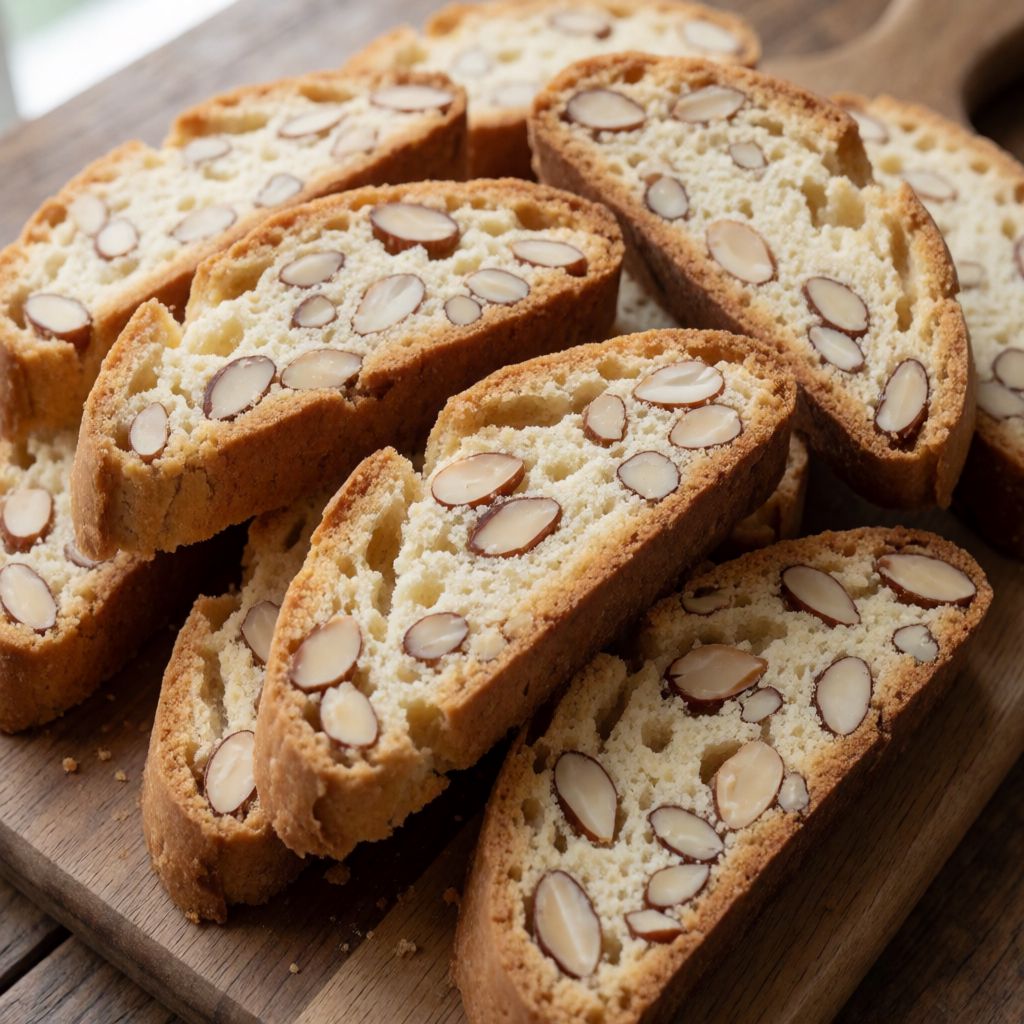
 AI photo
Almond Cantucci
Crunchy, twice-baked Tuscan almond biscuits, perfect for dipping in coffee or sweet wine.
Labels are worked out automatically from the ingredients and can be wrong. Check the packaging if it matters to you.
Ingredients
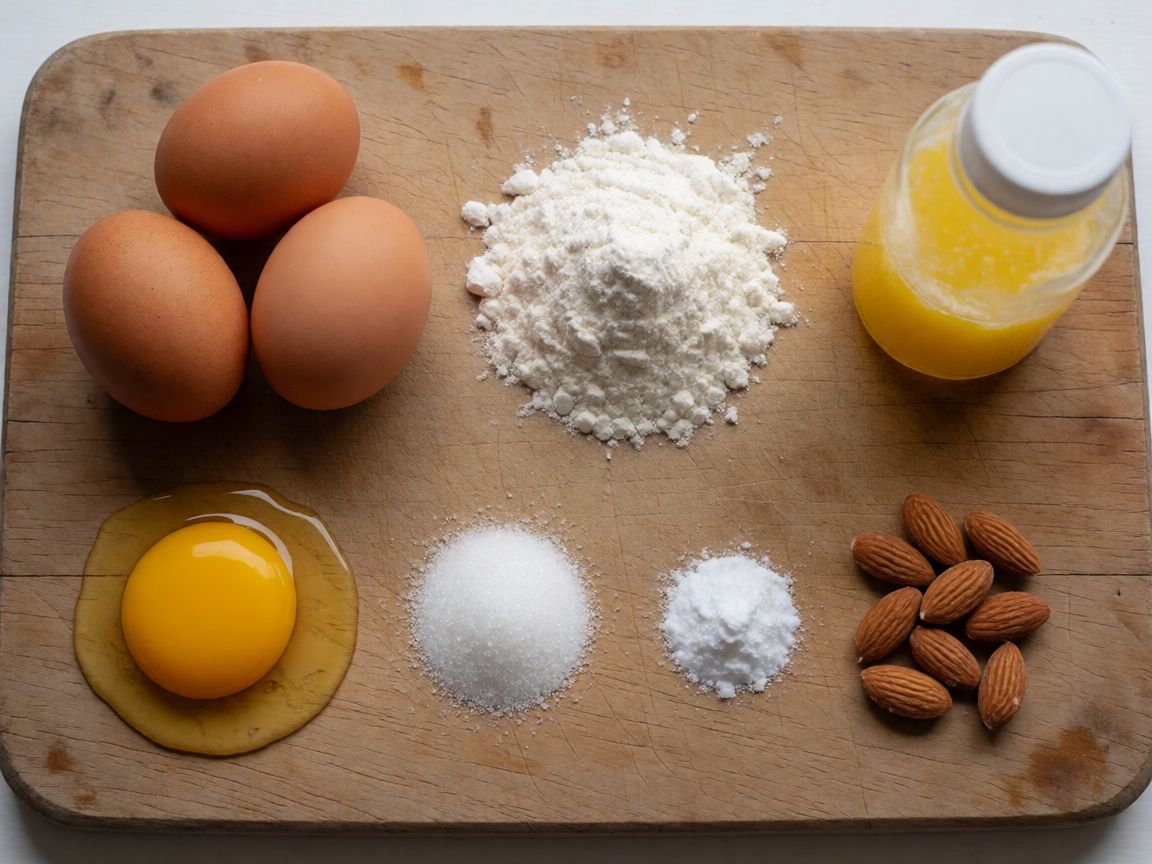
- 500 g Plain Flour
- 220 g Caster Sugar
- 10 g Baking Powder
- 3 pcs Eggs
- 1 pcs Egg Yolk
- 100 g Butter melted
- 120 g Almonds
- 1 pinch Salt








Steps
Heap the flour onto the worktop, make a well in the centre and add the sugar, baking powder, salt and melted butter.
Add the eggs and egg yolk, then mix with your fingers, gradually drawing in the flour.
Knead energetically until the dough is soft and smooth, then work in the almonds.
Shape the dough into a ball, divide it into three pieces and roll each into a log about 4-5cm thick.
Place the logs on a lined baking tray and bake in the oven at 170°C for 30-40 minutes.
35 minLet cool, then cut the biscuits on the diagonal with a sharp knife into cantucci about 1-1.5cm thick.
Arrange the sliced cantucci on the tray and bake at 180°C for a further 15 minutes.
15 minLeave to cool before serving.
Cantucci are the reason "biscotto" means what it says — twice cooked. You bake a dense almond log once to set it, slice it while it still has some give, then put the slices back into a hotter oven to drive out whatever moisture is left. That second bake isn't decoration, it's the whole trick: it turns a soft almond loaf into something that keeps for weeks in a tin and survives a dunk in coffee without going soggy and falling apart.
What decides whether yours work is the slicing, and the slicing depends on the first bake going right. A log too thin and the inside never gets wet and warm enough to set a proper crumb before the outside's already firm; too thick and the middle stays underdone while the crust has locked. 4-5cm is the width that lets the heat reach the centre before the outside seals it off.
Some say twice-baked biscuits started as leftover bread, dried out a second time so nothing was wasted. Not this one. Cantucci are baked twice on purpose, from fresh dough, because a biscuit with almost no moisture left in it is a biscuit that doesn't need a fridge. That's the real economics of the thing — cheap flour, cheap sugar, a few eggs, the almonds being the one proper expense — and what you get is a tin that feeds a household for weeks. No refrigeration required, which mattered enormously before refrigeration was a thing you could rely on.
Don't rush the cooling before you cut. Slice it straight from the oven and it's still too soft to hold a clean edge — the knife drags, the crumb tears, and you end up with ragged lumps instead of biscuits. Slice it stone cold and the sugar inside has fully set hard, so the knife has to fight through rather than glide, and the slice can shatter at the edges. You want it warm-ish, cooled enough to handle, firm enough to take a cut without crumbling. That middle window is the patience part of this recipe — there's no shortcut to it, you just wait and test with the knife.
The second bake, at 180°C, is hotter but shorter, because now you've multiplied the surface area by slicing — every cut face is suddenly exposed to dry heat instead of being locked inside a loaf. That's what finishes the drying and gives the snap. Watch the cut faces, not the clock: they go from a pale, slightly damp-looking matte to a light gold at the edges, and a finished cantuccio feels light when you pick it up — lightness is moisture gone, and moisture gone is what buys you the weeks in the tin. 15 minutes is the lower bound again, not a deadline.
Flour and sugar are doing the obvious job — structure and sweetness — but the ratio here (500g flour to 220g sugar) is weighted toward a dough firm enough to roll into a log by hand on the worktop, not toward a soft cake batter. The well in the flour, the "fontana", isn't ceremony — it's just a way of drawing the wet ingredients into the dry a little at a time so you don't get a slurry at the bottom and a dry island on top. A bowl does exactly the same job if your worktop is also where you're meant to be making dinner.
Three whole eggs plus one extra yolk is a deliberate imbalance: the extra yolk adds fat and richness without the extra water a whole egg would bring, which would mean more flour to mop it up, which would mean a tougher dough. If you're out of an egg, don't panic and add a whole one instead of the yolk — you'll just be fighting the dough back into shape with more flour later.
The baking powder is doing far less work than it would in a cake — 10g against 500g flour gives you just enough lift to stop the log being a brick, not enough to make it airy. This dough isn't meant to rise, it's meant to hold a shape you can slice. Butter, melted in, gives the crumb some short, tender give; if you only have a flavourless oil, it'll work, you'll just lose a little of that short bite and end up closer to a leaner, more rustic biscuit — which, historically, is exactly what oil-based versions were, oil being what poorer households had instead of butter.
Almonds are the one ingredient here with no real substitute if you want cantucci and not just a hard sweet biscuit — but within "almonds" you have room: skin-on for a more rustic look and a faint bitter edge from the skin, blanched for a paler, milder bite. Either is correct; it's taste, not technique. If you want to wander from tradition the way Tuscan bakers themselves did when the cupboard dictated it, hazelnuts or pistachios slot into the same dough the same way — any hard, oily nut that won't turn to paste under kneading will do the job.