
 AI photo
Caramel Cake
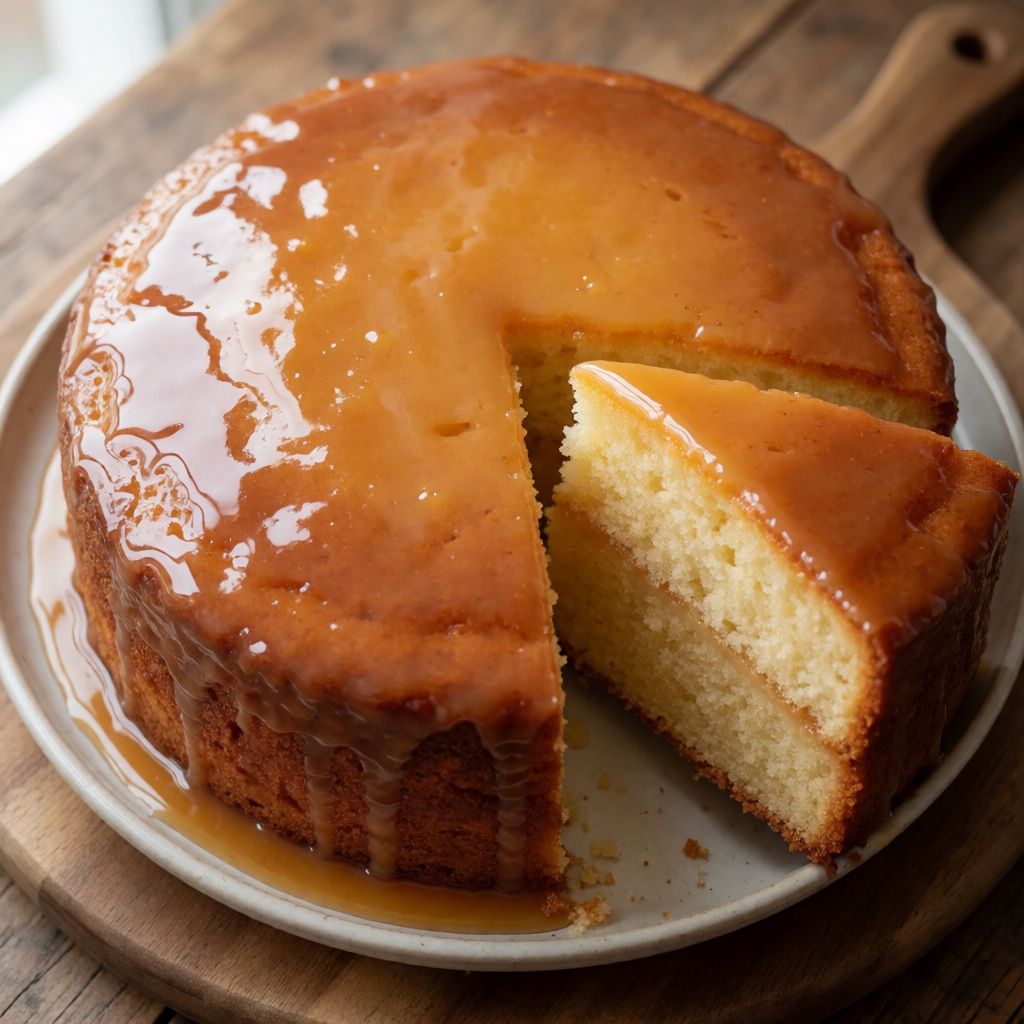
A soft yeasted cake topped with a rich caramelised brown sugar and butter layer, finished with a hint of cinnamon.
Labels are worked out automatically from the ingredients and can be wrong. Check the packaging if it matters to you.
Ingredients










Steps
Dissolve the yeast in a bowl with the milk. Melt the butter over low heat and add it along with the egg, sugar, salt, cardamom and flour. Knead the dough until it becomes smooth, soft and pleasant to touch.
15 minLine the base of a 24 cm cake tin with baking paper, grease the sides with butter and place the dough into the tin.
5 minCover with a cloth and let the dough rise for 1 hour on the kitchen counter.
60 minFor the filling, slowly melt the butter, brown sugar and cinnamon in a saucepan over low heat, stirring constantly. Mix well until smooth. Let it cool to room temperature and mix again thoroughly.
10 minPress deep indentations into the risen dough with your fingers and spread the filling into the indentations.
5 minBake the brunsviger in a preheated oven with fan assistance for 25-30 minutes at 180°C.
28 min
What was changed
The oven temperature was rounded to to suit typical UK oven settings.
This is a brunsviger — Danish, not Austrian, despite looking like it wants to be a Linzer tart. One soft yeasted dough, baked flat in a tin, and a butter-brown-sugar paste pressed into it rather than poured over it. That one word, pressed, is the whole trick. Get it right and you have a cake with a lacquered, slightly chewy top and a crumb underneath that's still light. Get it wrong and you have burnt toffee glued to a tin, with raw dough hiding under it.
What decides whether it works is where the caramel sits. Spread flat on top of risen dough, it just runs — toward the edges of the tin, where it's thin and scorches, while the middle stays pale and undercooked. That's why you punch deep dimples into the dough with your fingers before filling. Each dimple is a little dam. It holds the paste where you put it and lets the heat of the oven reach the dough evenly instead of fighting through a lake of molten sugar.
Some say you can pour caramel over cake like icing on a Victoria sponge — no, because this isn't icing, it's a filling that has to survive baking. Pour it on hot and runny and it floods the whole surface, drowns the dough, and turns leathery at the edges before the centre sets. That's why the recipe has you cool the butter-sugar mix to room temperature and beat it again: cooling lets it re-thicken into something closer to soft fudge than syrup, and the second mixing brings the butter and sugar back together after they've started to separate on cooling. A paste like that stays in its dimple instead of wandering off.
Start with the yeast and the milk. Room-temperature milk isn't a fussy instruction — it's protection. Yeast works by feeding, and heat above body temperature starts killing it long before it looks hot to your hand; cold milk just stalls it for no reason. Twenty grams of fresh yeast is a fair bit for 250 g of flour, which is deliberate: this dough is heavy with butter, egg and sugar, all of which slow fermentation down, so it gets extra yeast to compensate. If you only have dried yeast, use roughly a third of that weight — about 7 g — and dissolve it the same way.
The egg, the 40 g butter, the 40 g sugar and the pinch of salt in the dough aren't there to be tasted individually. They're there to make the crumb soft and keep it that way after baking, because a lean yeast dough left overnight would be rubbery by morning. The salt isn't just flavour either — without it, fermentation runs unchecked and you get a dough that's gassy and loose rather than smooth. Cardamom is the one traditional, slightly surprising note: it's a Scandinavian baking habit, cheap once sugar and spice trade routes opened up through the Baltic ports. If you haven't got it, a little grated nutmeg does a similar quiet job — don't reach for cinnamon here, you're using that in the filling and you don't want the cake tasting of one note twice.
The filling is just three things, and each one is load-bearing. Butter carries the fat and the flavour that caramel alone (just sugar and water) can't give you — this is really a toffee, not a true caramel, and that's exactly why it's cooked on low heat rather than high: brown sugar has molasses in it, and molasses scorches and turns bitter fast if you rush it. Brown sugar itself is doing a job that white sugar and a hot pan would otherwise do slowly through actual caramelisation — the colour and the burnt-sugar depth are already in the sugar before it ever meets heat, which is why this filling cooks gently and briefly rather than needing careful sugar-thermometer work. Cinnamon rounds it off; if you're out, a ground clove or two, used sparingly, points in roughly the same direction.
About the tin: lining the base with paper isn't decoration, it's the thing standing between you and a cake welded to the metal. Caramel that leaks to the bottom during baking will set hard against bare tin as it cools, and good luck getting the slice out in one piece. A 24 cm cake tin or springform is the right size for this amount of dough and filling in a domestic kitchen — if yours runs a bit shallow, grease the sides generously, because the dough does rise and spread as it proves.
The hour's proving on the counter and the cooling of the filling before it goes anywhere near the dough are both patience doing real work, not padding. Rush the first and the dough is dense; rush the second and the caramel floods instead of sitting in its dimples. This isn't a cake you can speed up by turning the oven higher — fan-assisted 180°C is already hot enough to set the crumb and melt the filling further without burning the sugar outright; go hotter and you'll cook the top before the inside catches up. Six people, one tin, and an hour of mostly doing nothing while the dough gets on with it — that's the shape of this bake.