
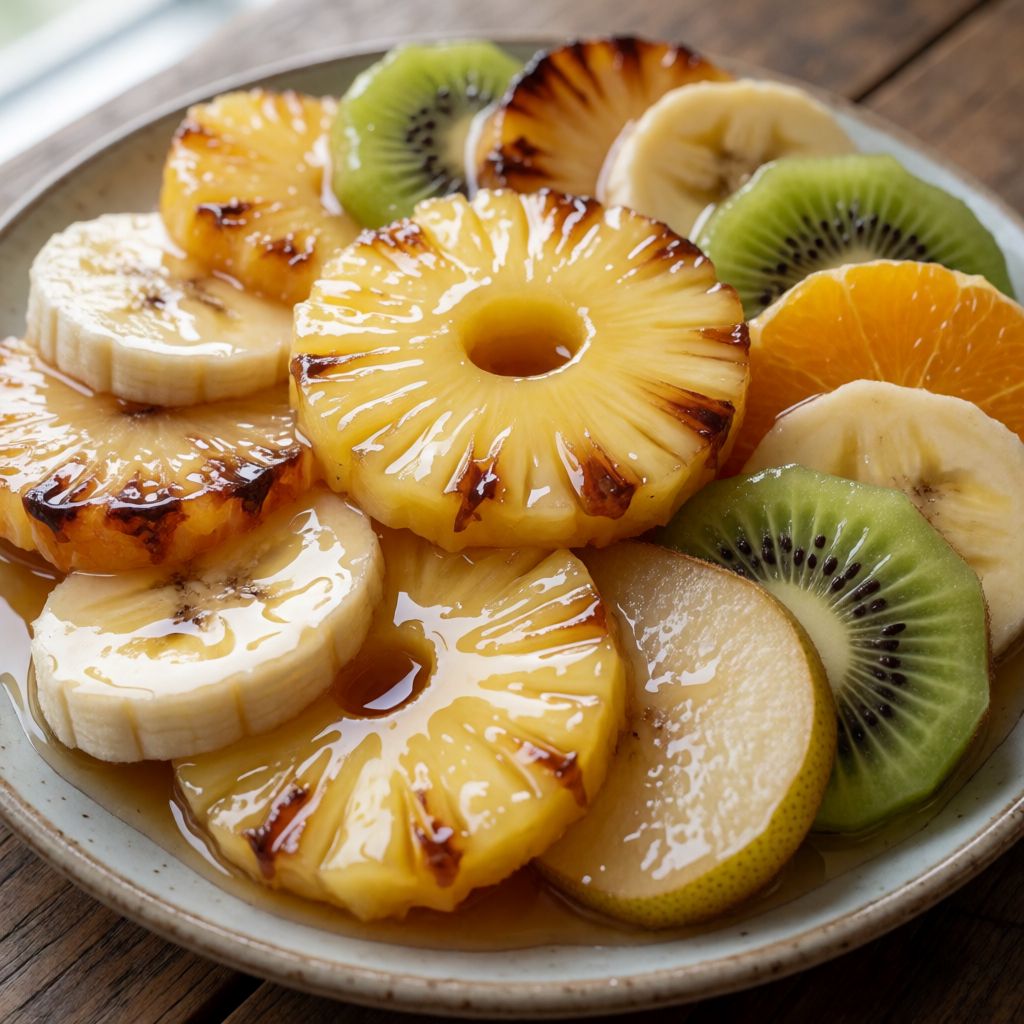
 AI photo
Caramelised Fruits
A quick fruit dessert, caramelised in butter and brown sugar, finished with flaked almonds, ice cream and biscuits.
Labels are worked out automatically from the ingredients and can be wrong. Check the packaging if it matters to you.
Ingredients
- 1 pcs Pineapple
- 1 pcs Banana
- 1 pcs Kiwi
- 1 pcs Orange
- 1 pcs Pear
- 4 tbsp brown sugar
- 1 pcs Butter
- flaked almonds to taste
- vanilla ice cream to taste
- plain biscuits to taste







Steps
Cut the pineapple, kiwi, banana and orange into small pieces. Dice the pear into cubes, keeping the skin on.
Melt the butter in a heavy-bottomed frying pan and add the cut fruit.
Add the brown sugar and flaked almonds.
Cook over high heat until the fruit turns nicely caramelised.
10 minLet it cool slightly before serving.
What was changed
Swapped plain biscuits, as plain dry biscuits are better matched by digestive biscuits than savoury crackers in British kitchens.
This isn't a baked pudding, it's a fast sauté — fruit flashed in butter and sugar until the sugar stops being syrup and becomes caramel. That single mechanical fact decides everything: whether you get glossy, amber fruit with a toffee smell, or a sad, pale fruit salad sitting in sweet water. The whole recipe is a race between two things happening at once — moisture leaving the pan as steam, and sugar breaking down into caramel. Win that race and you have the dish. Lose it and you have poached fruit.
Some say turn the heat down so the fruit doesn't catch — no, because low heat is exactly what makes it catch, just slower, and wetter. At low heat the fruit sits in its own juice, the sugar dissolves into that juice instead of browning, and you end up stewing, not caramelising. High heat is what boils that juice off fast enough that the sugar left behind has nowhere to go but brown. The burn you're afraid of comes from a crowded pan, not from a hot one — too much fruit at once means too much liquid released at once, and no amount of stirring saves it.
So the pan matters more than the clock. You want it wide — a sauté pan or your biggest frying pan, not a saucepan with high sides that traps steam instead of letting it escape. If your fruit is piled two layers deep, work in two batches rather than one crowded one. A kazan would spread heat evenly round a curved base; a flat domestic hob under a flat pan gives you a hot middle and a cooler rim, so move the fruit, don't leave it parked.
Patience here isn't about long cooking, it's about not fiddling. Cut your pieces roughly the same size so they all finish together, then once they're in the butter, leave them a beat before you toss — that's how one side actually gets colour instead of everything staying pale and jostled. Stir constantly and you get even, boring heat; stir occasionally and you get caramelised faces on the fruit, which is the whole point.
Pineapple is the backbone — firm, low in extra moisture relative to its sugar, and it holds its shape under heat. Fresh is better because tinned pineapple is already half-cooked and waterlogged with syrup; if it's all you've got, drain it hard and pat it dry, or the pan will fill with liquid before the sugar gets a chance. The criterion for any fruit you swap in here is the same: firm flesh that won't collapse in the first minute.
Banana is the opposite case — it's meant to go soft, that's its job, but it goes soft fast, so cut it a little thicker than the rest and add it slightly later if you're doing fruit in stages, or it'll be sauce before the pineapple's even coloured.
Kiwi and orange are there for acid, not sweetness — without something sharp, the whole dish is just sugar on sugar and tastes flat. Any citrus works in the orange's place — tangerine, a blood orange if you want colour — the criterion is juice and acidity, and the juice that leaks out as you cut them actually helps get the caramel liquid moving early on.
Pear, skin on, cut into cubes — the skin is what holds the cube together under heat, a peeled pear cube falls apart into strings. Use a pear that's firm, not one that gives under your thumb; a ripe, soft pear has already started breaking down and will turn to pulp the second it hits the pan. Conference or similar, under-ripe rather than over.
The sugar: brown sugar brings molasses with it, which is what gives you that toffee note rather than a plain burnt-sugar one, and it melts and browns at a slightly lower point than white sugar because of the moisture it holds — that's a small mercy on a home hob that can't always hit high heat instantly. White sugar will caramelise too, you just lose the depth; muscovado goes the other way, deeper and almost bitter, good if you want that.
Butter does two jobs: it stops the fruit sticking to bare metal, and it carries flavour into the caramel rather than leaving a neutral sugar glaze. The criterion for swapping it is a fat that can sit in direct contact with high heat for a few minutes without smoking and without smelling of itself — ghee or clarified butter if you're nervous about the milk solids scorching, but skip olive oil, its own flavour fights the fruit instead of carrying it.
Flaked almonds burn in seconds once the sugar's gone dark, so if you're worried, toast them separately in a dry pan and scatter them on at the end rather than cooking them the whole way through — the dish doesn't need them cooked in the caramel, it needs the crunch on top. Hazelnut flakes do the same job if that's what's in the cupboard.
Serve it straight from the pan, warm, with the ice cream added at the table, not before — the point is the ice cream half-melting into the hot caramel and making its own sauce, which doesn't happen if it's been sitting in a bowl going liquid on its own. Plain biscuits are there for the one thing the dish doesn't have: something dry and crisp to break up all that soft, warm fruit. This is the kind of thing a Sunday roast ends with, something you throw together in the time the kettle takes to boil for tea — not a dish with history behind it so much as a practical bit of kitchen economics, a way of using fruit that's gone a bit too ripe for the bowl but isn't ready for the bin either.