
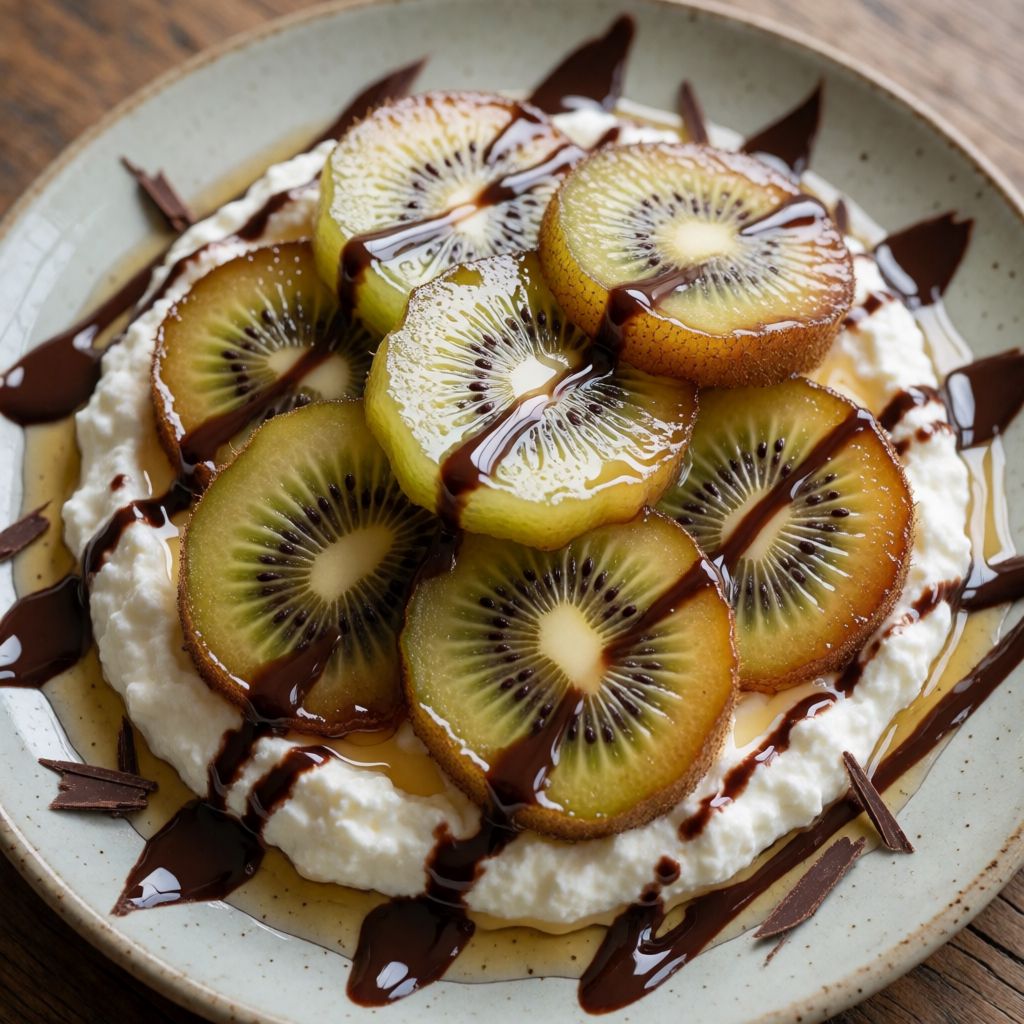
 AI photo
Caramelised Kiwis with Ricotta and Honey
A simple dessert of caramelised kiwi slices served with sweetened ricotta and dark chocolate.
Labels are worked out automatically from the ingredients and can be wrong. Check the packaging if it matters to you.
Ingredients
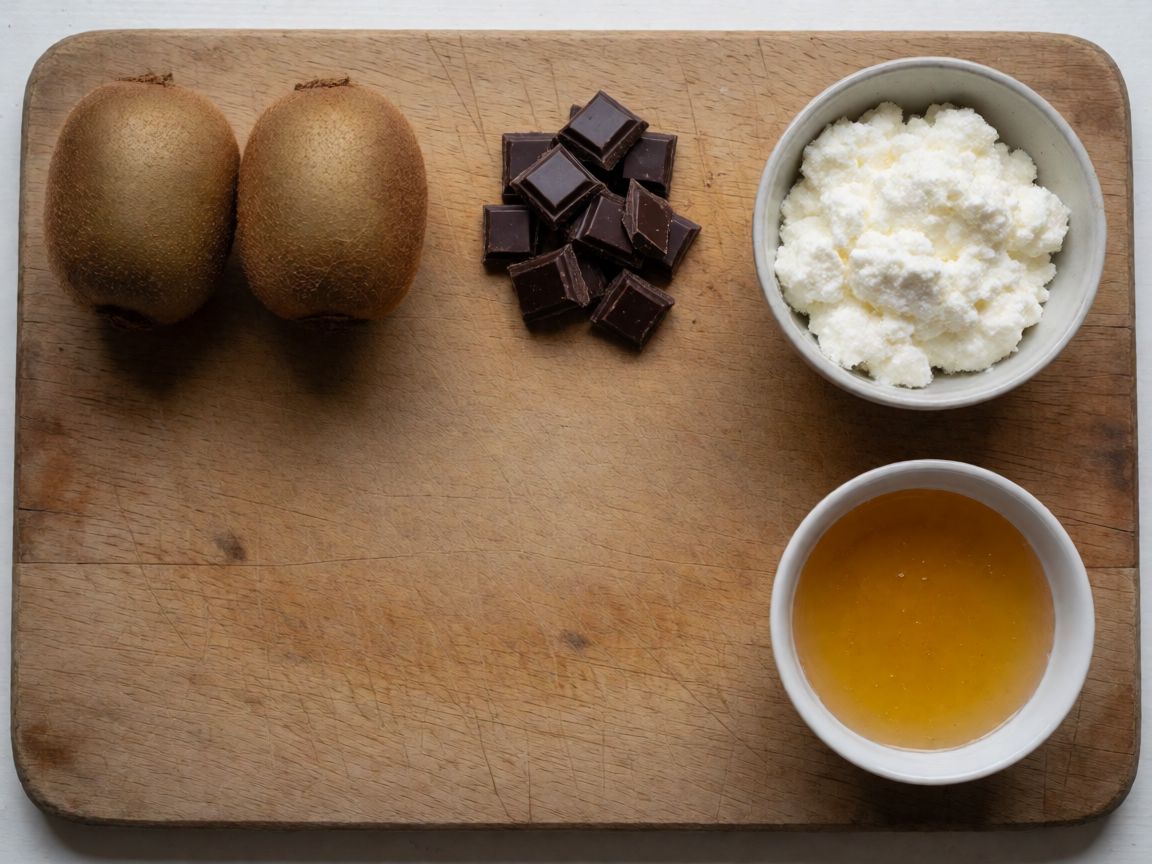
- 2-3 pcs Kiwi
- 70 g Dark chocolate
- 250 g Ricotta
- 50 g Honey



Steps
Peel the kiwis and slice them. Arrange on a baking tray lined with baking parchment and drizzle with a little honey.
Bake in the oven at 70°C until the kiwi is lightly caramelised.
20 minPush the ricotta through a sieve and mix in the honey. Whisk until smooth.
Chill the mixture in the fridge.
60 minMelt the dark chocolate in a bain-marie.
Drizzle a thin stream of melted chocolate onto a plate, add two quenelles of the ricotta and honey mixture, two slices of caramelised kiwi, and finish with grated chocolate on top.
This is a plate built on four tempers knocking against each other: tart kiwi, sticky-sweet honey, cool blunt ricotta, bitter dark chocolate. Nothing here is cooked in the ordinary sense — the kiwi barely, the ricotta not at all — so the whole dish stands or falls on contrast, not on technique. Get the balance of sweet and sharp right and it works. Get it wrong — too much honey, underripe fruit — and it's just sugar on sugar.
The word "caramelised" in the method is doing more work than it should. Some say caramelising means browning, a crust, that snap of hard sugar — no, because at 70°C sugar doesn't even melt, let alone brown; sucrose needs something north of 160°C before it turns colour. What's actually happening on that tray is slow water loss. The kiwi sits in its honey coat and dries at the edges while the honey itself thickens into a glaze. You're not cooking the fruit, you're concentrating it. Done is when the slices look slightly jammy and translucent at the rim, still holding their shape — not when a clock says so.
The low heat isn't gentleness for its own sake. Honey scorches at a lower temperature than sugar does, because of the fructose in it — push the oven hotter to save time and you'll taste burnt honey before the kiwi has softened at all. Seventy degrees is slow on purpose: it protects the glaze while it concentrates.
Start with the kiwi. Buy it firm, not the soft give-a-little ones sold as "ready to eat" — those have already started breaking down and will collapse to mush under even seventy degrees of heat. You want a fruit that can still hold a knife-cut edge. As for the fruit itself: it was never called kiwi until New Zealand growers renamed the Chinese gooseberry for export in the 1950s, because nobody abroad was going to buy something called a gooseberry from China during the Cold War. Marketing, not botany — but it's a good fruit for this plate because its acidity is what keeps the honey and ricotta from turning the whole thing into baby food. If you've no kiwi, any firm, sharp fruit that holds its shape under slow heat will do the same job — a hard pear, a green-skinned apple, an underripe plum.
The honey has two jobs: it glazes the fruit in the oven and it sweetens the ricotta without the graininess sugar would leave behind. Any thick, runny sweetener with its own flavour will substitute — golden syrup behaves closely enough in the oven, maple syrup works but burns a touch sooner because its sugars invert differently. Don't reach for granulated sugar here; it won't coat the fruit the same way and gives you nothing to glaze with.
Ricotta is really just drained whey curd, which is why supermarket tubs in the UK are often denser and drier than what you'd get fresh in Italy — they've been pressed harder to survive the fridge shelf. Pushing it through a sieve isn't fussiness, it's what turns a slightly gritty cheese into something you can pipe or quenelle cleanly. If it's stiff and dry, loosen it with a spoon of milk or cream before sieving, or it'll just clog the mesh. No ricotta in the house — strained quark or a mild cream cheese loosened with a splash of cream gets you close enough; quark is actually a little easier to sieve smooth.
Chocolate: go dark, somewhere around 60–70% cocoa, because the ricotta and honey are both sweet and the chocolate's job is to cut that, not join it. Milk chocolate will just agree with everything else on the plate and add nothing. Melt it over a bain-marie, not direct heat — a pan over a flame scorches chocolate from underneath before the top layer has even softened. The real danger with a bain-marie is water, not heat: one stray drop in the melted chocolate and it seizes into a grainy paste. Some blame this on fat and water repelling each other — no, it's the sugar in the chocolate dissolving into that drop and clumping. Keep the bowl dry, keep it clear of the steam, and you won't have the problem.
On a UK domestic oven, 70°C is close to the bottom of what the dial can do, and most home thermostats swing a good ten degrees either side of whatever they claim — so don't trust the number, trust the kiwi. Check it by eye past the twenty-minute mark rather than pulling it the second a timer goes. The parchment under the fruit earns its place here too: without it, the honey glaze will catch on bare metal, which heats faster than the fruit sitting on it, and you'll get a scorched patch under every slice before the centre's done anything at all.