
 AI photo
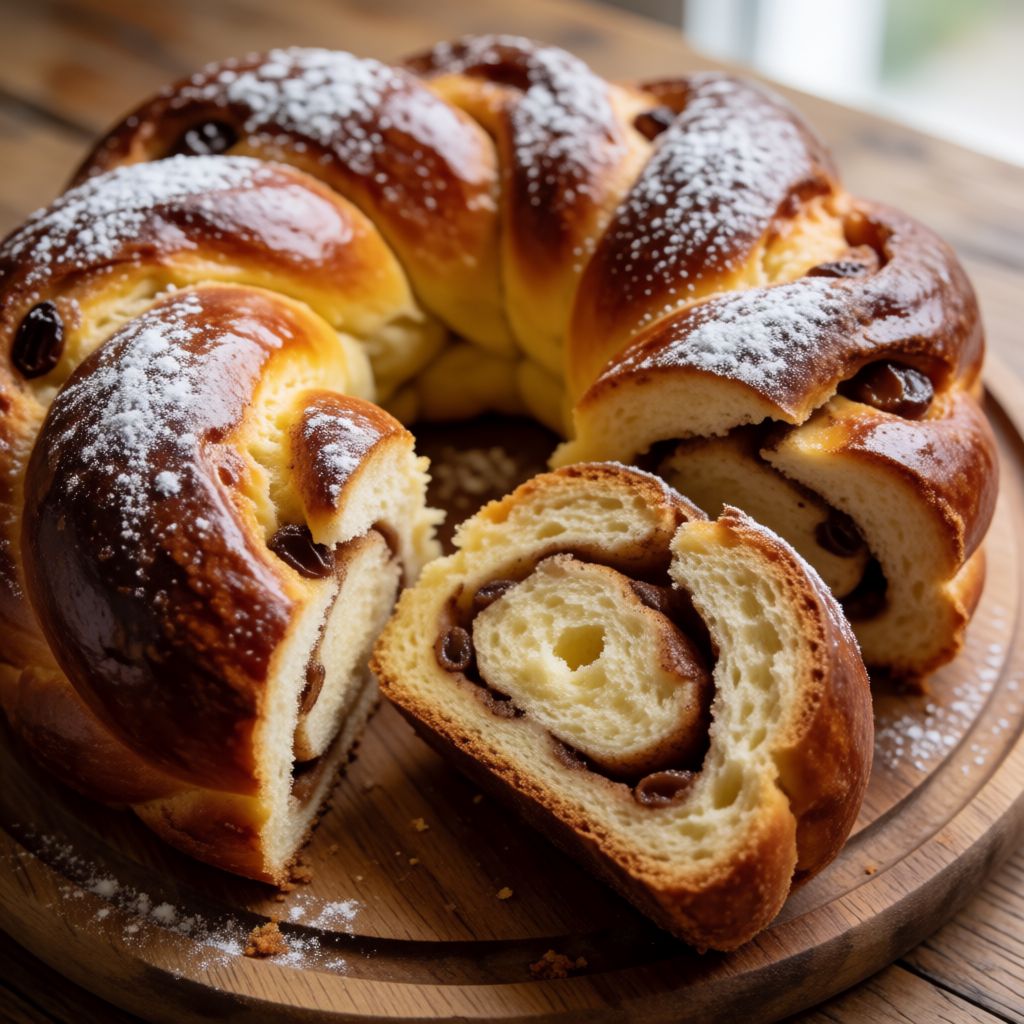
Carinthian Reindling
A spiced yeasted sweet bread swirled with cinnamon, walnuts and raisins, rolled into a ring and baked until golden.
Labels are worked out automatically from the ingredients and can be wrong. Check the packaging if it matters to you.
Ingredients
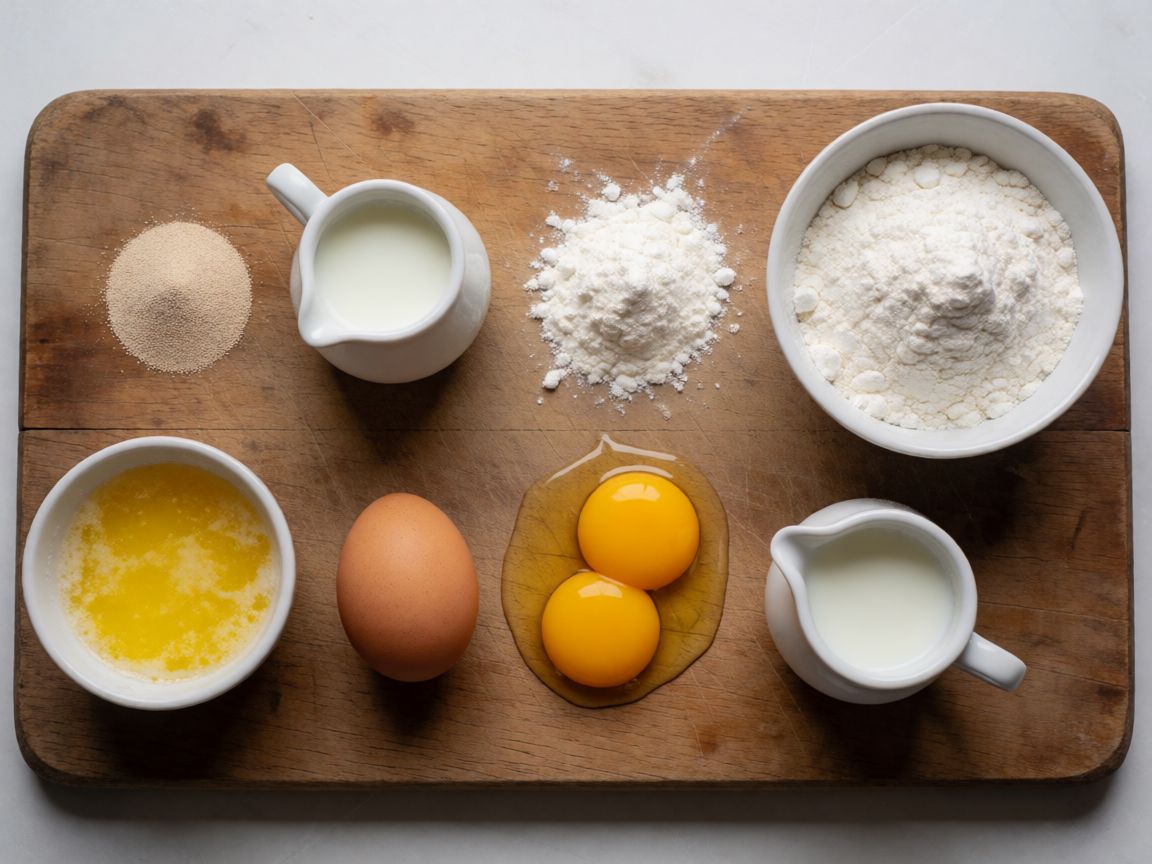
- 12 g dried yeast
- 65 ml Milk lukewarm
- 50 g Plain flour
- 500 g Plain flour
- 100 g Butter melted
- 1 pcs Eggs
- 2 pcs Egg yolk
- 250 ml Milk
- pinch Salt
- 40 g Caster sugar
- 80 g Butter melted
- 150 g Caster sugar
- 2 tbsp Cinnamon
- 200 g Raisins
- 150 g Walnuts
- 1 tbsp Butter for greasing the tin
- 1 tbsp Icing sugar for dusting










Steps
Combine the lukewarm milk with the yeast, add the flour and whisk until smooth.
Cover with cling film and leave to rise at room temperature.
60 minOn a work surface, pile the flour into a mound and make a well in the centre. Add the sugar, melted butter, egg and egg yolks. Mix in the yeast starter, salt and milk, kneading into a dough.
Knead the dough until soft, shape into a ball and transfer to a bowl.
Cover with a towel or cling film and leave to rise at room temperature.
120 minCover the raisins with water and leave for at least 15 minutes, then drain in a sieve.
15 minMix the sugar with the cinnamon. Roughly chop the walnuts.
Dust the work surface with flour and roll out the dough with a rolling pin into a rectangle about 5 mm thick.
Brush the whole surface with melted butter.
Spread the cinnamon sugar, walnuts and raisins evenly over the dough.
Roll the dough into a log and pinch the edge firmly to seal. Transfer to a greased 24 cm tin, coiling it into a ring.
Cover with a towel and leave to rise for about 1 hour.
60 minPlace the tin in a cold oven, then switch it on and bake at 180°C for 40-45 minutes.
42 minLet the reindling cool, turn out onto a plate and dust with icing sugar if wished.
Reindling is a Carinthian yeasted ring, built the way an Austrian baker thinks about a Sunday loaf rather than a cake: enriched dough, rolled thin, buttered, scattered with cinnamon sugar, walnuts and raisins, then rolled into a log and curled into a wreath. It bakes in the tin it rises in, so the shape you get is the shape you made before the oven ever comes on. That's the whole trick — a Bundt or ring tin isn't decoration, it's what lets a soft, buttery dough hold a ring shape without collapsing into a slab, because the central tube gives the dough a wall to lean against while it still has the strength to stand.
What decides whether it works is the dough's temperature discipline, not a clock. You start with a sponge — yeast, warm milk, a little flour — left until it visibly puffs and bubbles, because that tells you the yeast is alive before you commit 500g of flour and a stick of butter to it. Then the full dough rises twice: once as a ball, once coiled in the tin. Each rise is really asking one question — has the dough doubled, does it spring back slowly when you press a finger in, not "has an hour passed." An hour is just what it usually takes in a reasonably warm kitchen; a cold one takes longer, and that's fine.
On ingredients: two lots of flour, two lots of butter, two lots of sugar — that's not a typo, it's two different jobs. The 50g flour and some of the milk make the sponge, a quick way to prove the yeast is working and to wake it up gently before it meets salt and sugar, both of which slow yeast down. The 500g flour is the actual dough. Use a plain, ordinary flour — nothing fancy, no need for strong bread flour, because this dough wants to be soft and slightly cake-like, not chewy. If you only have self-raising, don't use it; the extra raising agent will fight the yeast and you'll get an odd, uneven crumb.
The egg plus two extra yolks are for richness and colour, not structure — they're why reindling has a tender, almost brioche-like crumb rather than a plain bread one. If you're short an egg, a splash more milk and a touch more butter gets you close enough; don't skip the yolks entirely, they're carrying most of the colour and softness.
Butter does double duty: melted into the dough for richness, and separately brushed onto the rolled-out sheet so the cinnamon sugar and nuts have something to stick to and so the layers inside the roll stay distinct rather than fusing into mush. Use real butter here if you can — it's doing a flavour job, not just a fat job, and margarine or a neutral oil will leave the inside tasting flat. If you must substitute, pick something with a flavour you actually want in the finished bread.
Walnuts and raisins are the traditional Carinthian pairing, tied to what grew and kept well in that region rather than to any rule carved in stone. Some say it has to be walnuts — no, because the point is a chopped nut with some bite and a bit of oil to it; pecans or hazelnuts behave much the same way, chopped roughly so you get texture, not dust. Raisins can be swapped for sultanas or currants; just keep the soak-and-drain step whatever dried fruit you use, for the moisture reason already covered.
Cinnamon mixed straight into the sugar, rather than dusted separately, means it clings evenly to the buttered dough instead of pooling in clumps — small thing, but it's why some reindling has streaks of bitterness and some doesn't.
On your kitchen: you won't have a kazan-style domestic oven that holds heat evenly top to bottom like a stone hearth, so the cold-start method matters more here than it would in a professional deck oven — it buys you the slow, even warm-up that compensates for a British fan oven's habit of browning the top before the middle's cooked. Keep an eye on the surface after half the baking time; if it's colouring fast while the middle still feels loose through the tin, a loose sheet of foil over the top buys the inside more time without burning the crust. And patience really is an ingredient twice over here — once while the dough proves, once while it cools in the tin before you turn it out, because a hot, half-set ring will tear itself apart trying to leave the tin too soon.