
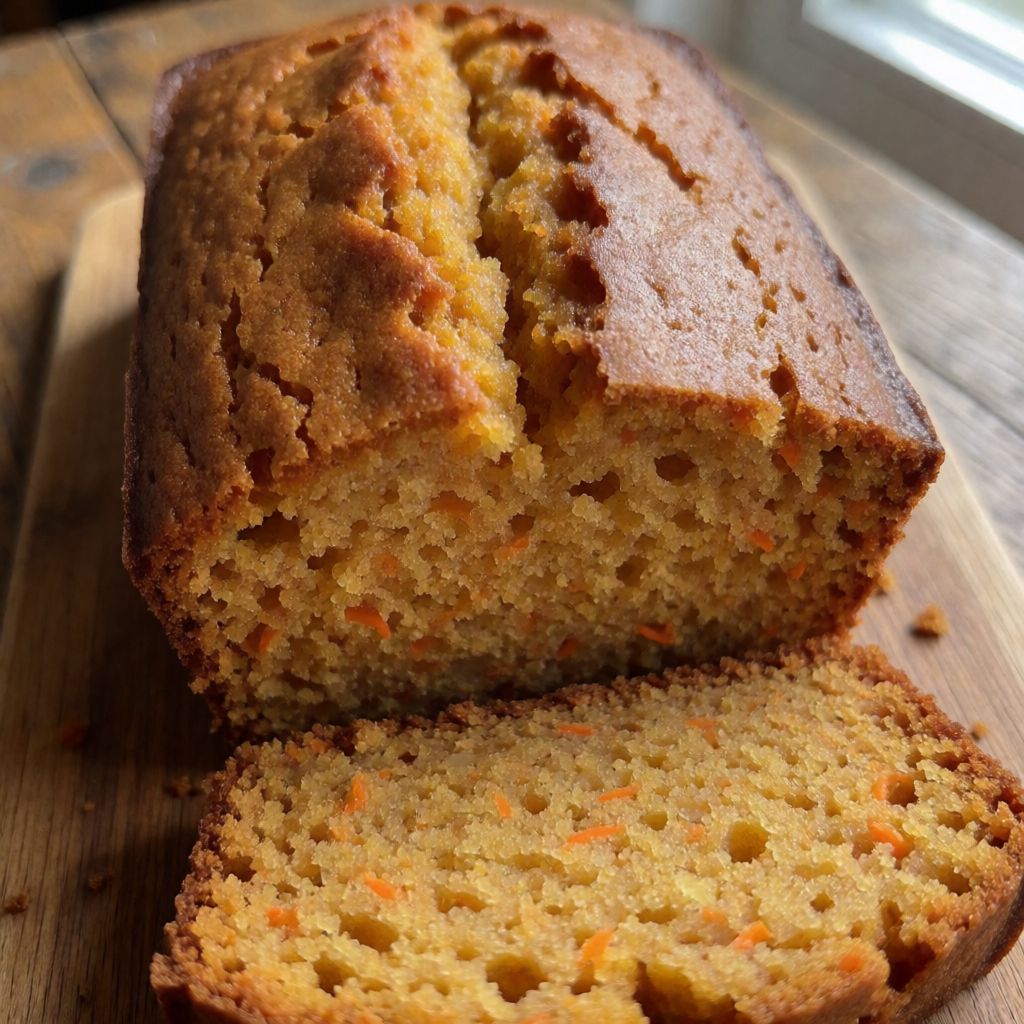
 AI photo
Carrot and Apple Cake
A moist carrot and apple cake with walnuts, lightly spiced and simple to bake at home.
Labels are worked out automatically from the ingredients and can be wrong. Check the packaging if it matters to you.
Ingredients
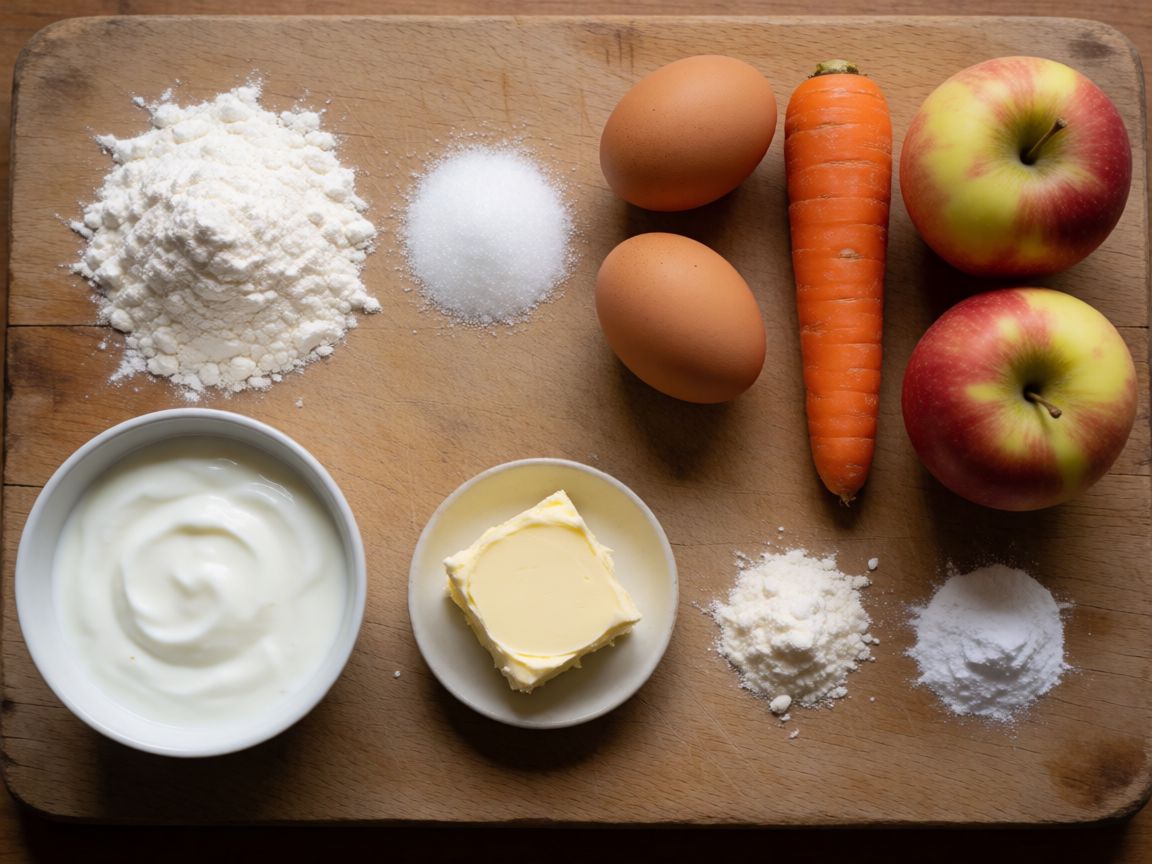
- 350 g Plain flour
- 200 g Caster sugar
- 3 pcs Eggs
- 200 g Carrot
- 2 pcs Apple
- 125 ml Yogurt
- 100 g Butter softened
- 16 g Baking powder
- 50 g Walnut









Steps
In a large bowl, combine the eggs and sugar and beat with a mixer until pale, thick and smooth with no lumps.
Add the softened butter, continuing to beat.
Gradually sift in the flour, then the baking powder.
Pour in the yogurt and mix the batter until smooth and even.
Peel one apple, cut it into small pieces and add it to the batter along with the coarsely chopped walnuts.
Peel and grate the carrot, then fold it into the rest of the ingredients.
Transfer the batter to a 24 cm tin, greased with butter and dusted with flour, and smooth the top.
Cut the second apple into thin slices, arrange them in a fan over the top of the cake and sprinkle with sugar.
Bake in an oven preheated to 160°C.
58 minCheck if it is ready with a wooden skewer — it should come out dry.
Let the cake cool completely before serving.
This is a carrot cake's quieter cousin — no spice cupboard raid, no cream cheese icing, just eggs, sugar and butter doing the work a proper gâteau does, then grated carrot and chopped apple riding along for moisture and a bit of virtue. What decides whether it works is the egg-sugar beat at the start: you're building a foam that holds air, and everything after — butter, flour, yogurt — has to fold into that foam without collapsing it. Beat eggs and sugar until pale and thick not because a recipe says so, but because that's your only leavening besides the baking powder, and a flat foam means a flat cake no matter how much powder you throw at it.
The second thing that decides it is the grated carrot and the folded-in apple chunks. They're not flavour here, they're water management — carrot especially releases moisture slowly as it bakes, which is why this cake stays tender for days rather than drying out like a plain sponge. Grate the carrot fine, not because tradition says so, but because coarse shreds stay raw-crunchy inside a 58-minute bake at this temperature; fine shreds soften and disappear into the crumb.
The fanned apple slices on top aren't decoration for a photograph — they're a second texture against the soft interior, and the sprinkled sugar on top caramelises slightly in the oven's dry heat, giving you a thin, faintly crisp edge where fork meets cake. Some say you can skip arranging them neatly and just scatter — no, because a fan lies flatter and overlaps less, so the slices actually cook through rather than steaming in a heap and turning to mush.
Flour and baking powder are the structure, and here they're doing double duty against a fairly wet batter — yogurt, two kinds of fruit, butter. 16 g of baking powder on 350 g flour is on the generous side, and it needs to be: all that moisture would otherwise give you a cake that's dense in the middle, the classic "carrot cake sank" complaint. Any plain flour works; if you've only got self-raising, cut the baking powder back by about half, since it's already carrying some lift. Sift the flour in gradually, not as ritual, but because dumping it in all at once in a domestic hand mixer leaves pockets of unmixed flour that show up as white streaks or dense lumps once baked — a wide bowl and patience here cost you nothing.
Caster sugar rather than granulated matters at the egg-beating stage: finer crystals dissolve into the egg faster, so you reach that pale, thick, no-lumps stage sooner and with less risk of overworking the eggs trying to chase down undissolved grains. If all you have is granulated, give it an extra minute or two of beating — it'll get there, just slower.
The eggs should be at room temperature, not fridge-cold, if you want that foam to come together quickly — cold eggs resist whipping and you'll be standing there with the mixer longer than the 22-minute prep allows for. Three eggs for 350 g flour is a fairly standard ratio for this kind of butter cake; don't be tempted to add a fourth "for richness" — it loosens the crumb more than it improves it.
Butter softened, not melted — melted butter is liquid fat that sinks and separates in a mixed batter, while softened butter creams into the egg-sugar mixture and holds tiny air pockets in suspension. If you forgot to take it out of the fridge, cut it into small cubes and give it ten minutes at room warmth rather than microwaving it soft — a microwave will start to melt the edges before the centre softens, and you're back to the separation problem.
Yogurt here is doing what buttermilk does in a traditional carrot cake — a mild acid-ish dairy that loosens the batter and reacts gently with the baking powder. Plain, unsweetened yogurt is right; a flavoured one will just fight the sugar you've already measured. No yogurt in the fridge — soured cream thinned with a splash of milk, or even plain milk with a spoon of lemon juice stirred in and left five minutes, will do the same loosening job, though soured cream gets you closer in texture.
Carrot: 200 g is roughly two medium carrots, peeled and grated — don't bother with pre-grated bagged carrot from the supermarket if you can help it, it's often drier and coarser, having sat cut for days, and it won't soften the same way fresh-grated does.
Walnuts go in coarsely chopped, not ground — ground walnuts turn to paste and vanish into the crumb, coarse pieces stay as texture you actually bite into. No walnuts, or an allergy in the house — pecans substitute almost exactly; sunflower seeds if you want to keep it nut-free, though you'll lose some of the richness.
The apples: one goes inside chopped, one goes on top sliced. Use something that holds its shape under heat rather than collapsing to mush — a firm eating apple, the kind you'd also use for a Sunday-roast apple sauce substitute, works better than a very soft dessert variety. Peeling isn't about tradition either — skin left on turns slightly leathery and chewy after nearly an hour in the oven, which is fine in a rustic tart but out of place in a cake crumb.
A 24 cm tin on a standard UK fan or conventional oven at 160°C for 58 minutes is your lower bound, as it should be — ovens vary, and a tin that's slightly smaller or deeper than 24 cm will need longer in the middle regardless of what the clock says. The skewer test is the only honest answer to "is it done": push it into the centre, where the carrot and apple moisture concentrates, and only trust it if it comes out dry, not just "mostly dry."
And then — let it cool completely before you cut it. This is the one piece of patience nobody wants to hear: a warm cake full of grated carrot and apple is still finishing its internal structure as it cools; slice into it hot and you get a wedge that collapses on the plate, not because it was underbaked, but because you didn't give it time to set. Tea with milk can wait the twenty minutes this takes.