
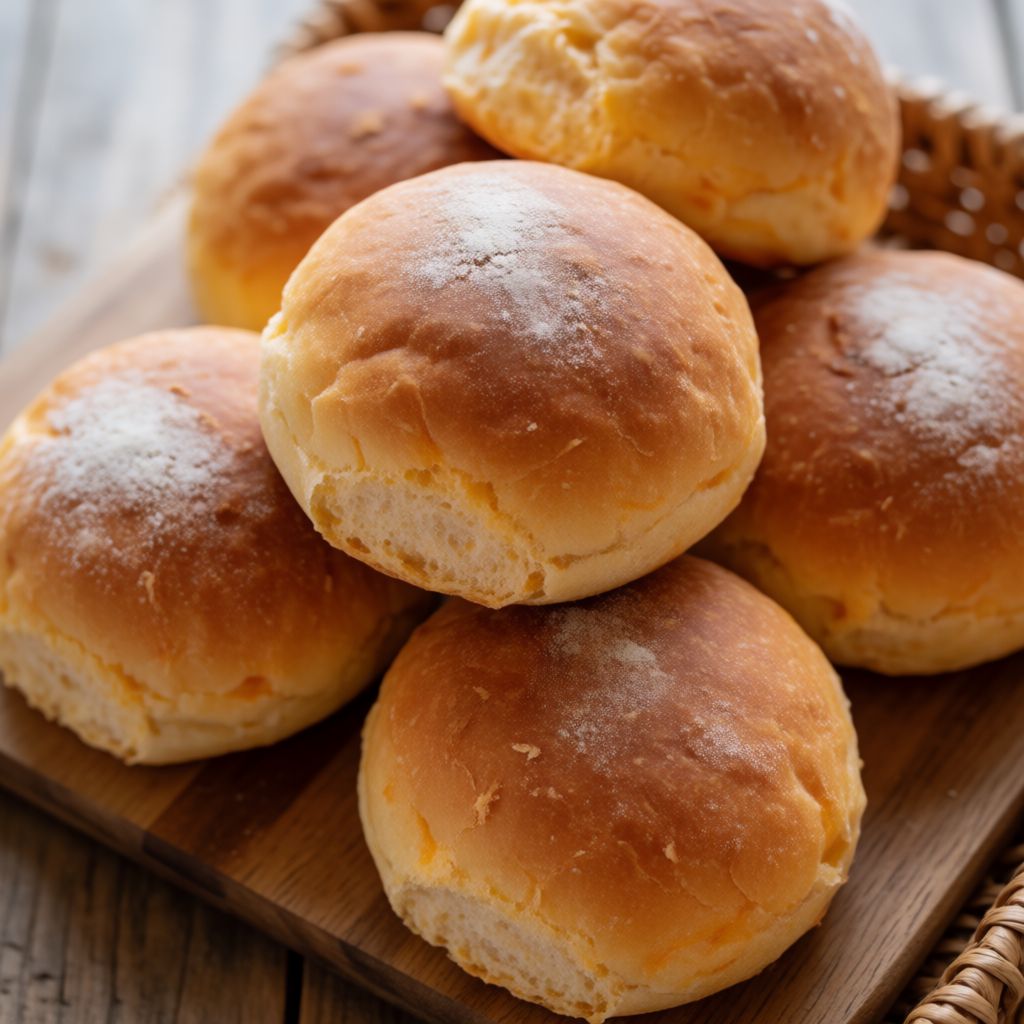
 AI photo
Carrot Buns
Soft yeasted buns filled with grated carrot and sunflower seeds, baked until golden.
Labels are worked out automatically from the ingredients and can be wrong. Check the packaging if it matters to you.
Ingredients
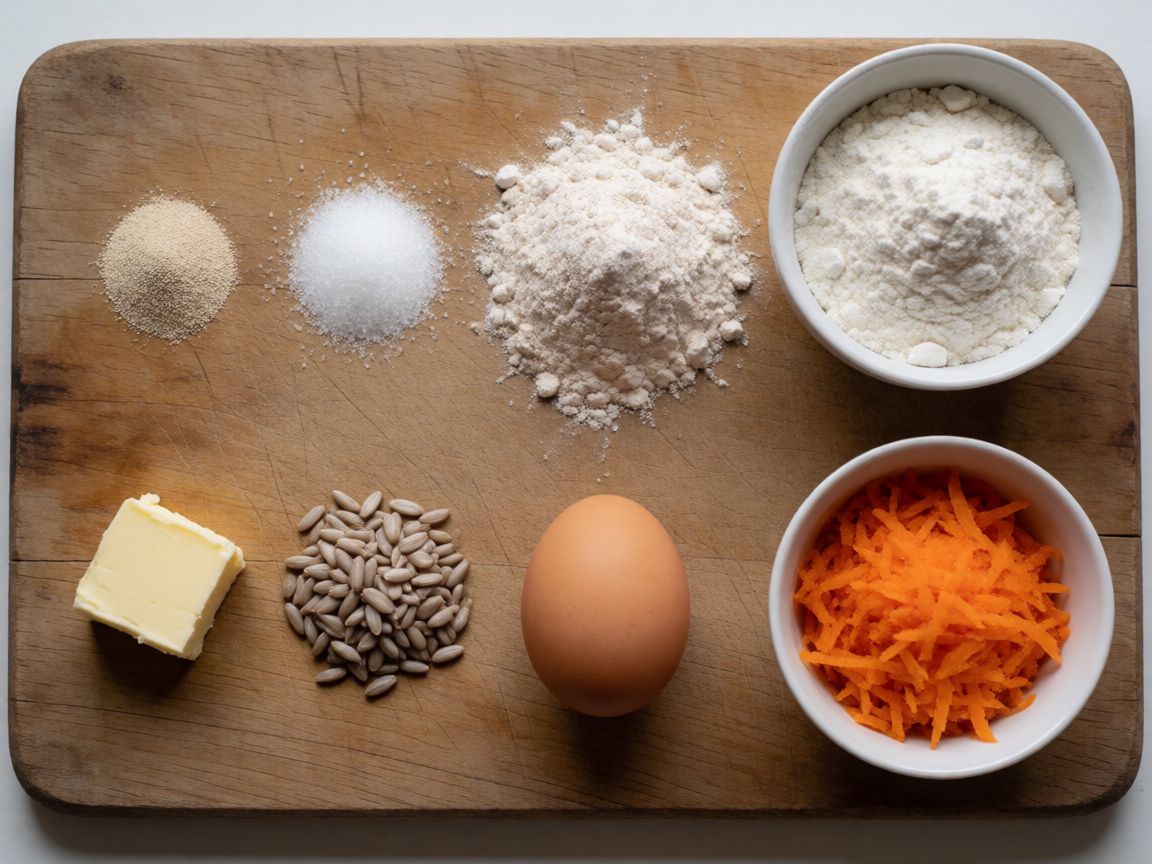
- 20 g Yeast
- 300 ml Water room temperature
- 1 tbsp Sugar
- 1 tsp Salt
- 100 g Wholemeal Flour
- 400 g Plain Flour
- 50 g Butter
- 1 pcs Egg
- 75 g Sunflower Seeds
- 200 g Carrot coarsely grated










Steps
Mix the yeast in a bowl with the water, add the sugar, salt and wholemeal flour, and stir together.
5 minAdd the plain flour and knead the dough for 5 minutes. Add the butter, cut into small cubes, and knead for another 5 minutes.
5 minLeave the dough to rise on the kitchen worktop for one and a half hours.
90 minTurn the dough out onto a floured surface, make a well in the centre, crack the egg into the well and add the coarsely grated carrot and sunflower seeds.
Fold the dough a little around the filling and, using a dough scraper, cut it into small pieces, turning the dough together with the filling with the scraper and cutting it again.
5 minDivide the cut dough into buns, placing each piece on a baking tray lined with parchment. Leave the buns to rise for 1 hour, covered with a clean tea towel.
60 minBake in a fan oven preheated to 210°C for about 15 minutes, or until golden and cooked through. Let them cool slightly on a wire rack before serving.
15 min
These are not carrot cake in bun form — there's no cinnamon, no cream cheese, nothing sweet beyond a spoon of sugar that never even reaches your tongue. What you get is a plain, slightly nutty yeast bun, ordinary bread dough carrying a streak of raw grated carrot, a cracked egg and a handful of seeds folded through it at the very last moment, almost rudely, with a scraper instead of a spoon. The carrot doesn't flavour the dough — it sits inside it, in ribbons, and that's the whole point.
What decides whether these come out right is not the oven, it's the order of operations before the oven ever gets involved. Gluten first, fat second: you knead the flour and water into a dough that's already strong and stretchy, and only then do you work the butter in. Butter coats the gluten strands and makes them slippery — if it goes in too early, before the strands have properly linked up, the dough never tightens, and you get a bun that's soft in the wrong way, more like cake crumb than bread. Add it after the gluten's done its job, and the fat just makes an already-strong structure tender instead of stopping it forming at all.
Yeast — 20g here means fresh, the soft block kind sold in little cakes, not the dried granules in a jar. If you've only got dried yeast, use about a third of the weight, roughly 7g, and it'll do the same job; it's just been dehydrated to keep longer, nothing mystical about it. Its only task is to eat the sugar and breathe out the gas that stretches your gluten into a sponge — which is also why the sugar in this recipe isn't for sweetness, it's yeast food, full stop. A tablespoon is plenty; more won't make the dough sweeter, it'll just leave extra sugar for the yeast to binge on and ferment too fast.
Salt does the opposite job to sugar — it slows the yeast down, keeps it from racing, and in return it tightens the gluten network so the dough holds its shape instead of slumping. Leave it out by accident and you'll get a dough that rises fast and flat, a bun with big uneven holes and no particular backbone. A teaspoon for this amount of flour is the usual ratio; don't be tempted to round it up for flavour, because what you're salting is the structure, not your tongue.
The two flours are doing two different jobs, not one bigger job. Wholemeal flour, mixed in first with the yeast and water, brings bran and a bit more of the wheat's own enzymes — it ferments a touch faster and gives the final crumb a nutty undertone you can't fake by just adding more white flour later. Plain flour, added after, is where the real gluten strength comes from — its proteins are cleaner, more elastic, better at holding gas. If you've only got one flour in the cupboard, use it all as plain — you'll lose some of the nuttiness but keep the structure, which matters more.
Butter here wants no particular brand, just a fat that's solid and cool enough to cut into small cubes and still work into dough by hand without turning it greasy and slick before it's absorbed — unsalted, so you're not fighting your own salt measurement. Any firm dairy fat will do the same job; a neutral solid margarine works at a pinch, though you lose the faint milkiness it leaves behind.
The egg goes in raw, straight into a well in the dough, where it does two things at once: it's a binder, holding the sliced-up carrot and seeds to the dough as everything gets cut and tumbled together, and once it's in the oven, it sets and glues that structure in place for good. Don't beat it first — you want it where it falls, pooling, not smoothed through the flour.
Sunflower seeds are raw here, untoasted, because the oven toasts them for you — fifteen minutes at a heat that's browning the crust is also quietly roasting every seed caught near the surface, which is where most of their crunch and nutty bitterness comes from. Pumpkin seeds, or a mix with a few oats scattered on top, would do the same job: anything with a hard outer shell and no strong flavour of its own to fight the carrot.
The carrot is grated coarse on purpose, not fine. Fine grating ruptures more cells, bleeds more water into the dough right where you can least afford it — at the fold, just before shaping — and a wetter dough there spreads instead of holding a bun shape on the tray. Coarse shreds keep most of their water locked inside until the heat of the oven forces it out, by which point the dough around them has already set enough to hold its line. Two hundred grams for twelve buns is a light hand — you're after a vegetable you can still see and bite into, not a carrot loaf wearing a bread disguise.
As for the oven — a domestic fan oven at 210°C is hot enough to set the outside of a small bun fast, before the inside has time to dry out chasing it; the fan just means you don't need to rotate the tray halfway through the way you would in an oven with hot spots. Go by colour and feel over the clock: when the tops have gone from pale dough to the colour of the carrot itself, and a bun sounds hollow when you knuckle-tap the base, it's done — fifteen minutes is where to start looking, not where to stop. And give the whole thing its two long waits without rushing them on a radiator or a warm windowsill to save time — fermentation isn't lazy, it's working the whole ninety minutes and the whole hour, and patience here is doing as much as any ingredient on the list.