
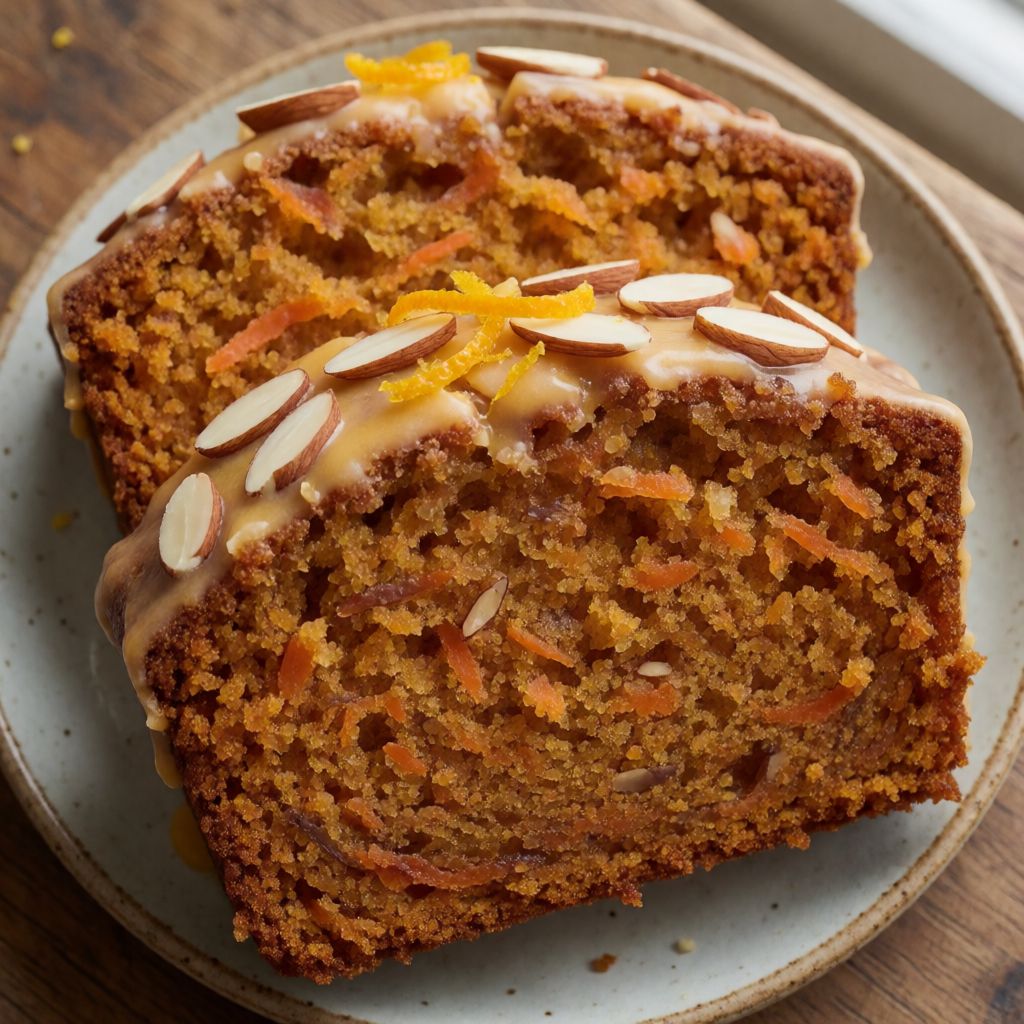
 AI photo
Carrot and Almond Cake
A moist carrot cake with almonds, flavoured with orange zest and juice.
Labels are worked out automatically from the ingredients and can be wrong. Check the packaging if it matters to you.
Ingredients
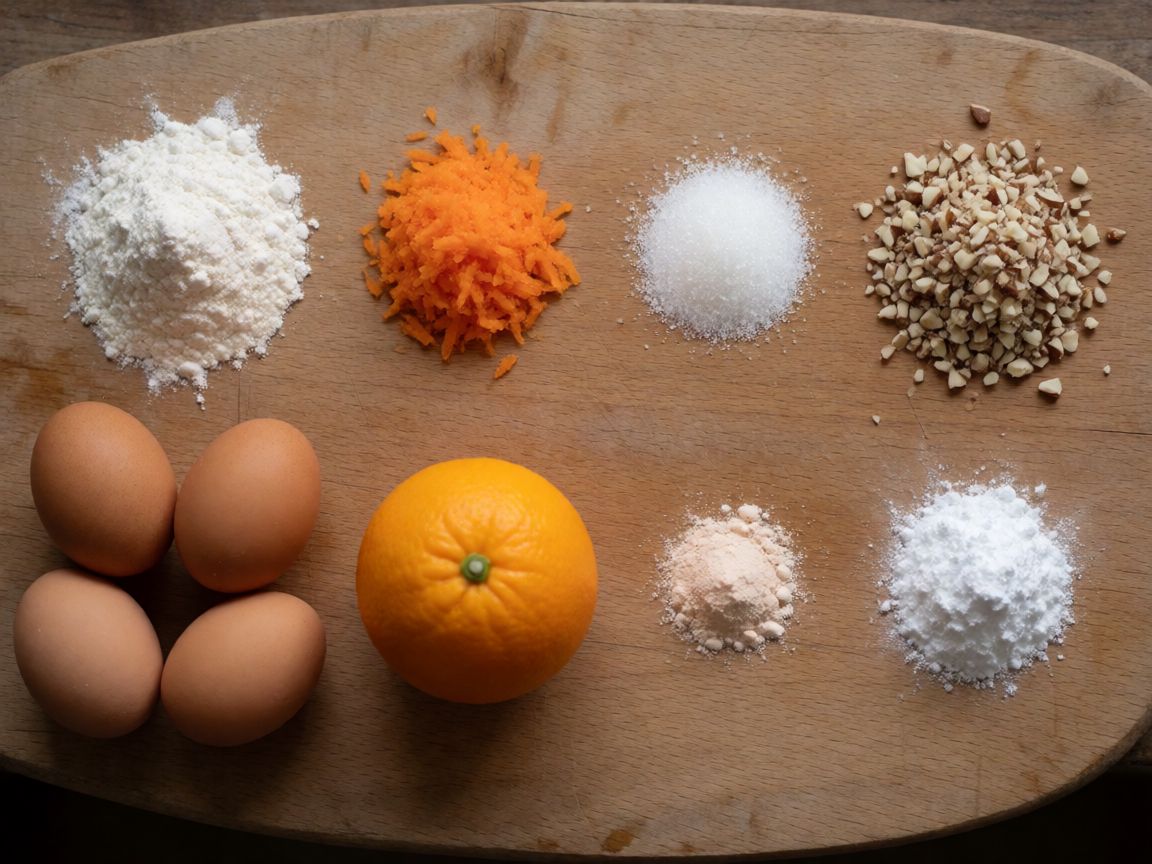
- 200 g Plain flour
- 250 g Carrots
- 200 g Caster sugar
- 100 g Almonds very finely chopped; can be replaced with almond flour if preferred
- 3 pcs Eggs
- 1 pcs Orange zest and juice
- 150 g Vegetable oil
- 1 pinch Salt
- 16 g Baking powder
- Vanilla icing sugar to taste










Steps
Wash the carrots thoroughly and peel them. Blend until smooth, add the vegetable oil and mix to a smooth carrot purée.
In a bowl, whisk the eggs with the caster sugar at maximum speed until light and airy.
10 minAdd the carrot purée and orange zest, and mix well.
Gradually add the sifted flour, almonds, baking powder and salt, mixing until smooth.
Pour in the orange juice and mix the batter well.
Grease a 24 cm tin with vegetable oil and dust with flour. Pour in the batter.
Bake in an oven preheated to 180°C fan, for 45–50 minutes.
47 minDust the finished cake with icing sugar and serve.
A carrot cake that isn't trying to be American — no cream cheese frosting, no cinnamon bomb, no walnuts drowning in spice. This is closer to a Continental almond sponge that happens to have carrot grated into its base. Strip away the carrot and the orange and what you've got is a classic almond cake: eggs whisked to ribbons, oil instead of butter, ground almonds doing the structural work flour alone can't.
What decides whether it works is the egg-sugar whisk at the start. Ten minutes at full speed isn't a suggestion — it's the only leavening you actually control. Baking powder gives you a bit of lift, but the real volume, the open crumb that stops this being a dense carrot brick, comes from air beaten into egg and trapped by sugar. You're looking for the ribbon stage: lift the whisk, and the mixture should fall back on itself in a slow, visible trail rather than vanishing instantly. Some say you can skip this and just fold everything together — no, because then the cake has nowhere to rise from except the baking powder, and 16 g of it won't carry 650-odd grams of wet, oily batter on its own.
The carrot here isn't for bite or texture — it's blended smooth, so its job is moisture and colour, not crunch. That's a different cake from the grated-carrot version, and worth knowing before you reach for the box grater out of habit.
The carrots: 250 g, peeled and blended to a purée with the oil already in. Blending rather than grating matters — a grated carrot cake needs the shreds to hold shape for texture, but this one wants the carrot dissolved into the batter as flavour and moisture, nothing more. If your blender struggles with raw carrot alone, that's what the oil is doing in there with it — it lubricates the blade and stops you ending up with carrot confetti stuck to the sides.
Almonds, 100 g, chopped fine or swapped for ground almond flour — the two aren't quite identical. Flour gives a tighter, more even crumb; hand-chopped almonds leave tiny flecks of bite and a slightly coarser structure, closer to what you'd get in an Italian torta di mandorle. Either way, almonds here aren't decoration, they're part of the flour system — they add fat and protein that keep the cake moist for days, which plain flour alone can't do. No almonds in the cupboard and no almond flour either? Ground hazelnuts will do the same structural job, though the flavour shifts.
The oil — 150 g of anything with no character of its own. Sunflower, rapeseed, whatever's in the cupboard that doesn't smell like itself. This is not a butter cake, and that's not a compromise: oil stays liquid at room temperature where butter sets solid, which is why oil-based sponges stay soft the next day and butter cakes firm up in the fridge overnight. If you only have olive oil, use the mild, flavourless kind — a peppery extra virgin will fight the orange.
The orange: zest goes in early with the carrot purée, juice goes in last, right before the batter goes in the tin. That order isn't fussy — zest wants to be worked into fat and sugar to release its oils properly, while juice added too early can thin the batter before the flour's had a chance to build any structure, leaving you short on rise. One orange, zest and all its juice — don't skimp and use bottled juice, you lose the zest's aromatic oils that are half the point of using the fruit in the first place.
Eggs: three, and they're doing two jobs — binding the fat and flour together, and carrying the air from that ten-minute whisk. Room-temperature eggs whip to volume faster and more stably than cold ones straight from the fridge — if you've time, take them out half an hour before you start. That's patience as an ingredient, not a nuisance: rushing the whisk with cold eggs is the most common reason this kind of cake comes out flat and dense.
On your hob: fan oven at 180°C is the setting given, and if your oven isn't fan-assisted, push it up by about 20°C to compensate for the gentler heat transfer of a conventional oven — fan ovens circulate hot air directly onto the tin, still ovens rely on the metal and the air around it heating more slowly. Forty-five to fifty minutes is the lower bound, not the finish line — the cake is done when a skewer through the centre comes out clean and the top springs back rather than leaving a dent under light pressure. A 24 cm tin, greased and floured — flouring after greasing isn't belt-and-braces fussiness, it's what stops the cake tearing itself apart against the metal when it shrinks slightly as it cools. Icing sugar dusted on at the end, not baked in — it's there for looks and a touch of sweetness on the tongue, not for sweetening the crumb itself.