
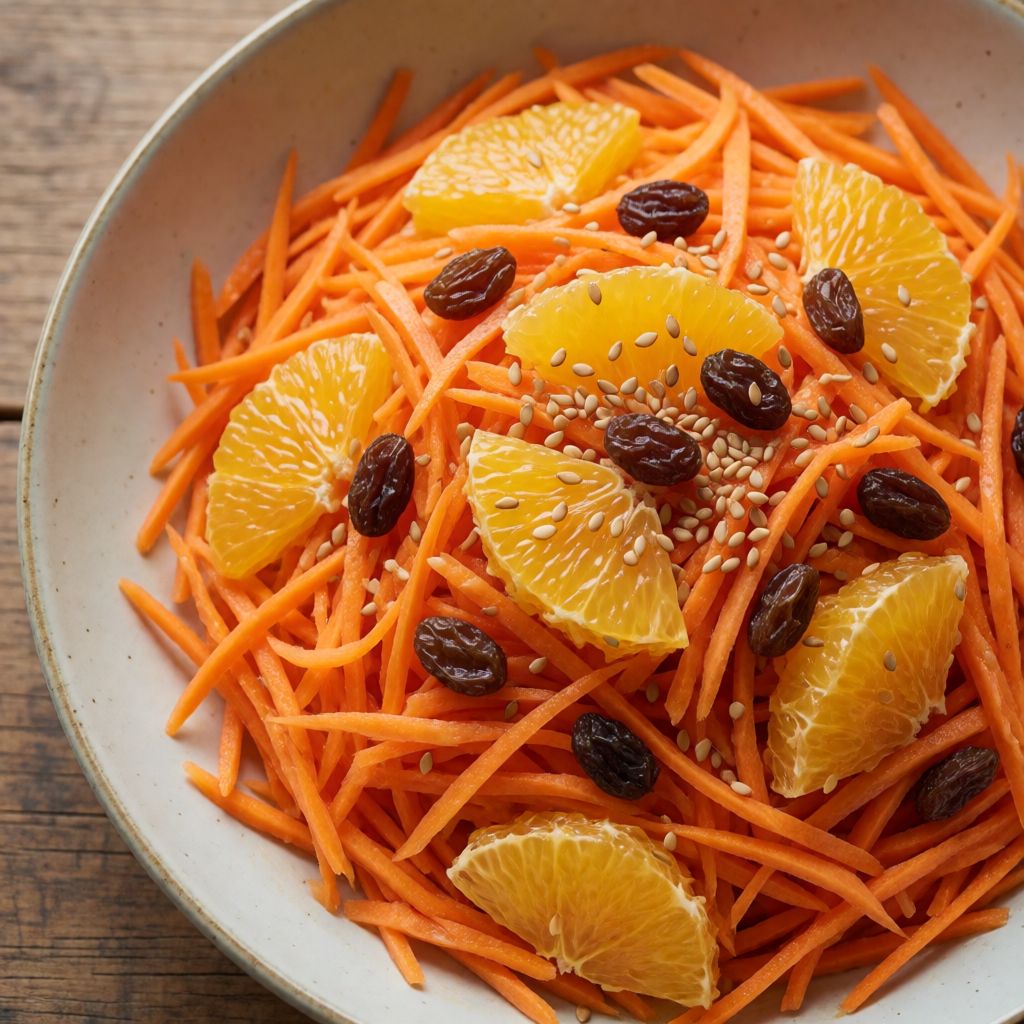
 AI photo
Carrot and Orange Salad
A bright, simple carrot and orange salad with raisins and toasted sesame seeds.
Labels are worked out automatically from the ingredients and can be wrong. Check the packaging if it matters to you.
Ingredients
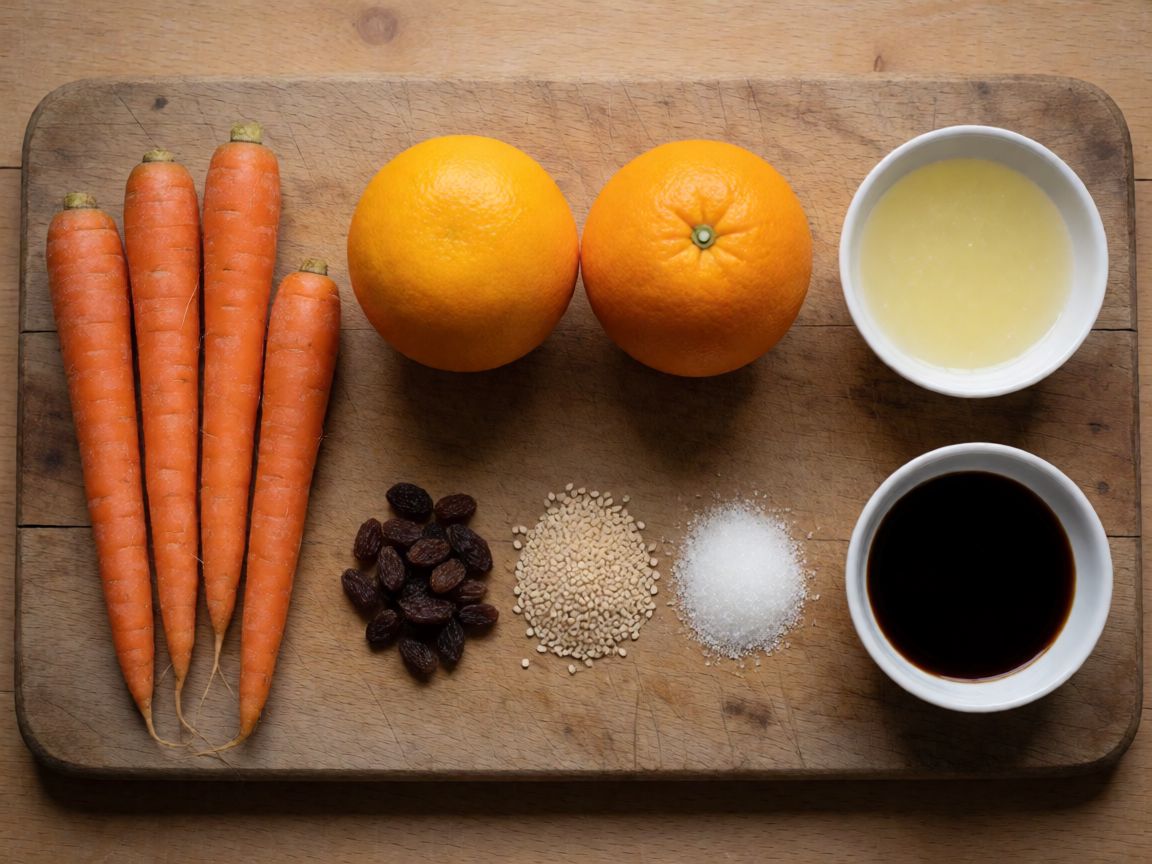
- 4 pcs Carrot
- 2 pcs Orange
- 45 ml Raisins
- 30 ml Sesame Seeds
- 5 ml Sugar
- Olive Oil to taste
- 15 ml Lemon Juice
- Soy Sauce to taste
- Salt to taste
- White Pepper to taste







Steps
Soak the raisins in a bowl of warm water to soften them.
Peel the oranges and slice them, keeping all the juice.
Drain the raisins, squeeze them out and pat dry with a paper towel.
Toast the sesame seeds in a dry non-stick pan until golden.
Peel the carrots and cut them into thin strips, place in a large bowl.
Add the orange slices, soaked raisins and toasted sesame seeds, and mix together.
Make the dressing: mix the olive oil, lemon juice, orange juice, soy sauce, sugar, salt and white pepper.
Dress the salad with the emulsion, mix and chill in the fridge.
10 min
This is a raw salad built on contrast, not cooking — sweet orange against earthy carrot, sharp lemon and salty soy pulling in opposite directions so neither one wins. What decides it isn't technique, it's the cut: carrot sliced into thin strips (not grated to mush, not chunked into coins) because thin strips take on juice and dressing along their whole surface and still keep a bit of snap when you bite. Grate it fine and it drowns in liquid by the time you serve it; cut it thick and it stays raw and stubborn against the soft orange.
Some say carrot salads need to "wilt" before serving. No — that's true for salted cabbage, where salt pulls water out by osmosis and softens fibre. Carrot doesn't have that structure in the same way, and this one isn't salted to break down — it's dressed to coat. The ten minutes in the fridge at the end isn't there to cook anything; it's there so the dressing sinks into the strips and the sugar and soy stop sitting on top like a varnish and start tasting like they belong.
The raisins get soaked in warm water first, and that step is doing real work: dry raisins are dense and chewy, and dropped straight into a cold salad they stay that way, little hard pebbles that fight the soft orange. Warm water rehydrates them in minutes because warmth speeds up how fast water moves into the fruit's flesh. Then you squeeze and pat them dry — skip that and you water down the dressing, and a watery dressing won't cling to anything, it just runs to the bottom of the bowl.
Carrot: four of them, peeled, cut into thin strips. Choose carrots that are firm end to end — a carrot that bends without snapping before you even cut it is old and starchy-soft, and it won't hold a strip shape, it'll go limp in the bowl. You want one that snaps clean when bent, because that's the carrot that'll still have a bit of bite after it sits in dressing.
Orange: two, peeled and sliced, and the instruction to "keep all the juice" matters more than it looks — that runoff juice goes straight into the dressing later, so don't peel over the sink, peel over the bowl or a plate that catches what drips. A thin-skinned, heavy orange (heavy for its size means more juice, light means mostly pith and air) gives you both the flesh and the liquid you need without reaching for a separate orange to squeeze.
Raisins: 45ml soaked in warm water, then squeezed and patted dry on a paper towel — that paper towel is doing the job a proper kitchen cloth would do in a kazan kitchen, and it's an honest substitute, not a lesser one. If you've only got sultanas or dried cranberries, same logic applies: anything dried and chewy benefits from a warm soak before it goes anywhere near a salad that isn't cooked.
Sesame seeds: 30ml, toasted dry, no oil, in a pan that doesn't let them stick and scorch in one spot — a domestic non-stick frying pan does this fine, you don't need anything specialist. If you don't have sesame, a few crushed toasted almonds or pine nuts give you the same thing sesame is giving: a bit of crunch and a toasted, nutty note against all that sweet-sharp juice.
Dressing: olive oil "to taste," lemon juice 15ml, the orange juice you saved, soy sauce to taste, 5ml sugar, salt, white pepper. Olive oil here is just "oil with no strong smell of its own that can carry the other flavours" — Stalic's rule, not mine to break: any neutral oil works, sunflower or rapeseed included, if your olive oil is the kind with a heavy, bitter, grassy character that fights the orange instead of carrying it. Soy sauce is standing in for salt with a backbone — it's salty, yes, but it also brings a savoury depth that plain salt can't, which is why the sugar is there too, to keep that savoury edge from tipping the whole salad into "salad or stew, which is it." White pepper rather than black is a texture choice as much as a flavour one — no dark flecks showing up in a pale, orange-and-carrot dish; if you've only got black pepper, use it, just grind it fine and don't worry too much.
This feeds four as a side, which in a British kitchen means it sits next to something else on the plate — it's not built to be the main event, it's the sharp, cold thing on the table that cuts through something heavier, the way a bit of pickle cuts through a Sunday roast. Fifteen minutes of prep, no actual cooking beyond toasting seeds for a minute or two, and then patience — the ten minutes chilled isn't optional, it's the step where the whole thing stops being "carrots dumped in juice" and starts being a salad.