
 AI photo
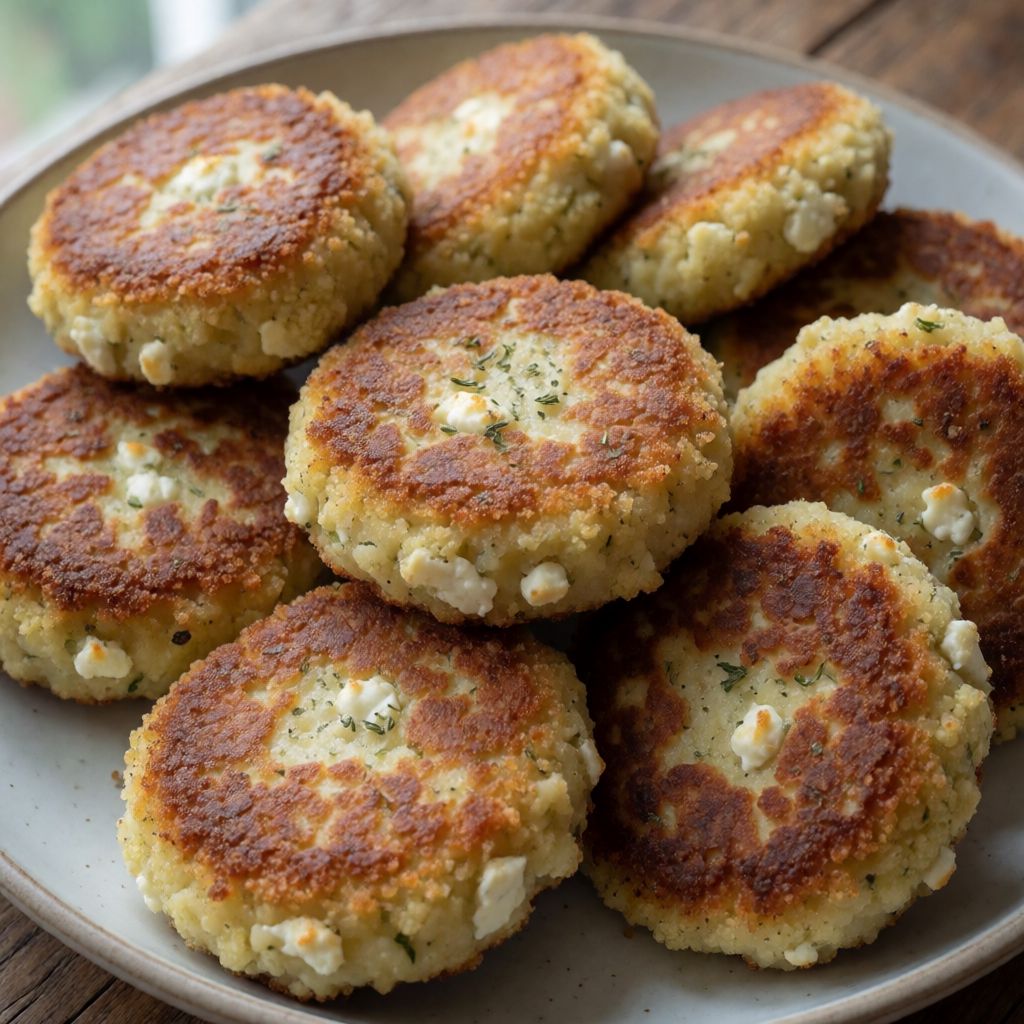
Cauliflower Cutlets
Baked cauliflower and quinoa patties with crumbled feta, a lighter take on the classic vegetable cutlet.
Labels are worked out automatically from the ingredients and can be wrong. Check the packaging if it matters to you.
Ingredients
- 180 g Quinoa
- 180 g Cauliflower finely chopped into cauliflower rice
- 3 pcs Eggs
- 200 g Feta crumbled
- 1 clove Garlic crushed
- 50 g Wholemeal flour
- Salt to taste
- Black pepper freshly ground, to taste
- 1 tsp Olive oil for greasing







Steps
Cook the quinoa according to the pack instructions in lightly salted water, then drain completely and leave to cool and dry out a little.
Put the cooked quinoa, raw cauliflower rice, eggs, crumbled feta, garlic, flour, salt and pepper in a bowl and mix until you have a smooth mixture.
5 minChill the mixture in the fridge for 30 minutes.
30 minShape into 10 patties, place them on a baking tray lined with baking paper and brush with oil.
Bake in a preheated oven at 190°C (fan) for about 25 minutes, turning halfway through.
25 min
These are vegetable cutlets dressed as something more serious — cauliflower rice and quinoa bound with egg and feta, baked instead of fried, until they hold on a fork without being dry as cardboard. Think of them as a distant cousin of the old meatless kotlety people made when meat was scarce and a grain had to stretch a vegetable into something substantial. Same logic here, different reason: less starch, more fibre, a side that behaves like a cutlet but eats lighter than a roast potato.
What decides whether they survive the oven is water, not heat. Cauliflower is mostly water held inside a cell wall; chop it fine and that wall breaks everywhere, so the water wants out the moment it's warmed. Quinoa, straight off the boil, carries its own film of surface starch and moisture. Put both into the mix hot and wet, and you get a paste that spreads flat on the tray and falls apart the second you try to lift it with a fork. That's why the quinoa is drained and left to cool and dry before it meets anything else, and why the whole mixture goes into the fridge before it goes near the oven.
Some say raw cauliflower in a baked cutlet is risky or undercooked — no, because the pieces are rice-grain small, and small pieces have enormous surface area for their size. An oven hot enough to set egg white and firm up feta cooks cauliflower that fine right through well inside the time given. Pre-cooking it first would only hand you more water to fight in a mixture that's already fighting water.
Quinoa's job here is bulk with backbone — protein and a bit of bite, so the cutlet isn't just vegetable held together by hope. Cook it until the grains are visibly separate, with a small crunch left in the centre, not swollen and soft like porridge; swollen quinoa carries more water than the mix can afford. Draining it and letting it sit and cool isn't a pause in the method, it's the point where the surface starch stops being sticky and starts being workable.
Cauliflower rice wants a size criterion, not a tool: pieces roughly the size of coarse semolina. Chop it finer and you multiply the cut surface, which means more water leaking out faster than the egg and flour can catch it. Leave it chunkier and the centre of each piece never quite cooks through in the time the cutlet spends in the oven, and you get a raw, peppery bite where you wanted softness. A food processor's pulse button gets you there quickly; a knife and patience get you there just as well.
Egg and flour are doing two different jobs that look like one. The egg's protein tightens up with heat and locks the mixture together — that's the actual glue. The flour's starch is there to soak up the free water the cauliflower sheds, the way a cloth soaks a spill, so the mix stays a mix and not a soup. Wholemeal is used here for a little extra bite and fibre, but the only real requirement is a flour that can absorb moisture without turning gluey — plain white flour does the same structural work, just with less character.
Feta is chosen for what it refuses to do: melt into a puddle. A firm, salted cheese stays in its own crumbs under heat instead of running, which keeps the inside of the cutlet textured rather than gluey. Any cheese with that same stubbornness works as a substitute — a mature Lancashire, a firm vegetarian hard cheese, even well-pressed paneer if you want it milder. Swap in something saltier than feta and ease off the added salt, or the whole batch tips too far.
The oil for greasing has one job only: even contact between the cutlet and the tray's heat, so the outside colours evenly instead of patchily. It isn't there for flavour, so there's no reason to spend good olive oil on it — any oil with no smell of its own does the job, sunflower or rapeseed included. Keep the oil with character for the salad on the side.
The thirty minutes in the fridge is not dead time, and skipping it is the single most common way these fall apart. Cold lets the feta's fat firm up and takes the raw clinginess out of the egg and flour, so the mixture goes from paste to something you can actually shape with your hands. The recipe makes ten cutlets for ten people as a side — a fair swap for the potatoes at a Sunday roast, if anyone at the table is watching their carbs and still wants something to put gravy on.