
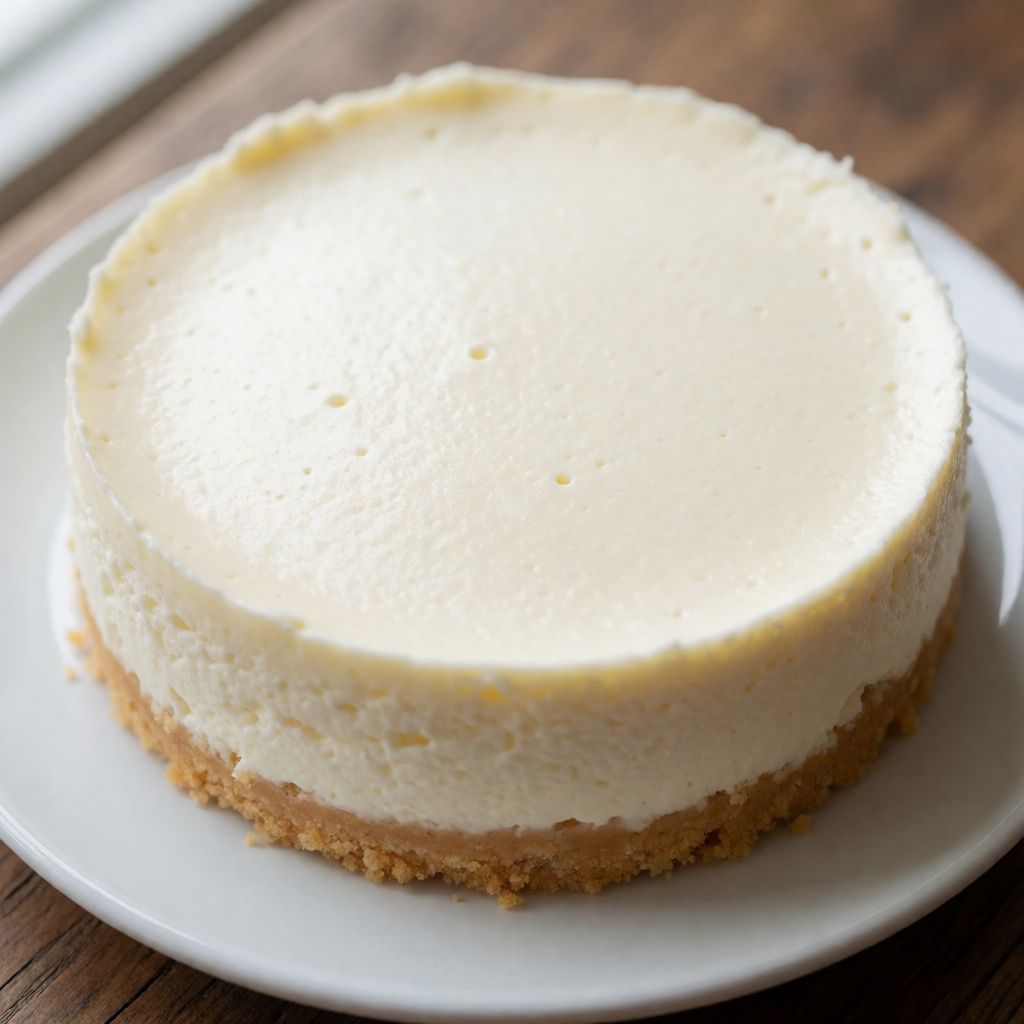
 AI photo
Forest Berry Cheesecake
A creamy no-bake cheesecake on a biscuit base, topped with forest berries and a drizzle of their juice.
Labels are worked out automatically from the ingredients and can be wrong. Check the packaging if it matters to you.
Ingredients
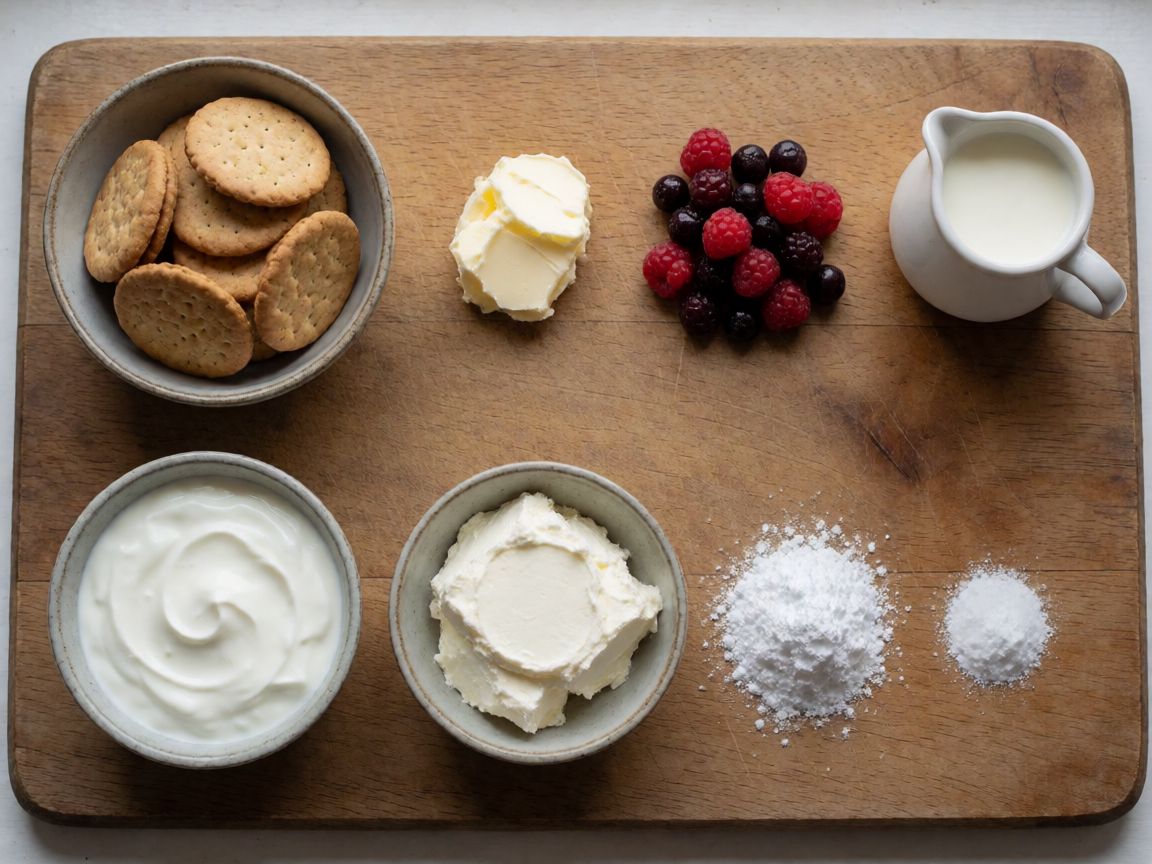
- 200 g digestive biscuits
- 100 g butter
- 1-2 tbsp forest berries
- 150 g Greek yoghurt
- 500 g cream cheese
- 120 g icing sugar
- 3 tbsp double cream
- 8 g gelatine
- 300 g forest berries
- 2 tbsp sugar
- 1 bunch mint a few leaves







Steps
Blitz the biscuits in a blender to fine crumbs. Melt the butter over a bain-marie or in the microwave, add to the crumbs and mix well.
Press the mixture into a 22 cm springform tin lined with baking paper, levelling the base with the back of a spoon.
Chill in the fridge for at least 30 minutes.
30 minSoak the gelatine in cold water for 10 minutes.
10 minBlend the cream cheese, icing sugar, yoghurt and forest berries until smooth. Transfer the cream to a bowl.
Warm the double cream and dissolve the well-squeezed gelatine in it, then gently fold the cream into the cheese mixture.
Pour the cheese cream onto the base, smooth the surface and chill in the fridge for at least 2 hours.
120 minIn a pan, mix the forest berries with sugar, cook for 1-2 minutes and remove from the heat immediately.
2 minStrain the berries, keeping the juice for decoration.
Take the cheesecake out of the fridge, decorate the top with the berries, a few spoonfuls of juice and mint leaves. Keep refrigerated until serving.
A no-bake cheesecake is really two separate problems wearing one name: a biscuit base that has to behave like a solid, and a cream that has to behave like a jelly. Everything in the recipe is one of those two problems getting solved, nothing more.
The base is biscuit crumb glued together with melted butter. Butter at room temperature won't flow into every gap between crumbs, so you melt it — not to cook anything, just to make it liquid enough to coat each crumb and then set hard again in the fridge. Press it down properly, with the back of a spoon or the bottom of a glass, because a loose base is the one that collapses into gravel the moment you lift a slice.
Some say a cheesecake base needs baking. No — only if it has egg or flour in it and needs to set by heat. This one sets by cold and butter, so the oven has nothing to do here. That's the whole point of "no-bake": the fridge is doing the work a kazan or oven would do elsewhere, and in a flat with one small oven and no time, that's a mercy, not a shortcut.
The filling is cream cheese loosened with yoghurt and sugar, blended with berries for colour and a bit of sharpness, then set with gelatine. Gelatine is the only reason this cuts into neat wedges instead of slumping like a thick mousse — it's a net of protein that traps water and holds the cream in a shape once it's cold. Everything about how you handle it — soaking, squeezing, warming into the cream rather than the reverse — exists to stop it clumping into little rubbery threads instead of disappearing invisibly into the mix.
Digestive biscuits are the British default here because they're already slightly sweet, slightly salty, and crumb without turning to dust — that's the whole criterion, not loyalty to the brand. Any plain, dry biscuit with a bit of fat already baked into it works: shortbread, ginger nuts if you want a bite of spice, even a plain sweet cracker in a pinch. What you're avoiding is anything soft or high in sugar syrup, because that won't crumb cleanly and will turn gluey with the butter instead of sandy.
Butter is there purely as glue, so "any oil with no smell of its own" doesn't apply the way it would in a savoury dish — you actually want butter's taste here, since it's half the flavour of the base. Margarine will hold the crumbs together just as well structurally, but you'll taste the difference, and not for the better.
Cream cheese is the backbone of the filling — full-fat, the plain block kind, not a low-fat spread, because low-fat versions carry more water and will fight the gelatine for a firm set. The Greek yoghurt is there to loosen that density and bring a clean sourness so the whole thing doesn't taste like eating a brick of cream cheese; it also adds a bit more water, which is partly why the gelatine quantity matters — too little and you get a cheesecake that spreads rather than slices, too much and you get something with the bounce of a jelly cup, which nobody wants from a cheesecake.
Icing sugar rather than granulated is about texture, not sweetness: it dissolves instantly into a cold mixture instead of sitting there as grit, since you're not applying heat to melt it the way you would in a cooked custard.
The double cream, warmed just enough to carry the gelatine, is the vehicle, not a separate layer of richness — you're using the smallest amount of liquid that will dissolve the softened gelatine evenly, then folding that through the main mixture so the set is uniform rather than patchy. Warm it gently near body heat and no further; if it's hot the moment it meets the cold cheese mixture, you risk little flecks of set gelatine seizing before they can spread, which is the real cause of the "gritty cheesecake" problem people sometimes blame on the gelatine brand.
The berry topping is cooked for the shortest time that releases their juice and brings sugar into it — a minute, maybe two, judged by the berries slumping and bleeding colour into the pan, not by the clock on the oven. Go further and you've made jam, which is a different, heavier thing sitting on top of a light filling. Straining keeps the fruit intact for decoration and gives you the loose, glossy juice separately, so you're building a top that looks deliberate rather than a mixture of mush.
This is a dish entirely run by patience, and the fridge is doing all the real work — thirty minutes for the base, two hours minimum for the filling, and if your fridge runs warm or you're in a rush, go longer, not shorter; cutting into it too early is the single most common way people end up blaming the recipe for a problem the clock would have solved.