
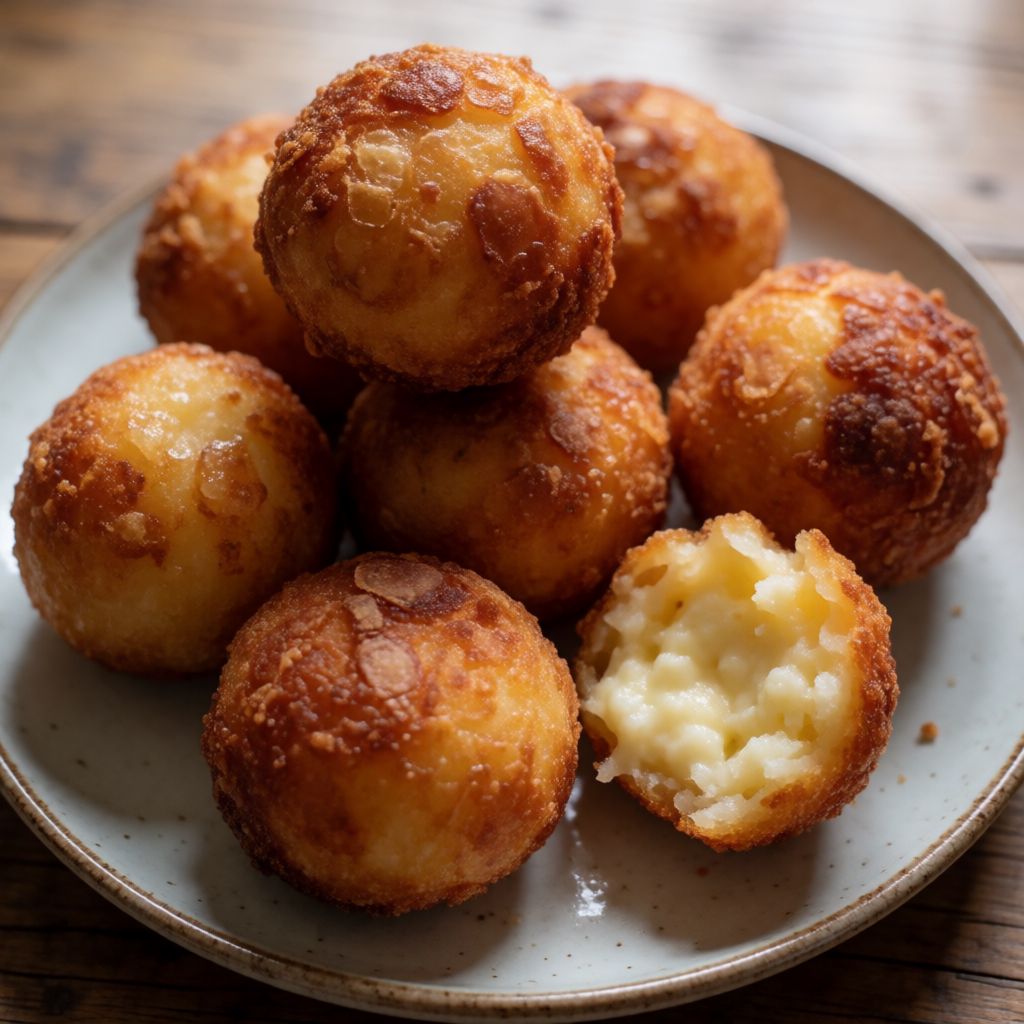
 AI photo
Bread and Cheese Balls with a Gooey Centre
Crispy bread and cheese balls with a molten cheese centre, pan-fried until golden.
Labels are worked out automatically from the ingredients and can be wrong. Check the packaging if it matters to you.
Ingredients
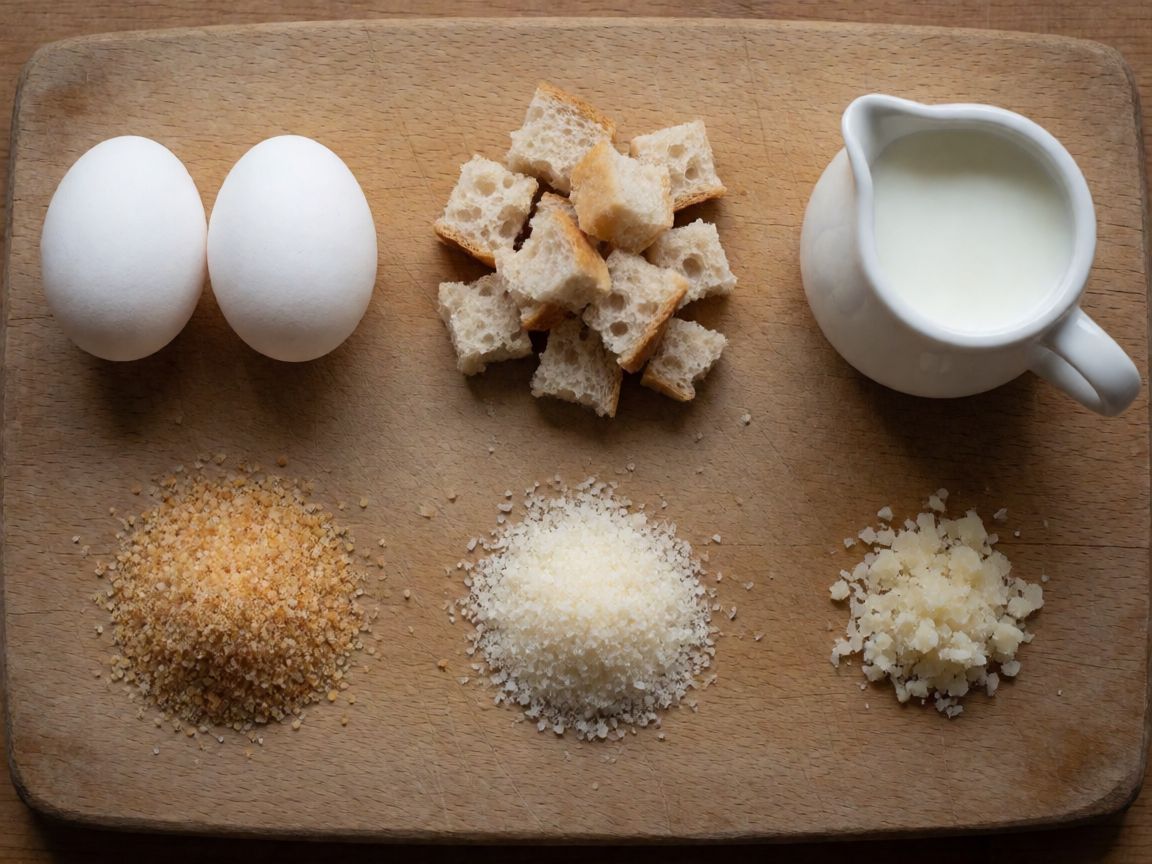
- 2 pcs Eggs
- 150 g Stale bread
- 50 g Breadcrumbs
- 40 g Parmesan
- Milk as needed
- Salt to taste
- Black pepper to taste
- 50 g Fontina cheese
- Vegetable oil as needed, for frying








Steps
Cut the stale bread into pieces, soak it in milk for a few minutes, squeeze out the excess and crumble it into a bowl with your hands.
Add the egg, Parmesan and breadcrumbs, season with salt and pepper, and mix well.
Cover the bowl with cling film and leave to rest in the fridge.
15 minShape into balls of about 30g each, place one or two cubes of fontina in the centre and close them up.
Roll the balls in beaten egg, then in breadcrumbs.
Heat vegetable oil in a frying pan and fry the balls, turning occasionally, until golden.
Place the cooked balls on paper towel to drain excess oil and serve hot.
These are small fried dumplings of bread and cheese, and the whole point is the surprise in the middle: you bite through a crisp shell and out comes a thread of melted cheese. If that thread doesn't happen — if the inside is just warm crumb — the dish has missed its target, however nice it looks on the plate.
What decides this is two things working against each other. First, the panade — the bread-and-milk paste that holds everything together. Too wet, and the balls won't keep their shape in the oil; too dry, and you get dense little croutons with no softness to contrast the crunch. Second, the double coating — egg, then crumbs — which isn't decoration, it's a wall. It has to set fast in the hot oil so the cheese inside melts and stays put instead of leaking out and burning in the pan.
Some say stale bread in a recipe is a sign of making do, of using up what's left. Don't buy that as an apology — here stale bread isn't a compromise, it's the better tool. Fresh bread is still full of its own moisture; add milk to it and you get a gluey sludge that never dries into a workable dough. Stale bread has already lost that water, so it drinks the milk cleanly and turns into a soft, cohesive paste you can actually shape. This is the same logic behind British bread-and-butter pudding — old bread finding a second life because throwing it out was never really an option.
Start with the bread. It needs to be properly dry, not just a day old and still springy — the kind that would otherwise go to breadcrumbs or to the bin. If you don't have stale bread, don't use fresh: dry a few slices in a low oven first, or just leave cut bread out on the side for a day. The milk's job is to rehydrate it evenly without drowning it — that's why you squeeze out the excess. Skip that squeeze and your panade carries too much liquid, and the balls will spread rather than hold a shape the moment they touch the oil.
The egg in the mixture is the binder — its proteins set with heat and lock the crumb together, same mechanism as in a meatball. The Parmesan does double duty: salt and a savoury backbone, plus a little fat that keeps the mixture from drying into something chalky. If you're out of Parmesan, any aged hard cheese with a salty, nutty edge will do the job — Grana Padano, a mature Pecorino — just taste before you add more salt, since some of those run saltier. The breadcrumbs inside the mixture aren't for crunch; they're there to firm up the texture, soaking any last looseness so the ball holds together when you handle it.
The rest in the fridge is not a pause for convenience — it's an ingredient. Cold lets the fat in the mixture firm slightly and the moisture settle evenly through the crumb, so what you shape afterwards actually keeps its shape instead of slumping between your palms. Skip it and you'll be fighting a sticky, uneven paste the whole time you're forming balls.
Fontina sits in the centre because it melts into a stretch without weeping oil everywhere — a semi-soft cheese with enough fat to go gooey but enough structure to pull into strings rather than turn into a puddle. If fontina isn't to hand, look for the same character rather than the same name: mozzarella, taleggio, a young raclette — anything soft enough to melt generously but not so wet it floods the centre. A very dry, crumbly cheese won't give you the pull you're after.
The second coating — beaten egg, then breadcrumbs again — is the part people are tempted to rush, and it's exactly the part that prevents disaster. This is the shell that has to seal fast in hot oil, trapping the cheese inside before it has a chance to escape through any crack. In a British kitchen, that means a wide frying pan with oil maybe a centimetre or two deep, not a full deep-fryer — which means you turn the balls by hand rather than leaving them to float and brown on their own. Drop in a pinch of breadcrumb first: if it sizzles and rises straight away, the oil is ready; if it just sits there, give it longer, because cool oil is how balls fall apart before they've had the chance to seal.
For the oil itself, the criterion is simple: something with no flavour of its own, so it doesn't compete with the Parmesan and the cheese inside. Sunflower or a plain vegetable oil does the job; there's no need to reach for anything with character here, since character is exactly what you don't want from the frying medium.