
 AI photo
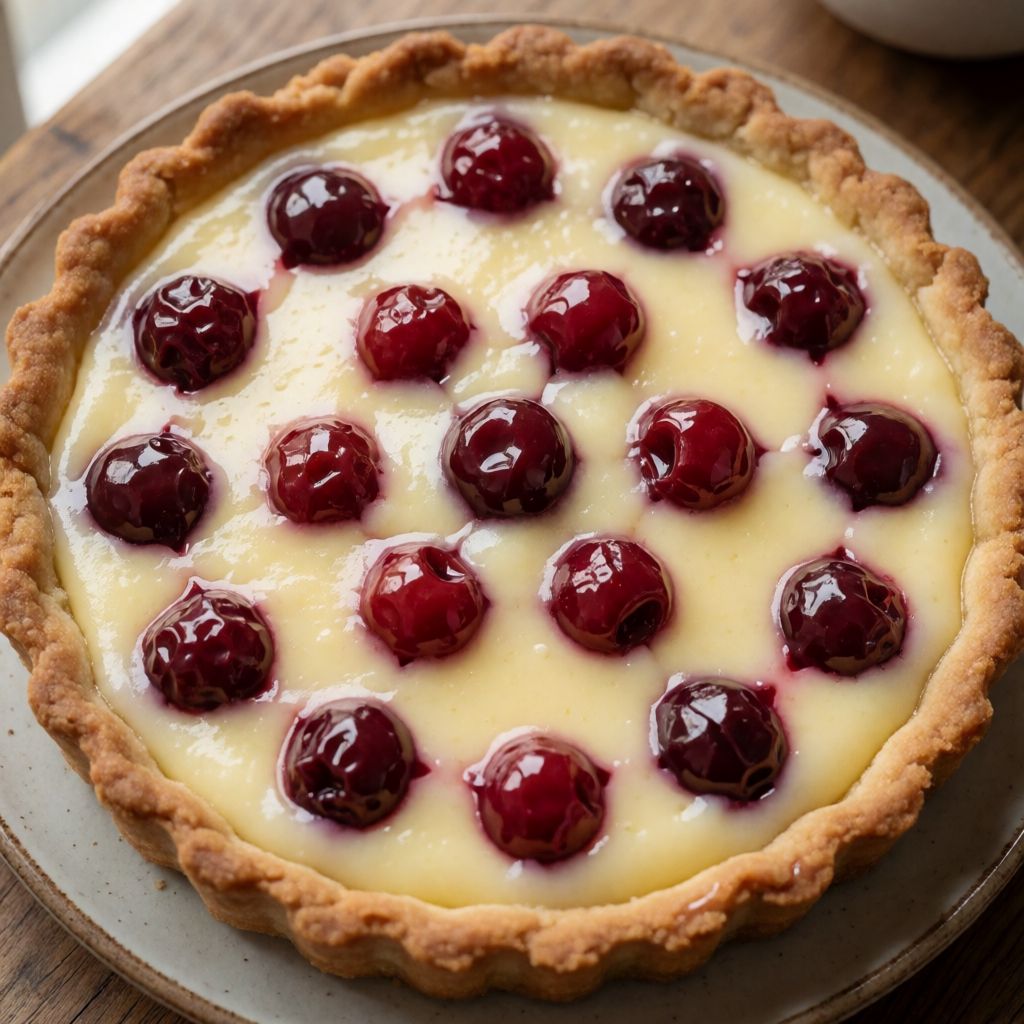
Crostata with Pastry Cream and Cherries
A crisp pastry shell filled with silky pastry cream and topped with fresh cherries.
Labels are worked out automatically from the ingredients and can be wrong. Check the packaging if it matters to you.
Ingredients
- 300 g Plain flour
- 120 g Caster sugar
- 150 g Butter cold
- 1 pcs Eggs
- 2 pcs Egg yolks
- 1 pcs Zest of 1 lemon
- a pinch Salt
- 400 ml Milk hot
- 100 g Caster sugar
- 50 g Plain flour
- 3 pcs Egg yolks
- Cherries ripe, pitted, to taste









Steps
Sift the flour, add the sugar and lemon zest, and mix. Add a pinch of salt and the cold butter, cut into cubes. Rub together by hand until the mixture resembles coarse crumbs.
Tip the mixture onto the worktop, add the egg and yolks, and mix quickly into a soft, elastic dough.
Wrap the dough in cling film and leave it to rest in the fridge.
30 minRoll out the dough and line a 26-28 cm tart tin. Cover with baking parchment and fill with dried beans for blind baking.
Bake the base in a conventional oven preheated to 180°C.
30 minWhisk the yolks with the sugar, add the flour, then pour in the hot milk in a thin stream.
Put the mixture over heat and cook, stirring, until the pastry cream thickens.
Fill the baked base with the pastry cream and decorate with pitted cherries.
This is two separate jobs stacked into one dish: a shortcrust shell that has to stay crisp under a wet filling, and a custard that has to set without turning to scrambled egg. Everything that can go wrong with a crostata comes from treating it as one operation instead of two, and rushing either half to catch up with the other.
What decides it is temperature, twice over, in opposite directions. The pastry wants cold — butter kept solid right up to the moment it meets the oven, so it melts there and not in your palms. That is what gives you a crumb that's short and sandy rather than something closer to a biscuit that fights back when you bite it. The cream wants gentle, patient heat — yolks that thicken slowly instead of being shocked into little curdled threads. One half of this recipe is about keeping heat away; the other is about adding it carefully.
Some say pastry needs a proper knead to "come together." No — the opposite is true here. Once butter and flour have met and gone crumbly, every extra second of handling warms the fat and wakes up gluten you don't want awake. Mix in the egg fast, barely, until it just holds — that's the whole trick. A well-worked shortcrust is a contradiction in terms; working it is exactly what you're trying not to do.
The cherries, meanwhile, aren't cooked into anything — they sit on top of a cream that's already set, which is the only reason the dish looks generous rather than muddy. It's a modest piece of engineering wearing fruit as decoration, and it's forgiving if you respect the two temperatures and unforgiving if you don't.
Flour here just needs to be plain and soft — low in protein, because you want it to bind the fat and eggs, not to build chains of gluten that make the base chewy. If all you've got is strong bread flour, it will still work, but handle it even less and let the dough rest a little longer in the fridge so the little gluten that did form can relax before baking. There's no virtue in "proper" flour here — this isn't bread.
Butter has to be cold and have no character of its own beyond fat — unsalted, straight from the fridge, cut into cubes so it coats flour in small patches rather than smearing into one slick. That patchiness is what gives you flakes of fat suspended in flour, which is the actual definition of "short." Margarine will do in a pinch and nobody will accuse you of treachery, but it carries more water than butter, and water is what wakes gluten up — so the result leans a shade tougher.
The whole egg plus extra yolks in the dough aren't for richness so much as for glue and colour — the yolks bring fat and a deeper gold without adding the water that whites would. Lemon zest is there to cut through that richness with something sharp and aromatic; it's doing a job, not decorating. Leave it out and the crust still works, just flatter on the tongue.
Blind-baking with dried beans under parchment isn't a ritual that needs special equipment — any dried pulse, rice, even old lentils you were never going to cook, gives the base enough weight to stop it puffing and keep the bottom from staying pale and raw once there's no filling yet to hold it down. Ceramic baking beads do the same job for more money. Judge the base by colour and feel, not a clock — it should be gone from pale and soft to properly golden, and dry rather than tacky when you touch the centre.
For the cream: yolks and sugar get whisked together before anything hot touches them because the sugar gets between the egg proteins and slows down how fast they can seize — that's your insurance against scrambling. The flour is there to thicken by swelling with heat, and it also acts as a buffer around the egg, which is why this cream is more forgiving than a plain custard and can take a slightly firmer boil without turning grainy. Pour the hot milk in slowly while whisking — that's tempering, warming the yolks up gradually instead of hitting them with a wall of heat they can't survive. On a British hob, especially electric, heat response is slow and uneven, so keep the pan moving and the flame low rather than trusting a dial — you're watching for the cream to thicken enough to hold a ribbon when you lift the spoon, not for a timer to go off. Milk wants to be whole, for body — semi-skimmed thins the result, and if you only have that, a spoon of cream stirred in at the end helps.
Cherries should be ripe enough that pitting them is a fight worth having — out of season, drained frozen cherries work better than anything jarred in syrup, which brings extra sugar and water you don't need. Pat them properly dry before they go on the cream, or they'll bleed juice into it and turn a clean yellow surface patchy within the hour. And give the cream time to cool and firm before the cherries go anywhere near it — patience here isn't optional, it's the only thing standing between a crostata and a cherry soup.