
 AI photo
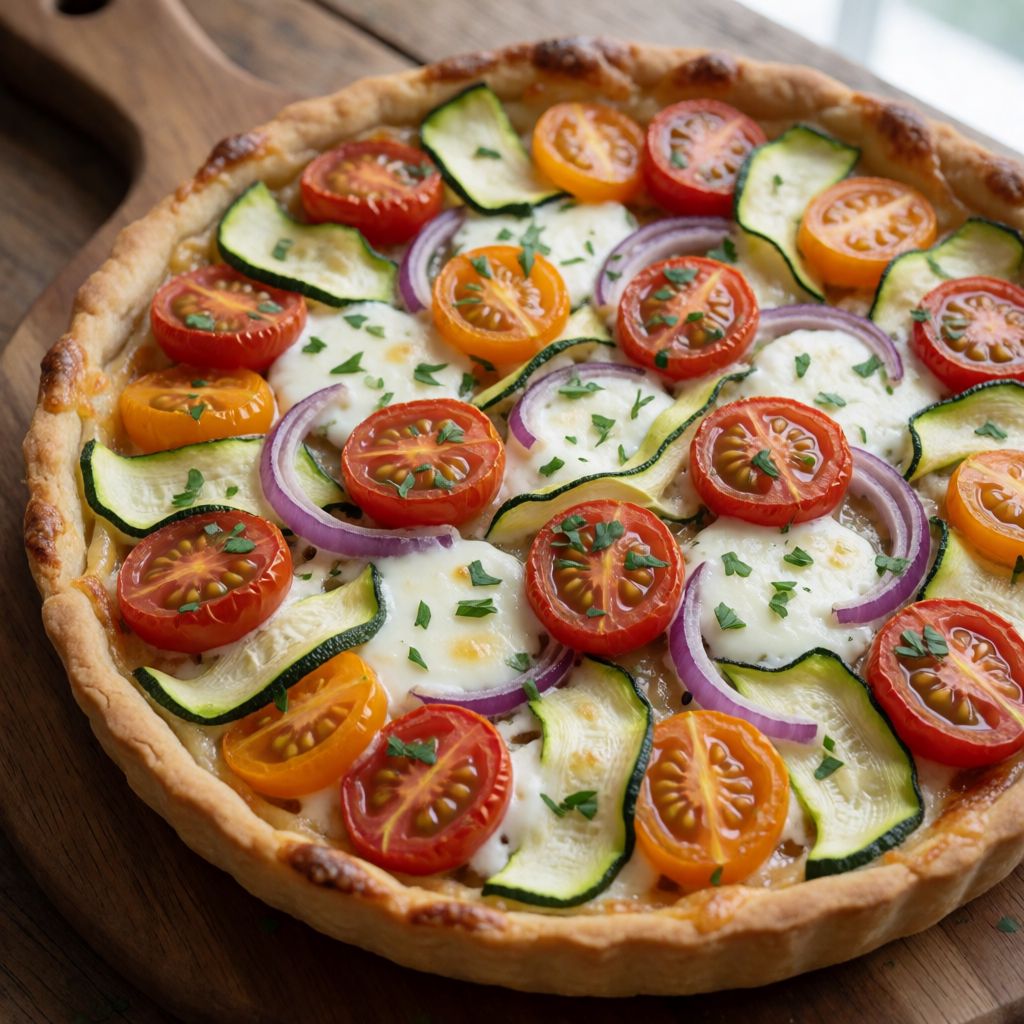
Savoury Cherry Tomato and Buffalo Mozzarella Tart
A savoury tart filled with cherry tomatoes, courgette, red onion and buffalo mozzarella, finished with herbs and olive oil.
Labels are worked out automatically from the ingredients and can be wrong. Check the packaging if it matters to you.
Ingredients
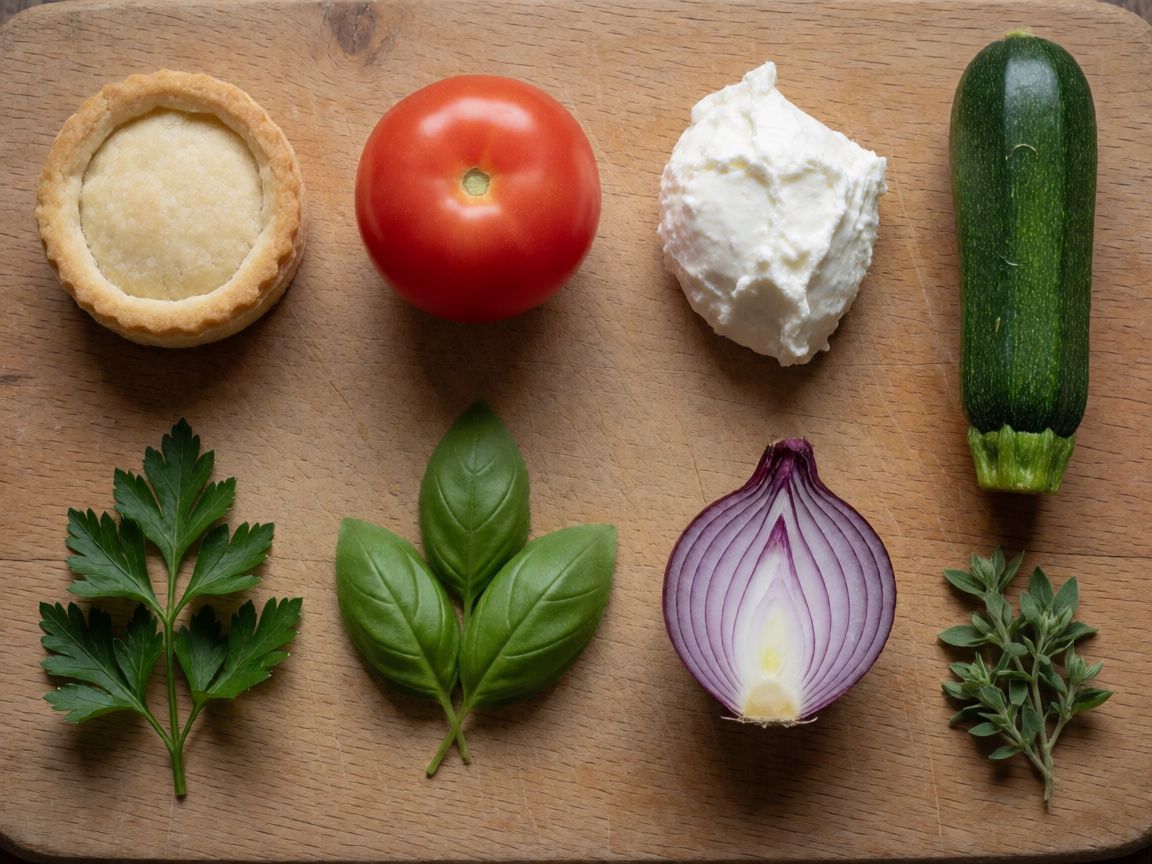
- 1 pcs Shortcrust pastry
- 200 g Cherry tomatoes
- 200 g Buffalo mozzarella
- 2 pcs Courgette
- 1 pcs Red onion
- 1 bunch Parsley
- 1 bunch Basil
- 1 bunch Marjoram
- 1 tbsp Parmesan
- 2 tbsp Breadcrumbs dried
- Olive oil
- Salt
- Black pepper








Steps
In a bowl, mix the cherry tomatoes, courgette, onion, buffalo mozzarella, parsley, basil, marjoram, salt and black pepper. Season with olive oil.
Lay the shortcrust pastry into a tart tin. Prick the base with a fork and sprinkle with breadcrumbs.
Spread the mixture over the pastry and sprinkle with breadcrumbs mixed with parmesan.
Drizzle with olive oil and bake at 180°C.
33 minCool in the switched-off oven and serve.
This is a wet-vegetable tart, and everything about it is a negotiation with water. Cherry tomatoes, courgette, mozzarella, red onion — all of them are mostly liquid wearing a solid disguise, and once they go into a hot oven they start giving that liquid back. The whole architecture of the recipe exists to stop that liquid from pooling on top of your pastry and turning it to paste.
That's what the breadcrumbs under the filling are for. Some say breadcrumbs on a tart base are just there for crunch — no, they're there as a sacrificial layer. They sit between the raw pastry and the vegetables and soak up the first wave of juice before it reaches the dough. Skip them, blame a "soggy bottom" on bad luck, and you've actually just removed the one thing that was protecting you from it.
The second breadcrumb-and-parmesan layer on top does a different job: it crusts over in the heat and seals the surface, so steam has to find its way out through small gaps rather than just sitting as a shallow puddle over the tomatoes. Parmesan browns faster than breadcrumbs alone because of its fat and sugars, so that layer isn't decoration, it's a lid with holes in it.
180°C is the temperature at which pastry sets and browns before the vegetables inside have time to collapse into mush. Push the oven hotter to "speed things up" and you'll scorch the crumb top while the courgette is still raw in the middle. 33 minutes is a floor, not a verdict — look for the pastry edge turning the colour of a digestive biscuit and the tomatoes blistering and slackening, not bursting into soup.
Shortcrust itself is doing a structural job here, not a flavour one — it's a dry, fat-rich wall built specifically to resist the juices for as long as possible. Pricking the base with a fork before baking isn't fussiness; it lets trapped air and steam escape through small vents instead of ballooning the pastry up away from the tin in one big blister. If you've only got puff pastry in the freezer, it will still work, but it's thinner-walled and gives in to moisture faster, so lean harder on the breadcrumb layer and don't skip it.
Cherry tomatoes are chosen over big ones for a reason beyond looks: smaller fruit means a higher skin-to-flesh ratio, so they hold their shape under heat instead of collapsing into a tomato soup that floods the tart. If you only have large tomatoes, deseed them and salt the flesh for ten minutes first, then pat dry — you're removing water you'd otherwise be fighting in the oven.
Courgette brings bulk and almost no flavour of its own, which is exactly its job: it's a mild, watery vegetable that takes on whatever it's cooked next to. Slice it thin and it cooks through in the same window as everything else; leave it thick and you'll have raw courgette next to burnt tomato skin, because they don't share a cooking speed by nature — you're forcing them to with the knife.
Buffalo mozzarella is the wet, soft option on purpose — it's packed in its own whey precisely because that's how it stays tender. Standard pizza mozzarella is drier and firmer; it'll hold together better in this tart if you're worried about sogginess, at the cost of that particular milky tang buffalo gives you. Either way, tear it rather than slice it in neat rounds — torn edges mean more surface contact with the vegetables and less chance of a slick, unmelted disc sitting on top.
Red onion goes in raw into the mix rather than sautéed first, which only works because the oven time is long enough to soften it and because its sugars are gentler than a white onion's, so you don't get the sharp bite that would otherwise fight the tomato. If you've only got a white or yellow onion, slice it thinner than you think you need to — it has further to travel to turn sweet.
The herb trio — parsley, basil, marjoram — isn't there for a bouquet garni effect; they're added raw and chopped so they wilt rather than cook, keeping their individual smell instead of merging into one generic "green" taste. Basil especially turns bitter and black-edged if it sits too long in a hot oven exposed, so if you want a brighter hit, hold some back and scatter it on after the tart comes out, while it's still warm.
Olive oil here should be one with "no smell of its own strong enough to compete" — a basic, mild extra virgin works, used both in the filling and drizzled before baking, where it helps the breadcrumb-parmesan top crisp rather than just dry out. Any other light, flavour-neutral oil will do the same mechanical job, you'll just lose the faint pepperiness olive oil gives back.
Cooling the tart in the switched-off oven, door ajar if yours runs hot even with the dial off, isn't about reheating leftovers slowly for comfort — it's about letting the custardy juices that have pooled inside the vegetables settle and firm up gently, so your first slice holds its shape on the plate instead of sliding into a wet heap. Cut it too soon, straight from a blasting oven onto a board, and you'll get a tart that tastes right but falls apart on the fork — patience here is doing the knife's job for it.
This feeds four as a light main, or six alongside something else — on a British table it slots in well as the extra savoury thing next to a roast, served at room temperature rather than piping hot, since a tart like this genuinely tastes better once it's had ten minutes to stop sweating.