
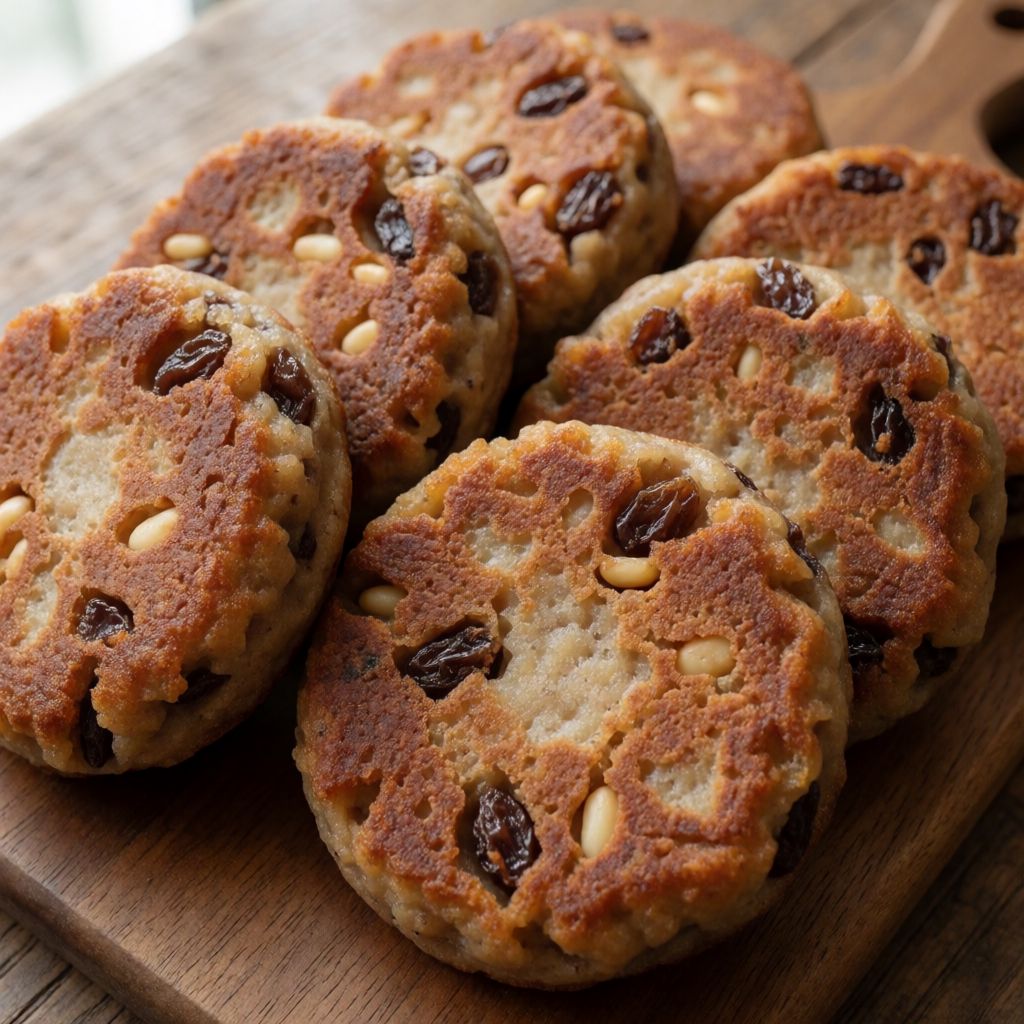
 AI photo
Chestnut Flour Fritters
A traditional Italian treat: chestnut flour batter studded with raisins and pine nuts, fried until golden.
Labels are worked out automatically from the ingredients and can be wrong. Check the packaging if it matters to you.
Ingredients
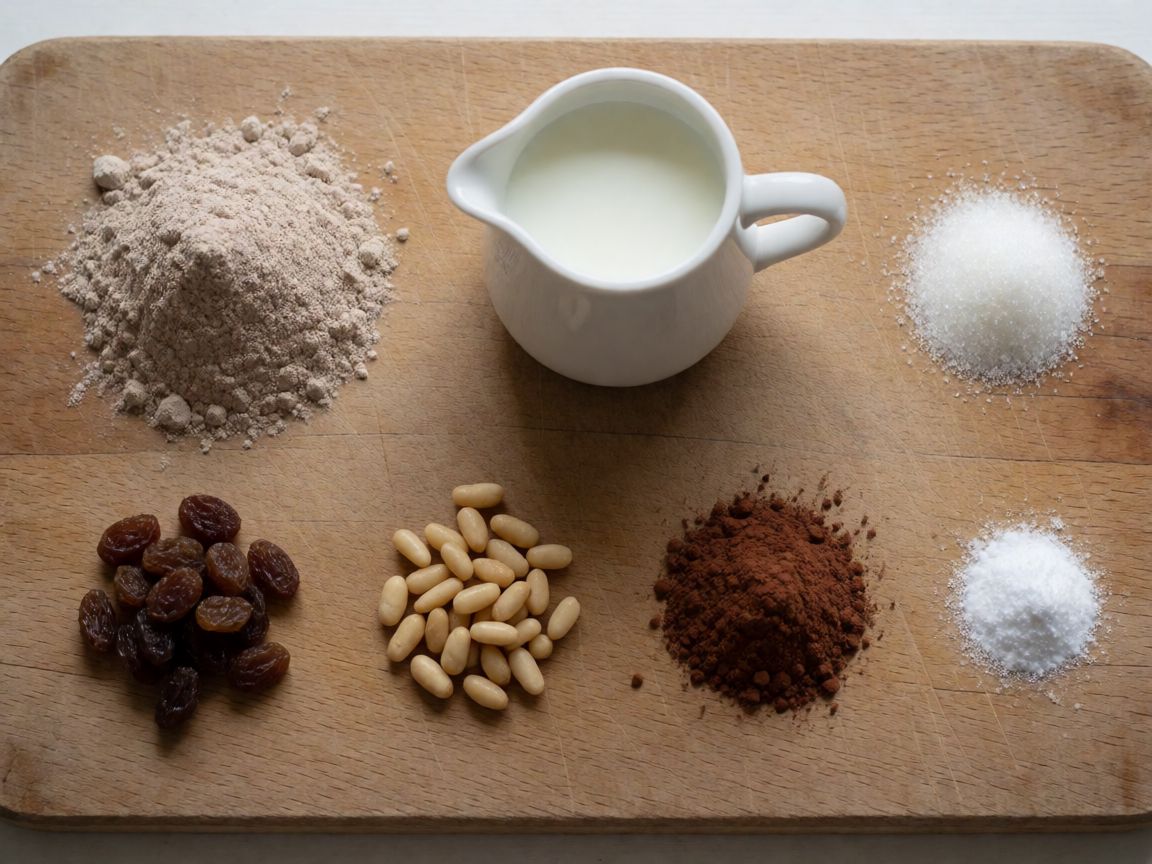
- 250 g Chestnut flour
- 200 ml Water warm
- 50 ml Milk
- 60 g Sugar
- 40 g Raisins soaked in a little water
- 30 g Pine nuts
- 1 tbsp Cocoa powder
- 1 tbsp Baking powder
- 1 pinch Salt
- Vegetable oil for frying







Steps
Sift the chestnut flour, breaking up any lumps with your hands.
Sift the cocoa powder and mix it with the chestnut flour.
Add the sugar, a pinch of salt and the baking powder.
Pour in the milk and warm water, stirring until the mixture is smooth and creamy.
Add the pine nuts and soaked raisins, and mix well.
Heat the oil for frying in a pan.
Using a spoon, shape the batter into small round fritters.
Fry the fritters on one side, then flip and fry the other side until golden.
25 minTransfer the fritters onto paper to drain off the excess oil.
Chestnut flour doesn't behave like wheat flour, and that's the whole story of this fritter. It has no gluten, so nothing in this batter stretches or holds air the way bread dough does. What you get instead is starch and a natural sweetness — chestnuts were Italy's and Corsica's bread substitute for centuries, ground and dried precisely because they filled you up when wheat was a luxury crop for someone else's table. These fritters are the dessert end of that same economy: a famine flour turned into something you'd choose to eat, not just survive on.
That's why the batter is "smooth and creamy" rather than elastic — you're not developing anything, you're just hydrating starch and cocoa until it's uniform. Lumps here aren't a texture problem you fix by kneading; they're a cocoa pocket that will taste bitter and raw in the finished fritter, so you sift and break them with your fingers before liquid ever touches the flour. Fix it dry, because once it's wet you can't rescue it.
What decides whether this works is the oil temperature, and your only gauge at home is the batter itself. Drop a small spoonful in: if it sits at the bottom sulking, the oil's too cool and the fritter will drink oil instead of frying, coming out heavy and pale. If it skitters and spits violently the second it lands, it's too hot — the outside will seal and colour before the baking powder has had time to lift the inside, leaving you a cooked shell around a gluey centre. You want a confident, steady bubbling around the spoonful, not panic and not silence.
Chestnut flour itself: buy it where it's labelled gluten-free or Italian/Corsican farina di castagne — it should smell faintly sweet, almost like a mild cocoa itself, not musty. Musty means old stock; the natural oils in chestnut flour go rancid faster than wheat flour's do, so buy in small bags and don't hoard it. There's no real substitute that gives the same flavour — this isn't a flour you can swap for plain flour and call the same dish, because the whole point is that distinct nutty sweetness. If you genuinely can't get it, you're making a different fritter, not this one.
The cocoa does two jobs, not one: colour, obviously, but also a bitter edge that stops the whole thing tasting like sweet mush. Chestnut flour is already sugary on its own terms — skip the cocoa and you've got something closer to a plain sweet bun. Any unsweetened cocoa powder works; don't reach for drinking chocolate, which carries its own sugar and milk solids and will throw off how much liquid the batter needs.
Baking powder is doing the lifting that gluten can't do here. In a wheat dough, trapped gluten strands hold the gas bubbles from a leavener in a stretchy net. Chestnut flour has no net, so the baking powder's gas has nowhere to go but straight up and out unless the batter is thick enough and the oil hot enough to set a crust around it fast. That's the real reason for frying rather than baking this one — the heat shock sets a skin almost immediately, trapping what the gluten-free batter can't trap on its own.
Raisins soaked first, not thrown in dry: dry raisins pull moisture out of the batter right where they sit, leaving a dense, chewy ring around each one and an uneven crumb elsewhere. Soaking lets them swell and soften so they sit in the fritter rather than fighting it for water. Pine nuts stay whole and untoasted here — they'll toast themselves gently in the hot oil during frying, and pre-toasting them risks a bitter nut by the time the fritter's done.
On oil: you want something with no flavour of its own, because chestnut and cocoa are the flavours doing the work — a neutral sunflower or vegetable oil, same as you'd keep in for a Sunday roast's Yorkshire puddings, is exactly right. Don't use olive oil for frying this; its own flavour and lower smoke point work against you, and you'd be masking the one thing you added cocoa to let through. Keep the oil at a depth that lets a fritter float and fry on its rounded underside rather than sitting flat on the pan's base — a few centimetres in a domestic frying pan is plenty, you don't need a full kazan's worth.
Last point, and it's not a small one: patience is an ingredient here as much as the flour is. Don't crowd the pan — too many fritters dropped in at once cool the oil instantly, and you're back to the "sulking at the bottom" problem no matter how hot it was a minute ago. Fry in batches, let the oil recover its heat between them, and drain each batch properly on paper. Rushing this step doesn't save you ten minutes; it costs you a pan of pale, oil-heavy fritters instead of six servings' worth of good ones.