
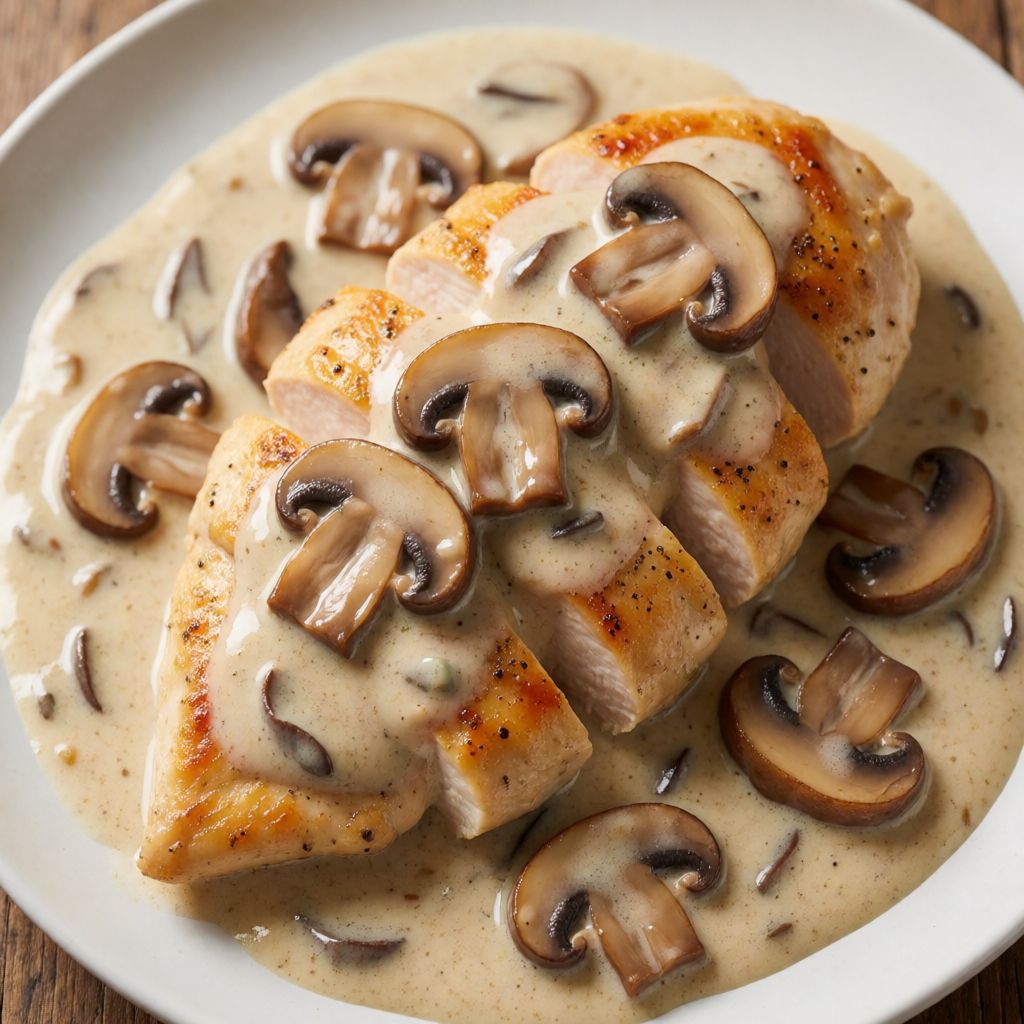
 AI photo
Chicken Breast in Mushroom Sauce
Tender chicken breast simmered in a creamy, blended mushroom sauce until golden and fully cooked.
Labels are worked out automatically from the ingredients and can be wrong. Check the packaging if it matters to you.
Ingredients
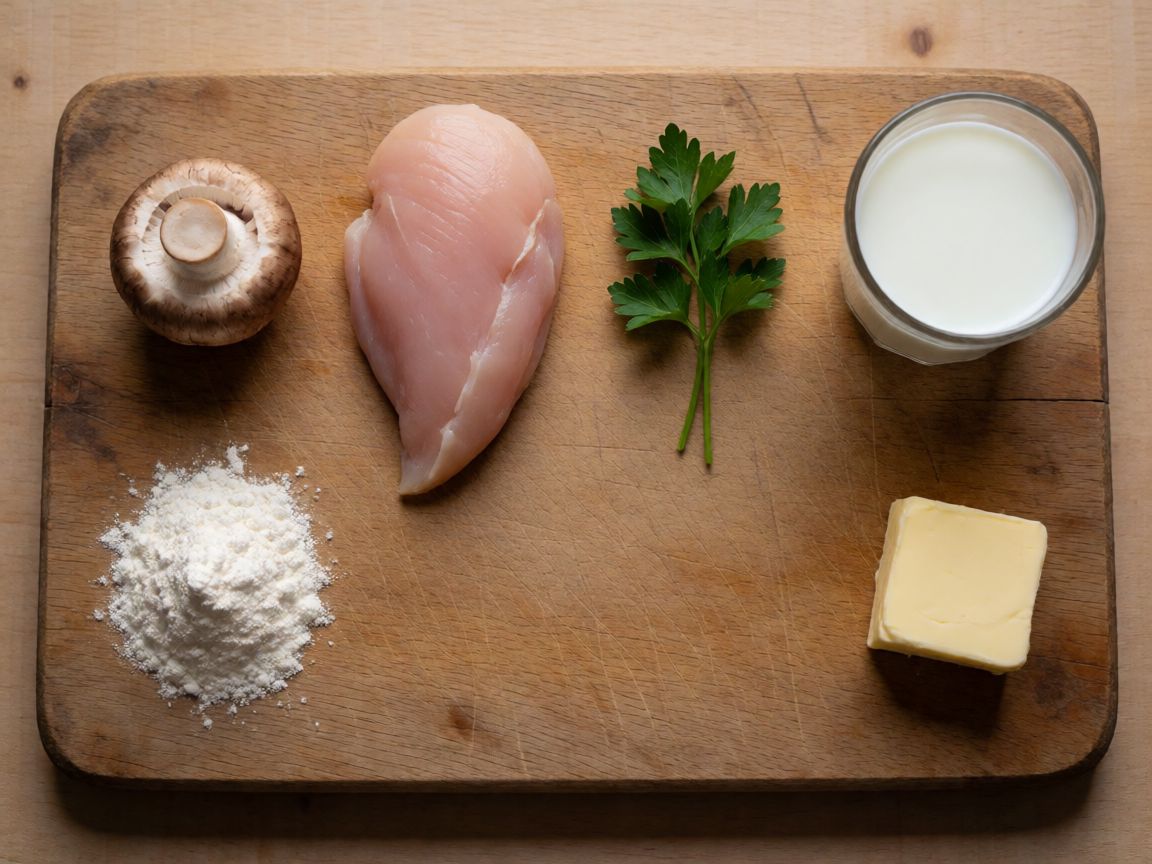
- 500 g Mushrooms
- 500 g Chicken breast
- 100 g Plain flour
- 475 ml Milk
- 3 tbsp Olive oil
- Salt to taste
- Black pepper to taste
- Parsley to taste
- Butter a small knob








Steps
Clean the mushrooms thoroughly: scrape off any soil or wipe with a clean cloth. Cut larger mushrooms into pieces, leave smaller ones whole.
Take a large frying pan, pour in the olive oil and heat it.
Add the mushrooms to the pan, fry over high heat, then lower the heat and add the flour and 240 ml of the milk. Add salt and pepper, and stir.
Transfer the mushroom mixture to a blender and blend until you have a smooth sauce.
Coat the chicken breast in flour and place it in the pan with the heated butter.
Fry the chicken breast over low heat on both sides until golden.
Add the mushroom sauce to the chicken breast, pour in the remaining 235 ml of milk, stir and cook over very low heat.
Turn the chicken pieces shortly before the midpoint of cooking and once more near the end.
Cook the chicken breast until fully done; the internal temperature at the thickest point should reach 74°C [c1].
Garnish with finely chopped parsley and serve hot.
What was changed
The cooking step notes the target internal temperature Chicken breast for the chicken.
This is a chicken breast poached in a mushroom-thickened milk sauce — closer to a béchamel-with-mushrooms than to anything you'd call a "sauté". The whole dish is really two separate cooking problems stacked on top of each other: a sauce that needs body, and a lean meat that dries out the second you're not watching it. What decides whether this works is whether you treat the breast gently once it goes back in the pan — because the sauce is already cooked by that point, and the breast is the only thing left that can fail.
Mushrooms give off water as soon as they hit heat — that's what the high heat at the start is for, not browning. You want that water driven off fast so the flour, added next, meets fat and a drier mushroom and can actually cook into a paste rather than turning gluey. Some say you should wash mushrooms under running water — no, because they're sponges, and a wet mushroom steams instead of frying, and a steamed mushroom never browns, it just goes grey and slippery. Wipe or scrape them.
The sauce itself is a roux logic borrowed straight from béchamel: fat, flour, milk, in that order, each addition tamed before the next goes in. Blending it afterwards isn't a modern shortcut for texture — it's there because mushroom fibres don't break down into a sauce on their own, no matter how long you cook them, so you force it mechanically instead.
74°C at the thickest point isn't a suggestion, it's the actual number at which chicken is safe and still just barely moist — go by that, not by minutes, because a breast's thickness varies piece to piece and your hob isn't a lab. If you have a thermometer, use it; if you don't, cut into the thickest part and look — the flesh should be opaque through, no pink sheen, juices running clear rather than milky-pink. Some say chicken is done when it "feels firm" — no, because by the time breast feels properly firm to a prodding finger it's usually past 74°C and already drying out. Pull it close to the number, not past it.
Mushrooms: any firm cultivated mushroom works — chestnut, button, even a mix. What matters is that they're dry-ish and not bruised to mush, because bruised mushrooms have already started breaking down and will dump extra water into your pan, undoing the point of that high-heat start. Wild mushrooms are lovely here but bring more moisture and more variable flavour — adjust by eye, not by faith in the recipe card.
Chicken breast: go for breast of even thickness if you can, or butterfly a thick one yourself — a lopsided breast cooks lopsided, full stop, no amount of pan-turning fixes that. Thigh would actually behave better here, forgiving sauce-simmering far longer than breast does, but then it's a different dish with a different fat content changing the sauce's richness — your call if you want insurance against dryness over strict tradition.
Flour does two jobs in this recipe and neither is about taste: it thickens the milk into sauce, and it coats the chicken as a moisture shield before frying. For the sauce, plain flour is fine as-is; if you need gluten-free, use a 1:1 gluten-free blend or cornflour mixed with a little cold milk first, stirred in near the end rather than at the roux stage, since cornflour behaves differently under heat and curdles if treated like wheat flour.
Milk carries the sauce's body and its blandness in equal measure — whole milk gives you a rounder sauce than skimmed, because fat matters more than you'd think for how a béchamel-style sauce feels on the tongue. If you're out of milk, a light stock loosened with a splash of cream gets you close, though you lose some of that pale, nursery-food colour that's part of this dish's charm.
Butter for the chicken, olive oil for the mushrooms — that split isn't fussiness, it's using butter's low smoke point where you want gentle contact with the chicken, and oil's higher tolerance where mushrooms need a hard, fast sear. Any neutral oil with no smell of its own stands in for the olive oil if you'd rather save your good bottle for the salad; butter has no real substitute here if you want that final gloss, though a knob of any mild dairy fat will do in a pinch.
And patience — this is the ingredient the recipe doesn't list but assumes. A rushed roux goes lumpy, a rushed breast goes rubbery, and nothing in this method rewards impatience. The hour it takes is mostly waiting with your eyes open, not your hands busy — that's the whole trick of it.