
 AI photo
Chicken Curry
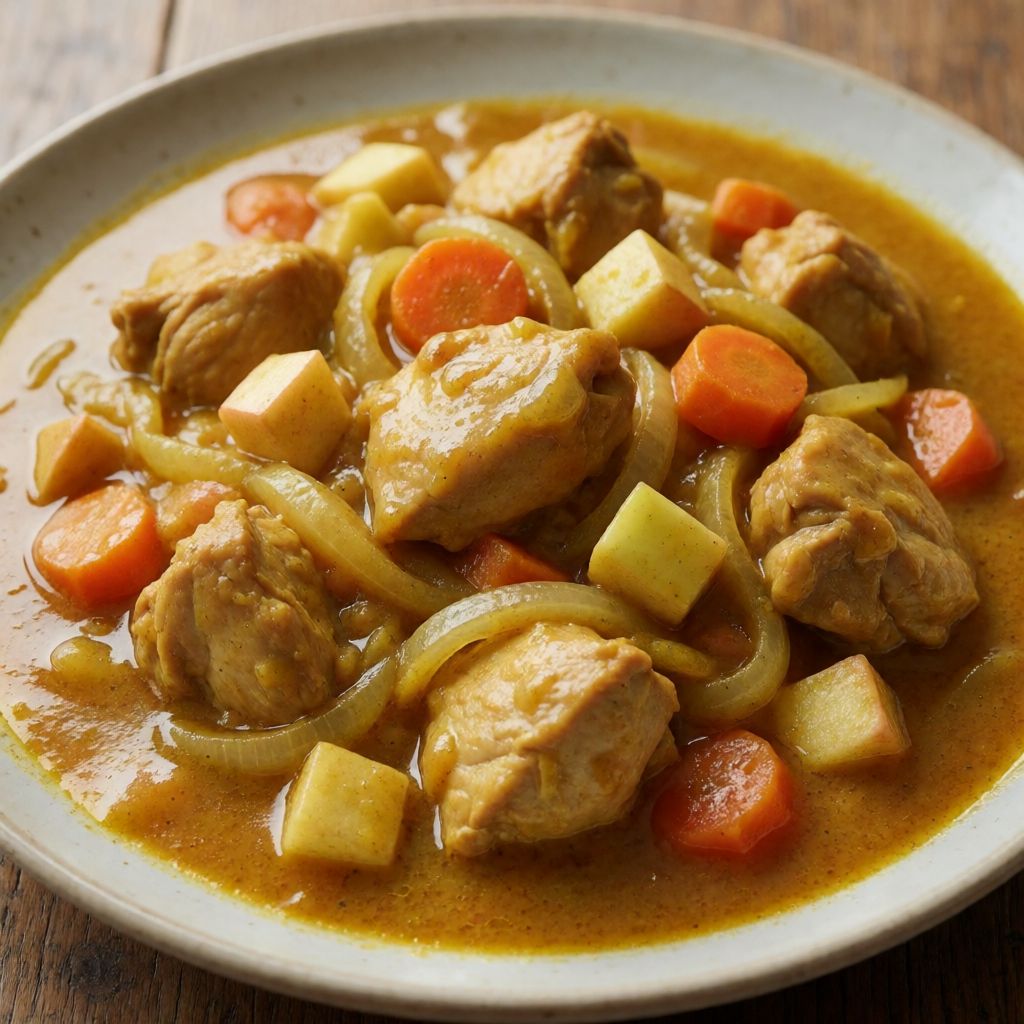
A quick, comforting chicken curry with apple, carrot and pepper, simmered in white wine and vegetable stock.
Ingredients
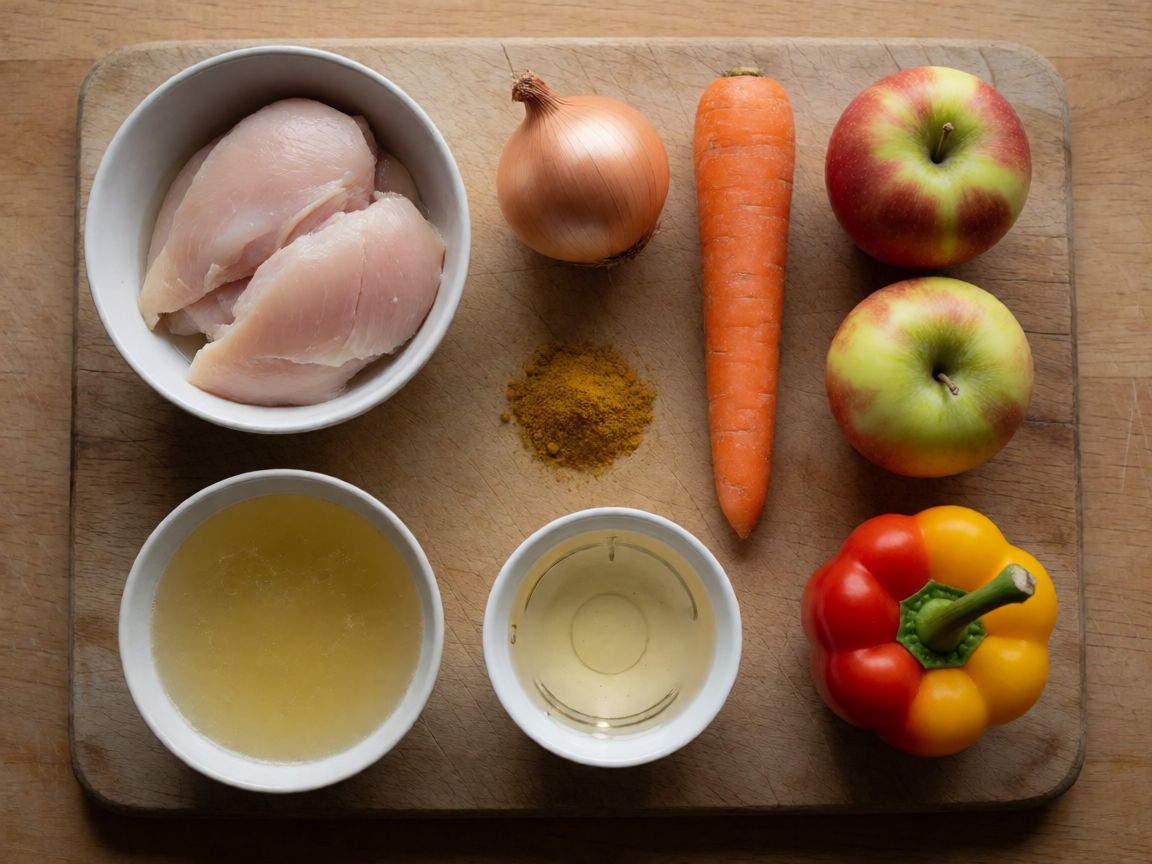
- 800 g Chicken breast
- 1 pcs Onion
- 1 pcs Carrot
- 2 pcs Apple
- Olive oil to taste
- 2 tbsp Curry powder
- Vegetable stock to taste
- 120 ml White wine
- 1 pcs Bell pepper
- Salt to taste










Steps
Cut the chicken breast into medium-sized cubes.
In a large pot, heat the olive oil and fry the thinly sliced onion until soft.
Add the chicken breast and fry for a few minutes until well browned on all sides.
Add the carrot strips and white wine. Stir and let the wine evaporate.
Stir in the curry powder, mix well, then add the diced bell pepper.
Add the diced apples, a pinch of salt and a few spoonfuls of vegetable stock.
Cook over high heat for about 15 minutes, adding more vegetable stock as needed, until the chicken is fully cooked through. Done when the inside reaches 74°C.
15 minTurn off the heat, transfer to a large serving dish and serve hot.
This isn't curry in the Indian sense — no paste, no simmered masala, no coconut milk. It's a quick pot of chicken and vegetables seasoned with curry powder, which is a British thing to do and has been since the East India Company brought the spice blend home in the 18th century and English cooks turned it into a flavour for stews rather than a cuisine in itself. Don't expect depth here. Expect brightness and speed.
What decides whether this works is moisture control, not spicing. You're frying chicken, then adding wine, then stock, then apple — three separate liquids into one pan over high heat, on a domestic hob that doesn't have the surface area of a professional range. If you crowd the pot or don't let the wine actually boil off before the next addition, you get a pale simmer instead of a fry, and the chicken steams rather than browns. Browning is where the flavour sits — the Maillard reaction needs a dry, hot surface, not a wet one.
The other thing that decides it: doneness is a number, not a guess. 74°C in the centre of the thickest cube. Chicken breast forgives nothing — a few degrees past that and it's cardboard, a few degrees short and it's a food safety problem, not a texture one. Buy a cheap probe thermometer if you don't own one; "cut it open and check the juices" is folklore that's cost people both undercooked dinners and overcooked ones.
Chicken breast is the right cut here precisely because it's lean and cooks fast — this is a weeknight dish dressed as a curry, not a long-braise curry where thigh or leg would survive hours of simmering. Cube it medium, roughly 2cm, no smaller. Smaller pieces hit 74°C before the outside has any colour; bigger pieces brown nicely and stay raw in the middle. If you only have thighs, use them — they're more forgiving of a slightly anxious cook and a slightly uneven hob.
The onion goes in first and alone, sliced thin, cooked until it's gone soft and pale gold — not browned, not caramelised, just relaxed. This is the base layer of sweetness that curry powder alone can't supply; the spice blend is flat and a bit dusty on its own, and onion cooked slowly gives it something to sit on. Some say you should fry the spices first in dry heat to "wake them up" — no, because curry powder is a mix that's already been roasted once in processing, and a few more seconds in a hot pan with no fat around it just scorches it bitter. Add it after the vegetables have some fat and moisture to bloom into.
White wine does a specific job: it deglazes whatever's stuck to the bottom of the pot from browning the chicken, and the acid cuts through the richness before the apple adds its own sweetness later. Let it evaporate properly — you want the smell of alcohol gone, not just the liquid reduced, because raw wine flavour sitting in a finished dish tastes like a mistake, not an ingredient. No wine in the house? A splash of cider vinegar in water does the acid job, though you lose the slight sweetness wine brings.
Carrot goes in as strips, not rounds — more surface area, faster cooking, and you want it to end up bendable, not raw-crunchy and not collapsed to mush. That's your doneness cue for the vegetables generally: a carrot that bends without snapping is cooked; one that snaps is still raw in the middle regardless of what the clock says.
Apple is the odd one for a British kitchen used to thinking of apples as pudding, but it's standard practice in curry-powder dishes going back to Victorian "mulligatawny"-style cooking, where fruit sweetness stood in for the layered spicing a proper curry gets from hours of cooking aromatics. Use something that holds its shape under heat rather than turning to sauce — a Braeburn or Cox, not a Bramley, which is bred specifically to collapse into mush and is the wrong tool here even though it's the apple most British kitchens have to hand.
Bell pepper goes in late and diced small, because it needs the least time of anything in the pot — you want it with a bit of bite left, not boiled grey. Vegetable stock is there to keep the pan wet enough to actually finish cooking the chicken without drying out or scorching; use it in spoonfuls as the pan asks for it rather than dumping it all in at once, which would turn your fry into a boil and strip the browning you worked for.
Curry powder itself is not one thing — supermarket own-brand versions skew heavily to turmeric and not much else, so if yours tastes flat, that's the blend, not your cooking. A hotter or more complex blend (Madras-style) will change the whole character of the dish without changing a single step, which tells you the recipe is really a method for cooking chicken quickly with vegetables, and the word "curry" is doing the work of a seasoning choice, not a cuisine.
Fifteen minutes is patience's floor here, not its ceiling, and patience with the heat matters more than patience with the clock — resist the urge to turn it up to rush the stock along; a pan that's too hot will dry out before the chicken's centre catches up, and you'll be adding stock in a panic rather than as a plan.