
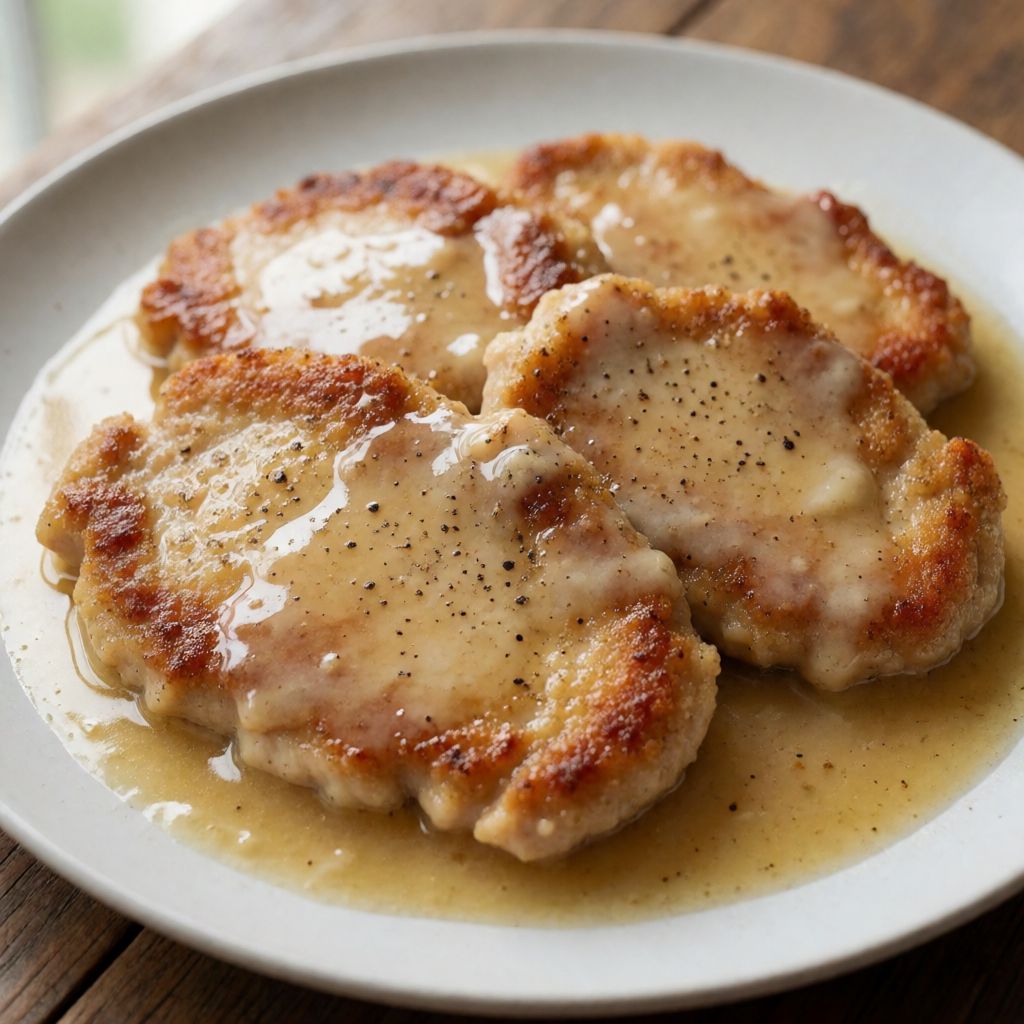
 AI photo
Chicken Escalopes in Beer
Tender chicken escalopes pan-fried and then gently simmered in beer, finished with marjoram.
Labels are worked out automatically from the ingredients and can be wrong. Check the packaging if it matters to you.
Ingredients
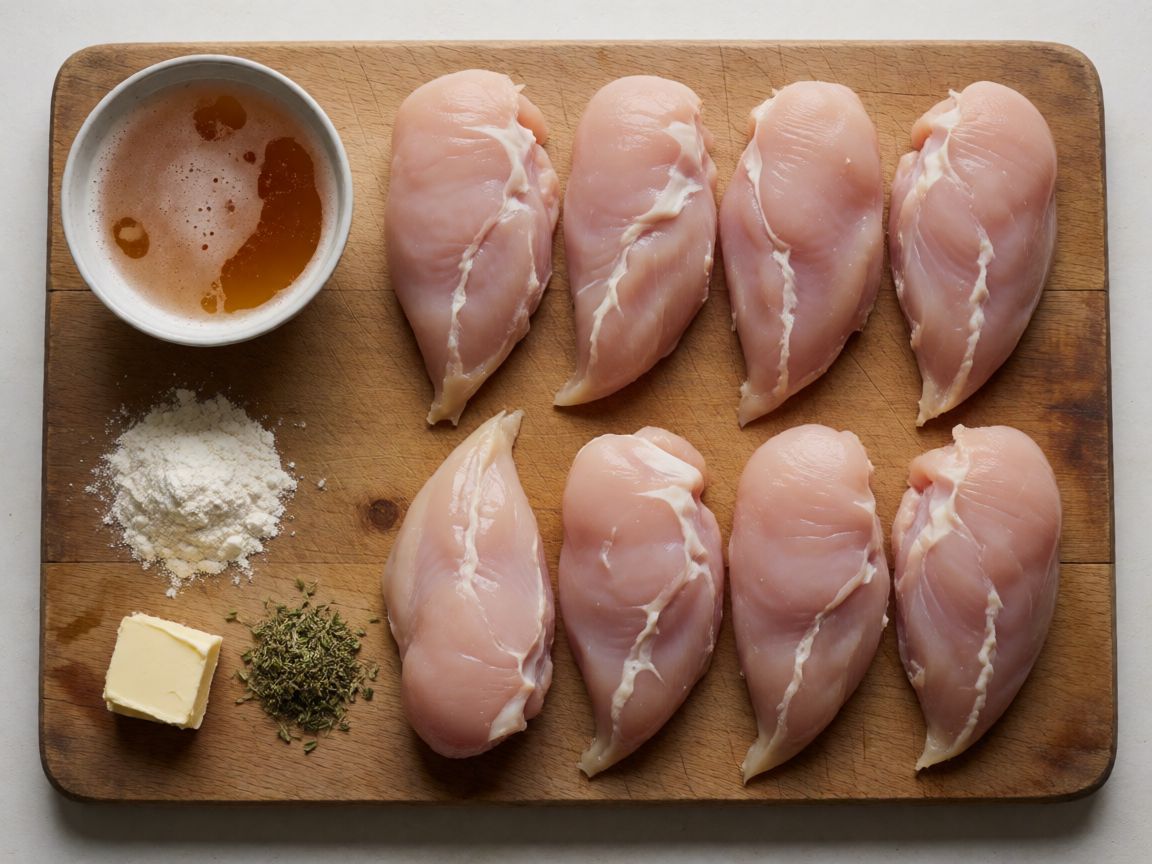
- 8 pcs Chicken breast
- 250 ml Beer
- Salt to taste
- Black pepper to taste
- Plain flour for dusting
- 30 g Butter
- Marjoram to taste







Steps
Dust the chicken breast pieces in flour, shaking off any excess.
Melt the butter in a frying pan and quickly brown the pieces on both sides.
Pour in the beer, let it bubble briefly, then lower the heat and simmer gently.
10 minSeason with salt and pepper, and sprinkle with marjoram.
Serve with a side dish of your choice.
This is a stove-top dish built on speed, which makes it the opposite of a Sunday roast. No oven, no two hours of forgetting about it while you have a nap. Escalope means flattened, thin — that's the whole trick. A chicken breast is a thick, uneven lump: narrow at one end, fat at the other. Cook it as it comes and one end is done while the other is still raw in the middle. So before any flour goes near it, you want it pounded or sliced to an even thickness, maybe a centimetre and a half. That's not written in the steps, but it's buried in the word 'escalope' — the name is the instruction.
What decides whether this works is not minutes, it's colour and smell at three separate moments: the flour crust going from raw-white to pale gold, the butter foam going from white to light hazelnut (past that, it's burnt and bitter, and no amount of beer saves it), and the beer going from a violent fizz to a quiet shiver. Each of those is a different chemistry, and each has its own failure if you rush or ignore it.
There's a myth worth naming here: that chicken breast is naturally dry and tasteless, a punishment meat you eat because it's lean. It isn't naturally anything — it's dry because it's almost always overcooked. There's so little fat in it to protect the proteins that a few extra minutes squeeze all the moisture out. This recipe is short exactly because of that. The flavour isn't meant to come from the meat anyway; it comes from what you build around it in the pan.
Chicken breast: buy it as breast and either pound it thin between two sheets of film or ask the butcher to slice it into cutlets — eight pieces for four people means two per person, so they should be modest, not whole breasts. If you find breast forgiving in theory but disappointing on your plate every time, use thigh fillet instead, boned and flattened the same way. It has enough fat marbled through it to survive a slightly careless minute on the heat, which breast will never forgive you for.
Flour: plain, nothing self-raising, nothing seasoned beyond what you add yourself. The only criterion is that it's dry and fine enough to coat thinly — shake off the excess properly, because a thick crust of flour just goes gluey in butter instead of crisping.
Butter, 30g for eight pieces, is not generous, which is correct — this isn't deep-fried, it's a thin film for contact and colour. Butter browns because of milk solids and a little sugar in it; that's where the nutty smell comes from, and it's also why butter scorches faster than oil does. If your hob runs hot and you've burnt butter before, do the chicken in two batches rather than crowding the pan, or use a splash of any oil with no smell of its own — sunflower, groundnut — alongside the butter to raise its burning point a little without losing the butter flavour entirely. Ghee, if you have it, is the clean answer: it's butter with the milk solids already removed, so there's nothing left in it to burn.
Beer: use something pale and a bit bitter — a British bitter or a pale ale, the kind that might already be open from Sunday lunch. The carbon dioxide fizzing up when it hits the hot pan is doing real work: it's lifting the browned bits stuck to the base, the fond, which is where most of the savoury depth of this dish actually lives, not in the chicken. A stout or a very dark, heavy beer will fight the delicate smell of the marjoram and taste more like gravy than sauce — save it for something that wants that weight. One more thing worth saying plainly: simmering does not boil alcohol cleanly out of a dish in ten minutes, whatever the old wives say. Some of it stays. If that matters to you, it matters, and no amount of gentle bubbling changes it much.
Salt and pepper go in at the end on purpose, not from fussiness. Salt draws moisture out through the surface — salt the raw chicken heavily before it's cooked and you're pulling out the very juice you're trying to keep in. Season the finished pan instead, where the salt only has the sauce to dissolve into, not the meat's own water.
Marjoram is a soft, almost grassy herb that loses its whole personality if it sits in a bubbling liquid for too long — the aromatic oils in it are the first thing to cook off. Sprinkle it on right at the end, off the heat if you can manage the timing, so it perfumes rather than boils. If you've no marjoram, oregano is its close relative and the nearest match; thyme is a different smell entirely but it's not a disaster. And if your pan has no proper lid for the ten minutes of simmering — most ordinary flats don't keep a matching lid for every pan — a plate set over the top does the same job of holding the steam in so the sauce doesn't reduce to nothing before the chicken's even cooked through. The last patience this dish asks for is small but real: let the butter get properly hot before the chicken goes in, and don't stir the beer the second it starts to fizz. Both moments want a few seconds of you doing nothing at all.