
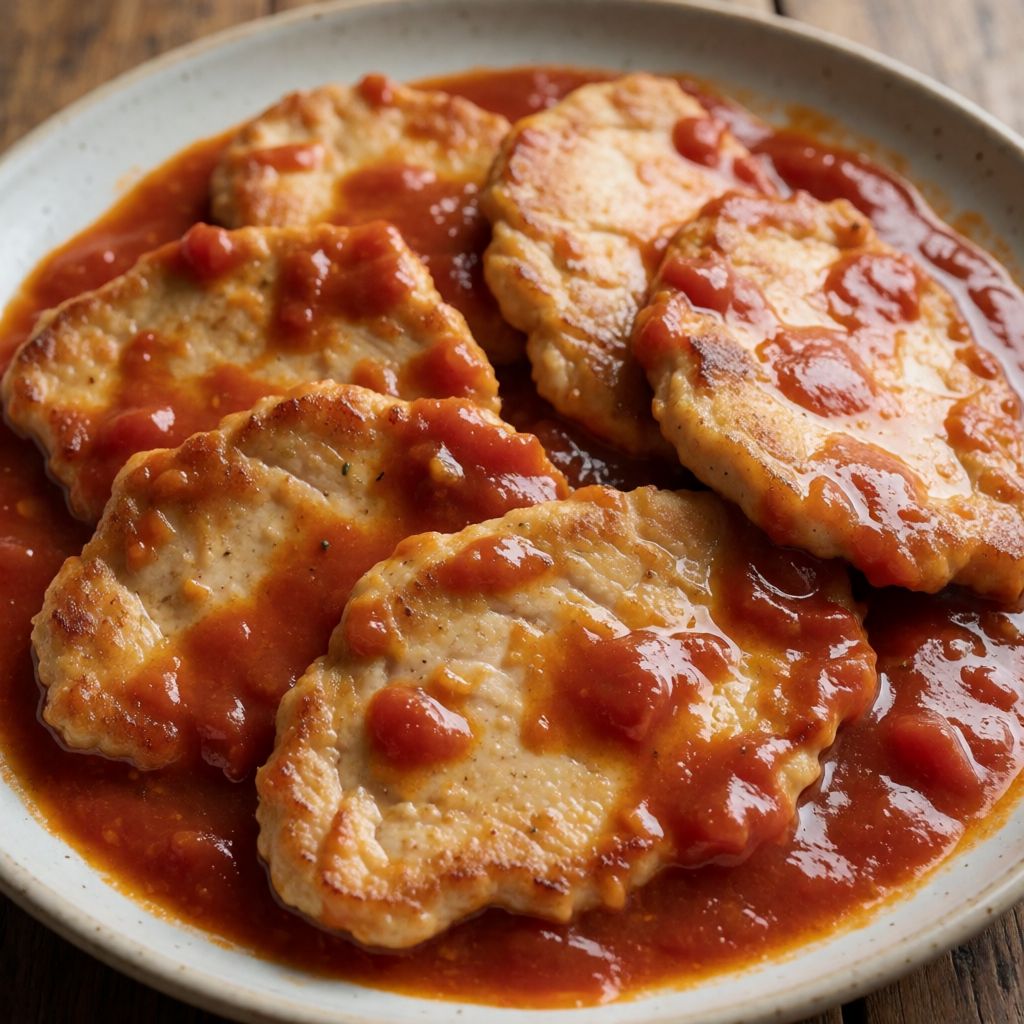
 AI photo
Chicken Scaloppine Pizzaiola
Thin chicken breast scaloppine, lightly floured and pan-fried, finished in a quick tomato pizzaiola sauce.
Labels are worked out automatically from the ingredients and can be wrong. Check the packaging if it matters to you.
Ingredients
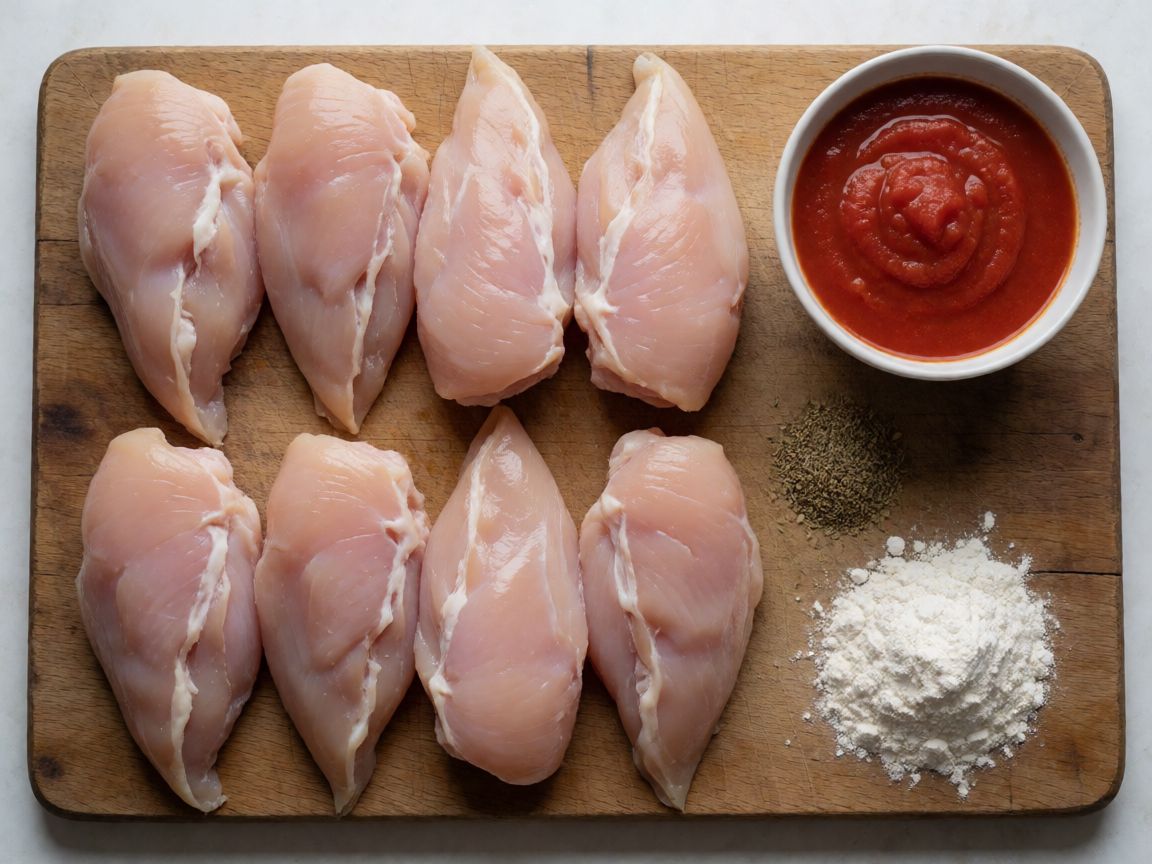
- 8 pcs Chicken breast
- 2 tbsp Tomato passata
- 2 tbsp Olive oil
- Salt to taste
- White pepper to taste, ground
- Plain flour to taste
- Oregano to taste






Steps
Place the chicken breast between two sheets of baking paper and beat it out thinly, then lightly coat in flour.
Heat the olive oil in a frying pan and add the scaloppine.
Quickly brown on both sides, then reduce the heat, add the tomato passata and cook gently until the chicken is cooked through.
10 minSeason with salt and ground white pepper to taste.
Serve immediately, sprinkled with oregano.
Scaloppine pizzaiola is a trick play on tough or lean meat: you make it thin enough to cook in minutes, then borrow the fast tomato sauce that Neapolitan pizza-makers used on cheap beef cuts when they had no time to braise anything. Pizzaiola wasn't invented for chicken — it was invented for economy, a way to make tomato, garlic and oregano do the softening work that slow cooking usually does. Breast meat here is doing the same job veal scaloppine does in the north: thin, quick, no fat to render, so everything depends on heat control, not on time passing.
What decides whether this works is the pounding and the pan, in that order. Beating the breast between paper isn't about tenderising fibres that chicken breast barely has — it's about making the thickness even, so the whole piece hits doneness at the same second, edge and centre. A cutlet that's thick in the middle and paper-thin at the edges will always give you a dry rim and a raw core; that's not a seasoning problem, that's a knife-and-mallet problem.
Some say you sear meat hard first to "seal in the juices." No — meat has no seal, juice moves by heat and pressure, not by crust. You brown it fast for flavour, the Maillard crust, nothing more. But getting that crust on a domestic hob matters, because a crowded pan drops its temperature the second the chicken goes in, and instead of browning you get grey, steaming meat sitting in its own liquid. Work in batches if eight pieces won't lie flat with space between them — better four minutes longer than a pan full of boiled chicken.
Chicken breast: buy it as flat and even as you can, because you'll be pounding it thinner, not thicker — a lopsided breast gives you a lopsided cutlet. If you've only got thick fillets, slice each one horizontally first, like opening a book, before you pound; that halves the beating you need to do and halves the risk of tearing the paper and the meat with it. No chicken breast — turkey breast works the same way, or pork loin sliced thin, or veal if you want the dish as the Italians first made it with beef. The principle is always the same: lean, boneless, easy to flatten.
Flour is not breading here, it's a thin veil — enough to catch and hold moisture at the surface so the meat browns instead of stewing, and enough to give the passata something to cling to and thicken against once it hits the pan. Press it in lightly, shake off the excess; a thick coat turns gluey and gummy in the sauce instead of melting into it. Any plain flour does this job — nothing fancy needed, this isn't pastry.
Olive oil: use it for what it is here, a cooking medium that can take a quick high heat without smoking straight away, and because its flavour sits well under tomato and oregano. If your bottle is the dark, grassy, expensive kind meant for drizzling raw, save it for something else — a plainer, more neutral olive oil works better in the pan and won't fight the tomato. Any oil with a high enough smoke point and no loud flavour of its own will carry you through the browning step; sunflower or a mild vegetable oil won't ruin anything.
Tomato passata is the whole sauce, so its quality matters more than its quantity. Passata is tomato that's been cooked down and sieved — no skin, no seed, no water sitting loose — which is exactly what you want for two tablespoons to coat eight pieces of chicken without turning watery. If you've only got chopped tinned tomatoes, blitz them smooth first and expect to cook the sauce a little longer so it thickens properly; otherwise you'll get juice, not sauce, and the meat will simmer in liquid instead of being glazed by it.
Salt and white pepper go on at the end, not before the flouring — salt pulls moisture to the surface of meat if it sits on raw chicken too long, and that moisture then fights the browning, steaming the crust before it forms. White pepper instead of black is just the old habit of not wanting black flecks showing in a pale sauce — black pepper will taste the same, it'll just show.
Oregano goes on at the very end, off the heat, because its oils are fragile and bloom in warmth, not in simmering liquid — cook it in with the sauce and ten minutes of heat will flatten it to straw. Dried is traditional and actually stronger here than fresh, which is unusual for an herb — dried oregano's flavour concentrates rather than fades, one of the few dried herbs where that's true. A useful dish for a British kitchen that leans on the Sunday roast: this is what you make on a Tuesday, in twenty minutes, in a wide frying pan instead of a kazan, no joint of meat, no hour in the oven — and the patience you need isn't long, it's just undivided, ten minutes of actually watching the pan instead of leaving it.