
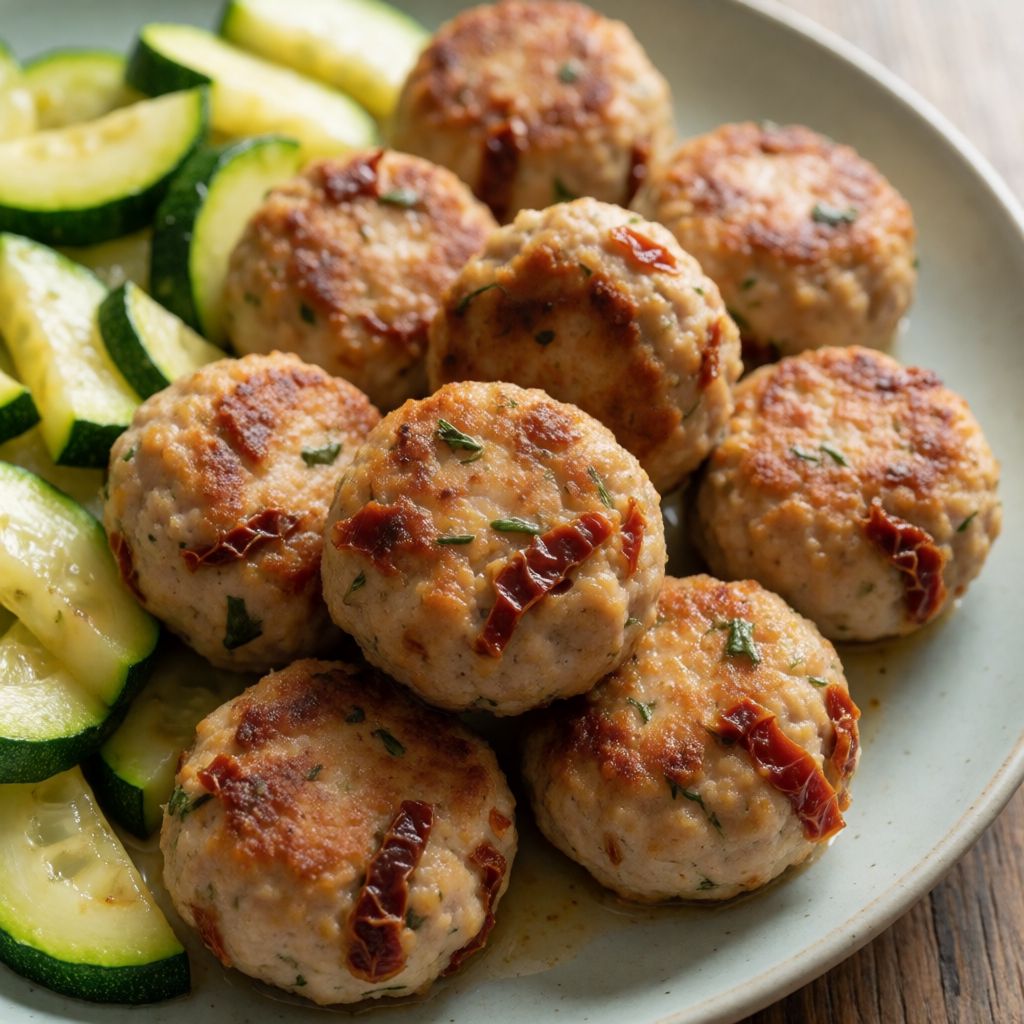
 AI photo
Chicken Meatballs with Courgette
Juicy chicken meatballs studded with courgette, garlic and sun-dried tomatoes, baked until golden.
Ingredients
- 400 g Chicken Mince
- 0.5 pcs Courgette coarsely grated
- 2 clove Garlic finely chopped
- 1 tbsp Sun-dried Tomatoes finely chopped
- 1 tsp Dried Thyme
- 1 tsp Salt
- 1 tsp Black Pepper freshly ground






Steps
Mix all the ingredients in a bowl and let the mixture rest for 30 minutes.
30 minShape neat meatballs and fry them in butter in a frying pan until cooked through.
Bake the meatballs in a preheated oven at 180°C (fan) for 15-20 minutes, until golden.
15 min
What was changed
Oven temperature rounded to to match standard UK oven settings; all other ingredients and amounts are unchanged.
Chicken meatballs are a trick against a design flaw: chicken mince is lean, with almost no fat to carry it through two separate bouts of heat — frying, then baking. Everything else in this mix exists to compensate for that one problem.
The courgette is not there for colour or virtue. Grate it coarse, salt goes into the mix, and over the thirty minutes of resting, salt pulls water out of the courgette's cells by osmosis. That water doesn't vanish — it moves into the mince, where chicken's own proteins, roughed up by the same salt, swell and grab hold of it. It's the same mechanism that binds a sausage: salt, protein, time, nothing mystical. Skip the rest and you get meatballs that either fall apart in the pan, not bound yet, or dry out in the oven, with no water in reserve to lose. Thirty minutes is a floor, not a ritual number — if your kitchen is warm it won't go faster, protein doesn't hurry because you're in a rush.
Frying first and then baking is two different jobs, not one job twice. The butter in the pan is there to brown — fast, by contact, before the inside overcooks. The oven after that is gentle and even, finishing the centre without punishing the crust you already built. Some skip the pan and bake straight from raw — fine, but you lose the crust, and with it a layer of flavour that only hot metal gives you. A domestic hob is more honest about its own limits here than it looks: you don't have the firepower to sear and cook through in the same breath, so let the pan do colour only, and hand the rest to the oven.
Chicken mince: buy it with some thigh meat mixed in if the shop allows it — pure breast mince is the leanest thing on the shelf and the hardest to keep moist. If all you can find is the pale, lean kind, the courgette trick isn't decorative, it's doing the work fat would otherwise do.
Courgette, grated coarse rather than fine: a coarse grate breaks fewer cells at once, so the water comes out slowly, staggered through the thirty minutes, under your control. Grate it fine and it dumps its water during mixing, before you're ready to use it. No courgette in the flat — grated raw potato does roughly the same osmotic job, and brings a little starch with it, which only helps the bind.
Garlic, finely chopped rather than pasted: raw garlic is sharp, almost bitter, and that sharpness needs the heat of the pan to round out. Chopped keeps a little texture, something that can catch and darken slightly at the edges — a flicker of char adds flavour; acrid char ruins it, so don't let the pan sit still once it starts.
Sun-dried tomato: concentrated tomato, salt and acid in one small spoon. Drying tomatoes in the sun was never about flavour — it was a way to keep them edible once the season ended, before anyone had a fridge. The flavour we now chase on purpose is a side effect of that old necessity. Without any to hand, a teaspoon of tomato paste fried for half a minute until it darkens gives a similar hit of concentrated acidity, minus the chew.
Thyme, dried, crushed a little between your fingers before it goes in: dried herbs keep their oils locked inside whole leaves, and rubbing breaks that open the way chewing would. Fresh thyme carries more water and less punch gram for gram — use about three times as much, chopped fine, if that's what's in the garden.
Fat for frying: the only real requirement is that it can sit in a hot pan without burning before the meatball browns, and that it stays out of the way of the thyme and garlic rather than fighting them. Butter does this and adds a little of its own nuttiness to the crust, which is why it's specified rather than just "oil." Any flavourless oil — sunflower, light olive, anything that doesn't announce itself — will brown the meat just as well; you only lose that last note of butter.
Doneness, both stages, is for your senses, not the clock. In the pan, you're not after cooked-through, only a crust: when the surface stops sticking and turns the colour of strong tea, turn it. In the oven, fifteen minutes at 180°C fan is a start, not a finish — press one meatball, it should push back firm with no soft give at the centre, and any juice that escapes should run clear. Fan ovens in particular tend to run a touch hotter than the dial claims, so the first time you make these, open the door and look before you trust the timer.