
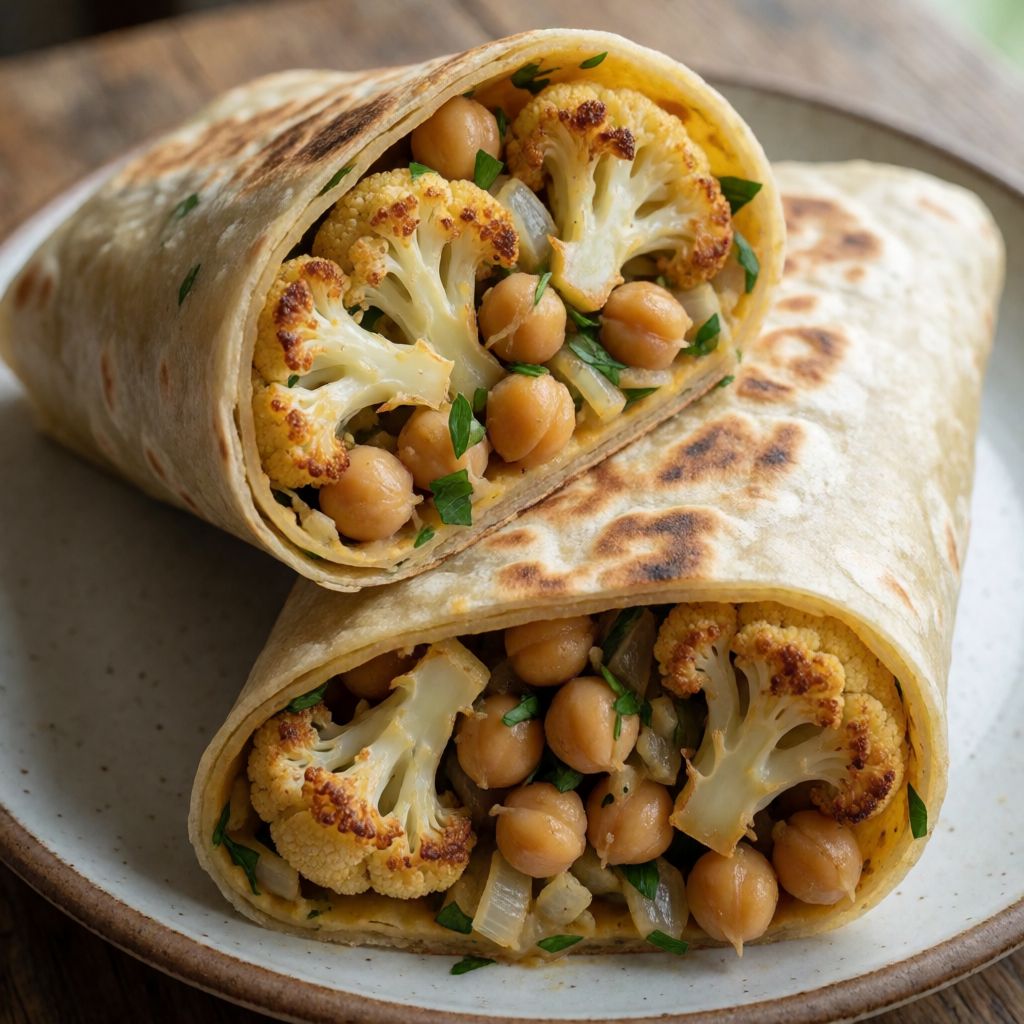
 AI photo
Chickpea and Cauliflower Wrap
A simple roasted chickpea and cauliflower wrap, bright with lemon, sumac and capers.
Labels are worked out automatically from the ingredients and can be wrong. Check the packaging if it matters to you.
Ingredients
- 1 can Chickpeas drained and rinsed
- 1 pcs Cauliflower broken into florets
- 1 pcs Onion finely chopped
- 2 clove Garlic finely grated
- 1 pcs Lemon juice and zest
- 1 bunch Parsley
- 1 tbsp Capers drained and finely chopped
- 1 tbsp Sumac
- 1 tbsp Olive oil
- Salt to taste
- Black pepper to taste
- 8 pcs Tortilla wraps
- 80 g Rocket
- 0.5 pcs Cucumber finely diced
- 3 pcs Tomato diced
- 30 g Pumpkin seeds toasted in a pan









Steps
Spread the chickpeas, cauliflower florets and onion on a baking tray lined with parchment paper.
In a bowl, mix the garlic, lemon juice, lemon zest, olive oil, salt and pepper. Pour this over the vegetables on the tray and mix well.
Roast in an oven preheated to 175°C (fan) for 20-25 minutes until golden.
23 minSprinkle the roasted vegetables with sumac, the finely chopped capers and finely chopped parsley.
Warm the tortillas in the oven or in a pan until soft.
Fill the warm wraps with the roasted cauliflower and chickpeas, then add rocket, tomato, cucumber and toasted pumpkin seeds.
This is a roast dinner that got folded instead of plated — cauliflower and chickpeas doing the job of lamb, a wrap doing the job of a plate. What decides whether it works is not the oven, it's the tray. Spread everything too thick and you steam it under its own moisture; spread it thin and it roasts. That's the whole trick.
Cauliflower is mostly water held in a loose cell structure. Heat has to drive that water off before the surface can brown — if the florets are crowded, the steam coming off one piece has nowhere to go and just cooks its neighbour soft and grey. One layer, with gaps you can see the parchment through, is not fussiness, it's physics. The chickpeas and onion go in the same tray because they want the same thing: dry heat and room to breathe.
Don't trust "20-25 minutes" as a number — trust the edges. You're looking for the cauliflower to go from chalky white to freckled gold-brown at the tips, the onion to soften and turn from sharp white to amber, almost translucent. If at 20 minutes it's still pale and wet-looking, that's not the clock's fault — it's the tray's. Give it more time rather than more heat; cranking the oven up just scorches the tips while the core stays raw-tasting.
Sumac and lemon are doing the same job twice, which is deliberate, not sloppy. Roasting mutes sharpness — sugars caramelise, acidity cooks off — so by the time the vegetables come out they're sweeter and flatter than they went in. Sumac, added raw at the end, puts a clean, dry sourness back on top without adding more liquid to vegetables you've just spent 25 minutes drying out. If you haven't got sumac, a scraping of extra lemon zest plus a pinch of ground coriander gets you close — not identical, but it does the same job: lift, not weight.
Capers and parsley, chopped fine and tossed in off the heat, are there for salt-savoury bite and green freshness respectively — add them to the hot tray and the parsley wilts to nothing and the capers lose their snap. Chop them, hold them back, add last. If capers aren't in the cupboard, chopped green olives give you a similar salty punch; it's a substitution by function — "something briny and sharp" — not a brand name.
The dressing — garlic, lemon juice and zest, olive oil, salt, pepper, mixed before it touches the tray — exists so the garlic doesn't scorch. Raw grated garlic dropped straight onto a hot tray burns in patches long before the cauliflower is done, and burnt garlic tastes bitter in a way nothing else in the dish can cover. Suspending it in oil and lemon juice first slows that down and spreads it evenly, so you get garlic flavour, not carbon.
Chickpeas from a tin are already cooked — what roasting does for them here is dry the surface so they crisp rather than stay mushy, and let them pick up the garlic-lemon-oil mix the way a dry sponge takes up liquid better than a wet one. Rinse them properly; the canning liquid is starchy and a bit metallic, and left on, it dulls everything else.
For the wrap itself: warm the tortilla until it's soft and pliable, not toasted — the aim is a wrap that folds without cracking at the seam, not a crisp. Cold tortilla straight from the packet splits the moment you roll it, because the fat in it has gone stiff; gentle heat loosens that fat back up. Rocket, cucumber, tomato and pumpkin seeds go in raw and cold on purpose — they're the contrast to everything that's just come out of the oven, in temperature and in crunch. If you've no rocket, any leaf with a peppery edge — watercress, baby spinach with a squeeze more lemon — does the same contrasting job.
This feeds four generously as a main, assuming two wraps each — eight tortillas, one tray of vegetables between them. It's not a dish that minds waiting: the roasted filling actually holds its texture better once it's had ten minutes to cool slightly and firm up, so there's no harm doing the oven work ahead and assembling the wraps just before you eat.