
 AI photo
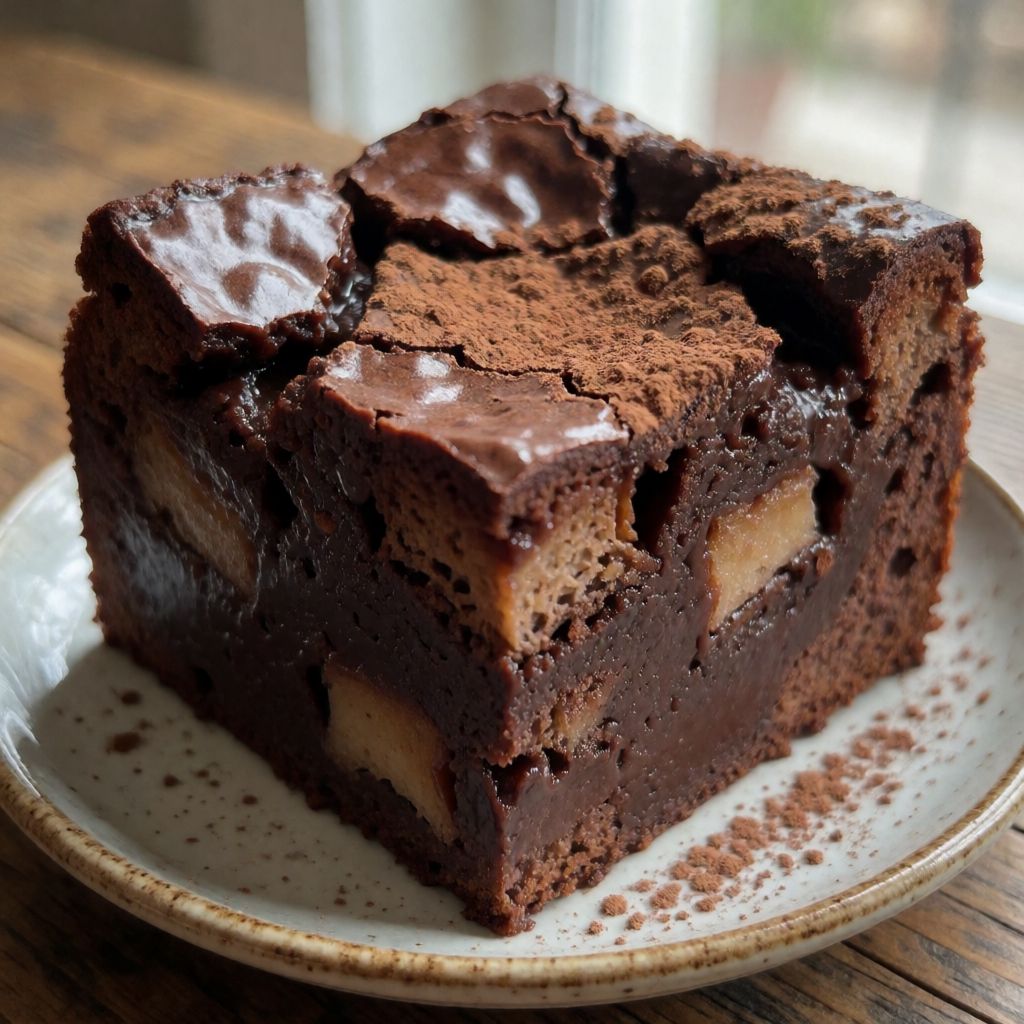
Chocolate Bread Pudding Cake
A rich chocolate cake made from bread, perfect for using up a stale loaf.
Labels are worked out automatically from the ingredients and can be wrong. Check the packaging if it matters to you.
Ingredients
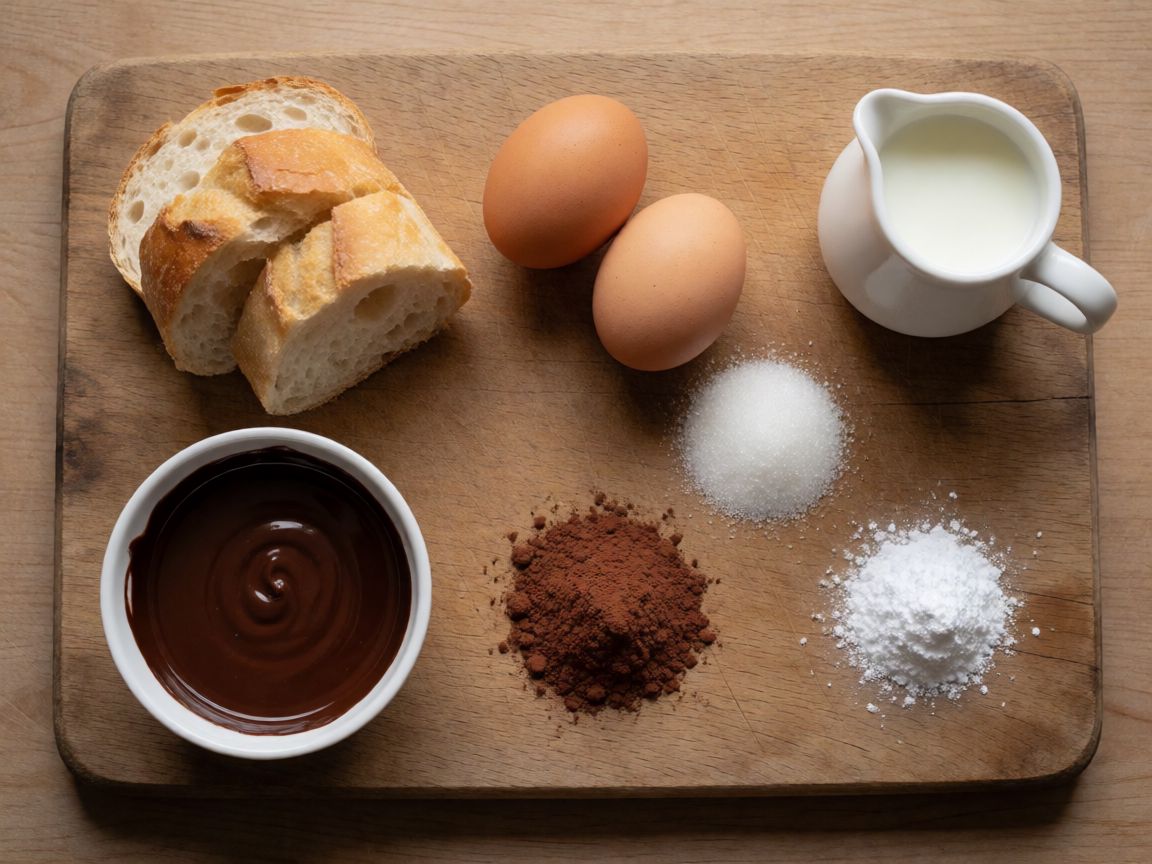
- 300 g Bread fresh or stale
- 2 pcs Eggs
- 120 g Caster sugar
- 100 g Dark chocolate melted
- 20 g Cocoa powder
- ml Milk add as needed to soften the bread
- g Icing sugar to taste, for dusting






Steps
Cut the bread into small pieces and place in a bowl. Add milk to soften it, then mash with your hands.
Add the eggs, caster sugar, melted chocolate and cocoa powder. Mix until smooth.
Line a 20-22cm springform tin with baking paper and pour in the mixture.
Bake at 170°C (fan) for 55-60 minutes.
60 minLet the cake cool completely before serving, dusted with icing sugar or cocoa powder.
What was changed
One fixed oven temperature was kept instead of the original's two alternative settings, for a clear instruction.
This isn't really a cake, whatever the tin suggests. There's no flour, no raising agent, nothing to make it rise. What you've got is a custard — egg, sugar, chocolate — setting its way through a mass of soaked bread instead of through cream. The bread isn't flavour here, it's scaffolding. Pull it out and you'd just have a chocolate egg custard with nowhere to stand.
What decides whether this works is moisture, twice over. First, how wet the bread is before it goes in the oven — too dry and the custard has nothing to cling to, too wet and the middle stays a swamp no amount of baking will fix. Second, whether you let it cool all the way before you cut it. Warm, it's still a liquid wearing a solid's clothes. The egg protein that's setting it needs the drop in temperature to actually lock in place. Cut early and you get a wound, not a slice.
Some say you need fresh bread for a pudding like this — no, the opposite, and it's not fussiness, it's physics. Fresh bread is already full of its own moisture and air; it floods with milk unevenly, goes gluey in patches, and fights you when you mash it. Bread a day or two old has already given up some of that water. It drinks the milk back evenly, all through the crumb, and turns into a paste you can actually control. This cake exists because someone, a long time before food waste was a virtue people talked about, needed to use bread before it went to the bin. That's the whole tradition, no mystery in it.
Bread: the only real requirement is a close crumb — something that holds together when wet rather than a lattice of big holes like ciabatta, which will just let the custard run straight through instead of binding into it. White sandwich bread, brioche, even a dense sourdough all work; brioche gives you a richer, more buttery result because it's already carrying egg and fat of its own. Day-old is kinder to work with than fresh, for the reasons already said, but if all you've got is this morning's loaf, let it sit out uncovered for a few hours first rather than fighting it straight from the bag.
Eggs do the actual setting. Two is right for 300g of bread — enough protein to coagulate through the whole mass without turning it rubbery. Let them come to room temperature if they've been in the fridge; cold egg meeting melted chocolate seizes the chocolate into little hard flecks instead of blending in, and you'll be stirring longer than you need to for no good reason.
Caster sugar dissolves into the wet bread and egg almost on contact, which is why it's specified rather than granulated — granulated will still get there, just slower, and you'll feel grit under your spoon for longer before it gives up. Either is fine; one just asks more patience of you.
Chocolate is doing two jobs — flavour, and fat, since there's no butter or oil anywhere in this recipe. The criterion for which chocolate to buy is cocoa solids, not the brand on the wrapper: something around 60–70% gives you bitterness that balances the sugar and the icing sugar dusted on at the end. Go lower, towards milk chocolate, and you lose that edge — it tips sweet, and the extra milk fat in milk chocolate softens the set, so the cake holds together worse when you slice it. The cocoa powder on top of the chocolate is there for depth without adding more fat — use the plain, unsweetened kind, whichever shade you've got in the tin, it's not fussy about that.
Milk is the one measurement given without a number, and that's deliberate rather than an oversight. You're not making a batter you can pour — you're making a paste you can mash with your hands, just wet enough to go smooth, no wetter. Add it a splash at a time. Stop the moment the bread stops fighting you and starts giving. Oat or any plant milk works the same way here; the bread doesn't care whose milk it's drinking, only how much.
The paper lining in the springform tin isn't decoration — this mixture is loose enough, before baking, to find its way through the seam of a springform and onto your oven floor, and nobody wants that smell for the rest of the week. A disc and a strip of baking paper solve it completely. Once it's out and properly cold, dust with icing sugar or more cocoa — purely for bitterness and contrast against the sweetness underneath, it changes nothing about how the cake holds together. Four modest, after-dinner-with-tea portions is really what 300g of bread gives you here; it's dense, and a little goes further than the size of the tin suggests.