
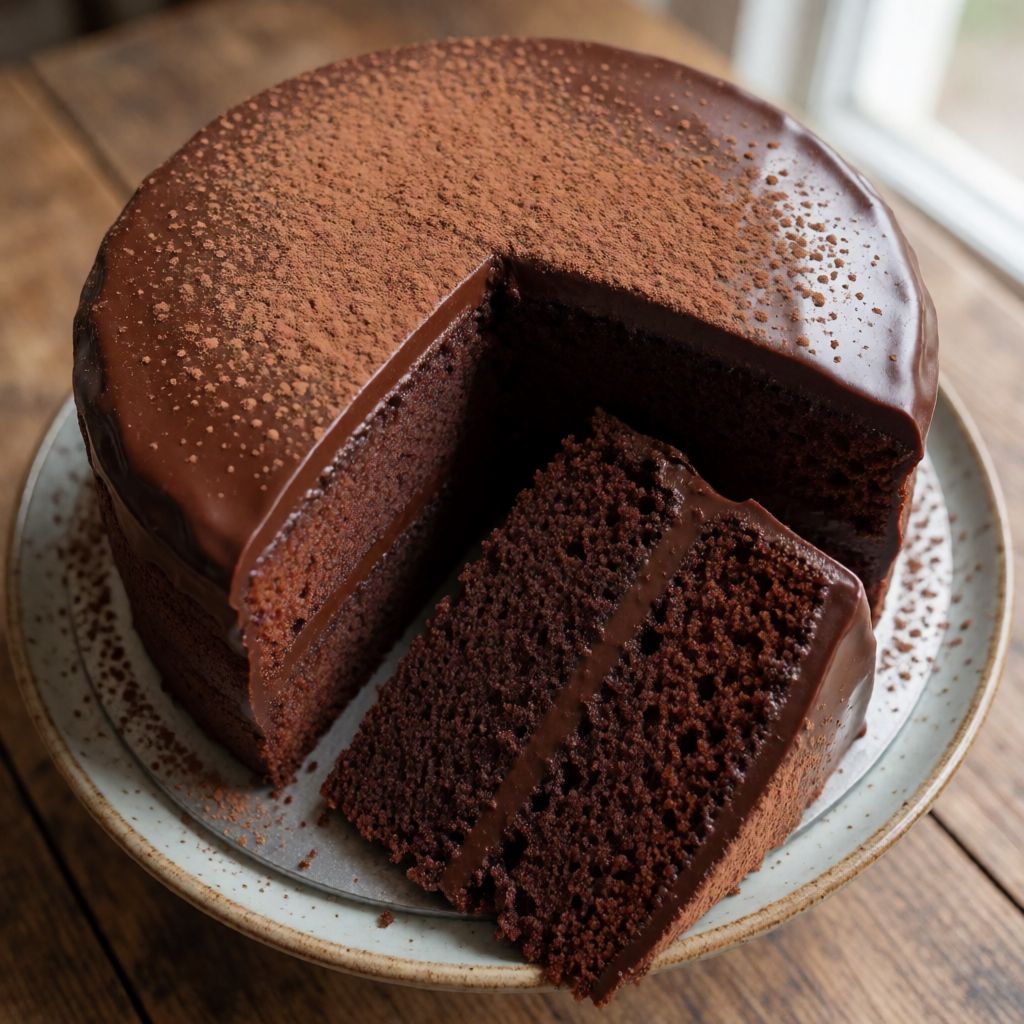
 AI photo
Chocolate Cake in a Kitchen Machine
A rich chocolate cake made quickly in a kitchen machine, such as a Thermomix-style appliance.
Labels are worked out automatically from the ingredients and can be wrong. Check the packaging if it matters to you.
Ingredients
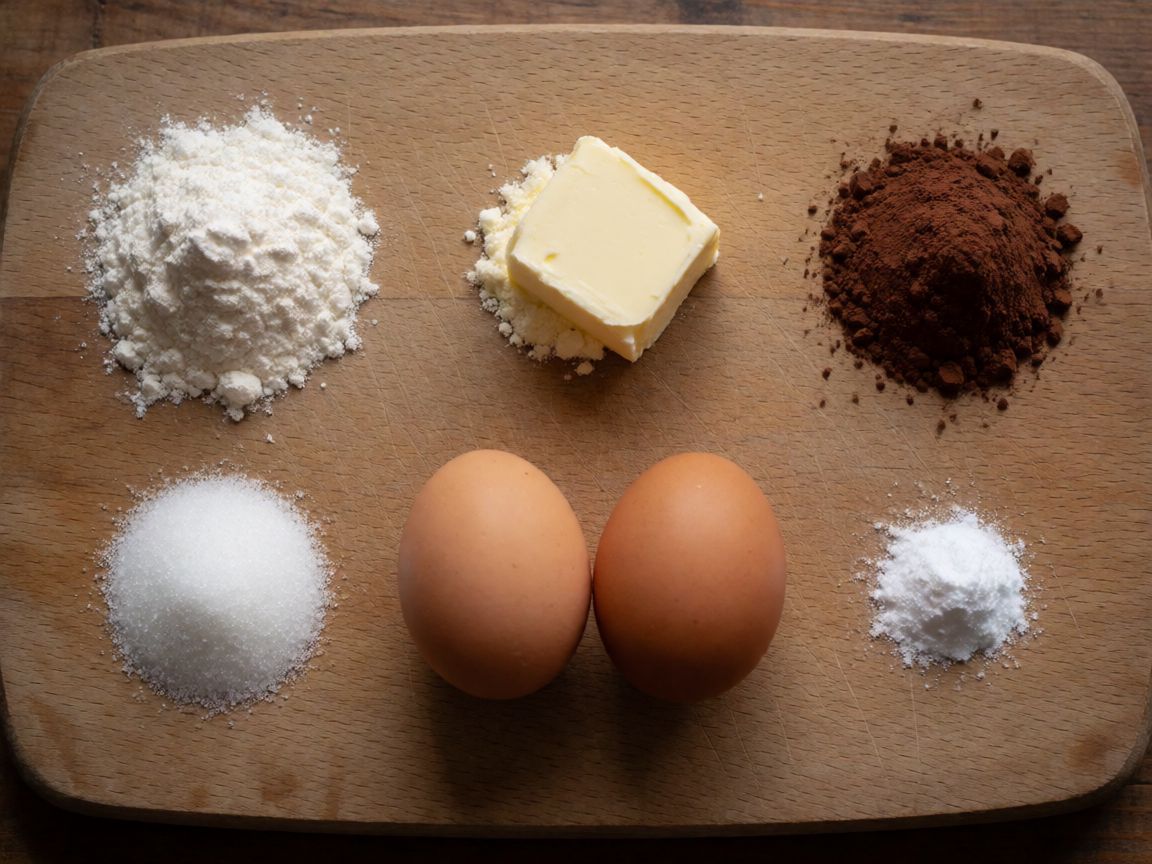
- 360 g Plain flour
- 200 g Water
- 200 g Butter at room temperature
- 360 g Caster sugar
- 70 g Cocoa powder
- 2 pcs Eggs
- 1 pcs Baking powder one sachet







Steps
Prepare all the ingredients in advance and have them ready at hand.
Pour the water into the bowl of the kitchen machine and add the butter, at room temperature, cut into pieces.
Melt the mixture at 90°C on speed 2.
Add the flour, sugar, cocoa powder and eggs. Whisk everything on speed 6.
Check that the ingredients are well combined; use a spatula if needed.
Add the baking powder and mix on speed 5.
Grease a 20–26 cm cake tin with butter and pour in the batter.
Bake in an oven preheated to 180°C, using the static (conventional) setting.
40 minCheck if it's done using a wooden skewer; it should come out dry. Bake for a few more minutes if needed.
This is a melt-and-mix chocolate cake, not a creamed one — and that distinction decides everything about how it turns out. You don't beat air into soft butter the way you would for a Victoria sponge. Instead you melt the butter into the water first, at a temperature gentle enough that it blends rather than fries (90°C — just below where butter starts to separate and smell of browned milk solids), and that emulsion becomes the base everything else goes into. The rise here comes almost entirely from the baking powder and the eggs, not from trapped air. That's why the crumb ends up dense and fudgy rather than light — and that's the point, not a flaw to apologise for.
What makes or breaks it is two moments, both easy to rush past. First, the butter-and-water stage: it needs to go from solid lumps to a smooth, pourable liquid with no visible fat globules floating loose — if it looks split, like butter sweating in a hot pan, you've gone too hot or too fast, and the finished cake will have greasy patches instead of an even crumb. Second, the baking powder stage, mixed only briefly and on a low speed. Baking powder starts releasing gas the second it meets liquid, and every extra turn of the whisk after that knocks bubbles back out of a batter that hasn't yet got the structure (from egg and flour) to hold them in. Mix it in for structure, not for smoothness — it's already smooth.
Flour here is plain, deliberately, because the baking powder is measured and added as its own ingredient. Self-raising flour already carries a raising agent baked into the bag at a fixed ratio that's rarely right for a recipe this wet and this heavy with cocoa — use it and you risk a bitter, soapy edge from excess alkali reacting with nothing left to neutralise it, on top of over-rising and then collapsing as it cools. If plain flour is all you can picture in the cupboard and self-raising is what's actually there, leave out the sachet of baking powder and accept the rise you get.
Butter and water together are doing a job a single fat can't do alone: butter sets firm again as the cake cools, holding the crumb's shape, while the water keeps the whole thing from drying out the way an all-butter batter can. It's also, quietly, an economical trick — two hundred grams of butter stretched by two hundred grams of water gives you the moisture of a far richer cake for half the fat cost. If you're out of butter, a neutral oil will melt-and-mix the same way, but the cake will stay softer and never quite firm up on cooling, because oil has no set point the way butter does. Don't reach for olive oil here — it has a taste of its own, and chocolate doesn't need company.
Caster sugar, not granulated, because the finer grain dissolves into that hot butter-and-water base properly instead of leaving a gritty undissolved residue that shows up on your tongue later. If granulated is what you've got, give the melted base an extra minute of patience before you move on — let the sugar have time to vanish into the liquid.
Cocoa powder is unsweetened either way — natural or Dutch-processed, it doesn't much matter here, because the leavening is baking powder, not bicarbonate of soda, so you're not relying on cocoa's acidity to trigger a reaction. Dutch-processed will give you a darker colour and a milder, rounder flavour; natural cocoa tastes sharper and more bitter. Either works; pick by taste, not by rule.
The eggs want to be at room temperature for the same reason the butter does — cold eggs dropped into a warm emulsified batter can make the fat seize back into small hard flecks instead of staying blended, which shows up later as tiny greasy spots in the baked crumb.
The baking powder sachet in a UK kitchen is usually around 7g — check the packet rather than assume, because sachets vary by brand and the amount here is tuned to this quantity of flour. Whatever tin you use, from 20cm to 26cm, the batter depth changes and so does the baking time — a wider tin means a shallower cake that's done sooner. Trust the skewer, not the clock: it should come out with no wet batter clinging to it, and the cake should have started pulling in slightly from the sides of the tin. This keeps well wrapped for several days, and it's honestly better the next day, once the crumb has had time to even itself out — good company for a pot of tea with milk after a Sunday roast, when nobody wants anything fussy for pudding.