
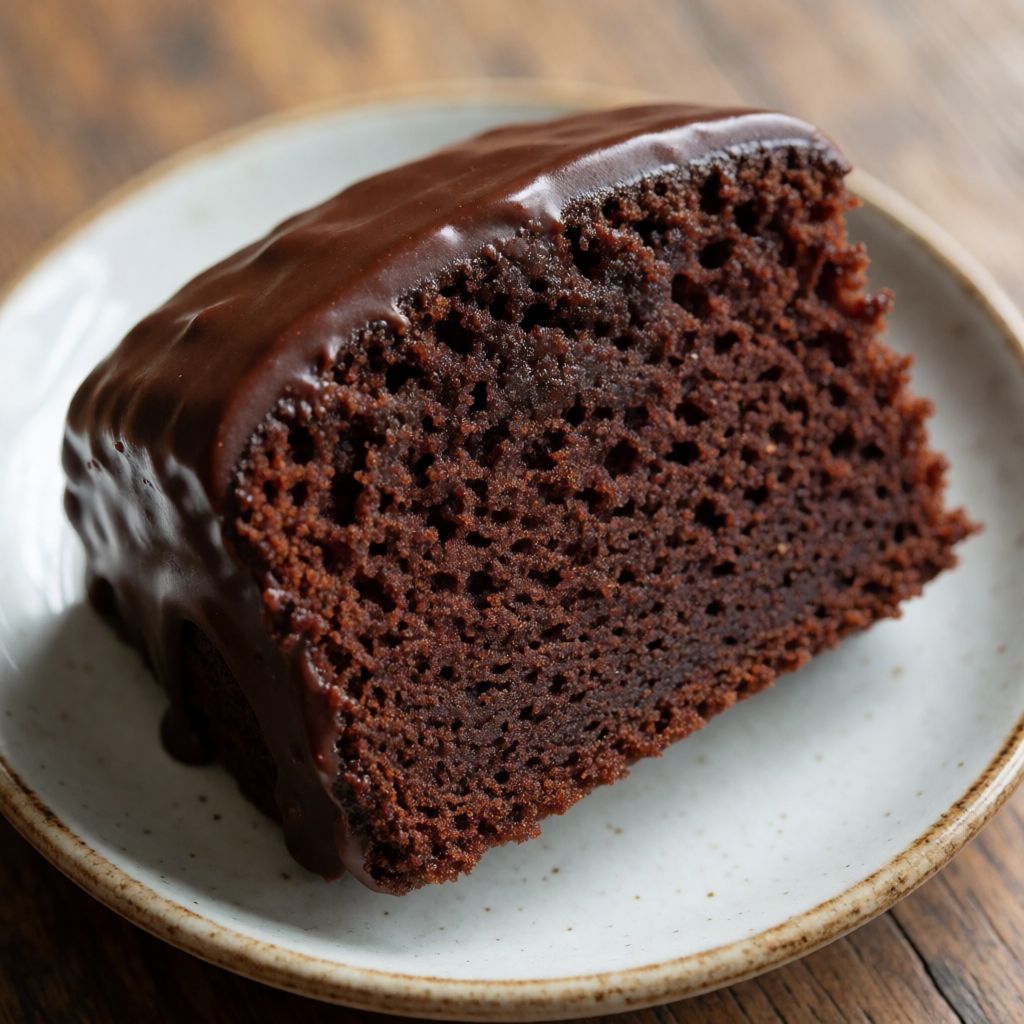
 AI photo
Chocolate Cake
A rich, dense chocolate cake, best baked a day or two ahead so it sets to the right fudgy texture before serving.
Labels are worked out automatically from the ingredients and can be wrong. Check the packaging if it matters to you.
Ingredients
- 200 g Butter
- 6 pcs Eggs
- 250 g Sugar
- 1 pcs Vanilla pod
- 70 g Plain flour
- 1 pinch Salt
- 200 g Dark chocolate roughly chopped
- 2 tbsp Coffee







Steps
Melt the butter slowly in a pan over low heat.
Put the eggs, sugar and vanilla seeds in a bowl and whisk until pale and fluffy.
Finally, fold in the plain flour and salt.
Remove the pan with the butter from the heat and stir in the chocolate and coffee. Mix well until the chocolate has melted and the mixture is smooth.
Slowly fold the chocolate mixture into the batter and mix well until fully combined.
Pour the batter into a greased 20 cm springform tin lined with baking paper on the bottom.
Bake in a preheated fan oven at 175°C for about 30 minutes.
30 minThe cake should still feel slightly underbaked in the centre.
It will reach the right texture the next day, so it's best baked 1-2 days before serving.
Tap the tin gently on the worktop when you take the cake out of the oven, so it settles slightly.
Refrigerate once cooled.
This is a flourless-in-spirit chocolate cake — 70 g of flour against 200 g of chocolate and 200 g of butter means the structure comes almost entirely from egg protein and melted fat, not gluten. That's why it has that dense, almost fudgy crumb rather than the open spring of a Victoria sponge. What decides whether it works is restraint at two points: how far you whisk the eggs, and how far you bake the middle.
The eggs and sugar go in pale and fluffy — that's not decoration, it's the only leavening this cake gets. No baking powder, no bicarb. Whisking beats air into the eggs, and that air is what lifts the batter in the oven, because there's nowhere near enough flour to build a scaffold of its own. Under-whisk and you get a cake that sits flat and dense all the way through, not just in the centre where it's supposed to.
Then there's the baking itself, and this is where people panic and ruin it. Some say a cake is done when a skewer comes out clean — no, not this one, because the whole design depends on the centre staying wet. You're baking the edges to a set crumb while the middle stays at that just-before-set stage, closer to ganache than sponge. Pull it when the centre looks underdone, because it keeps cooking in its own residual heat for a few minutes after it leaves the oven, and because the real setting happens overnight in the fridge, not in the oven at all.
Patience is the main ingredient here, more than the chocolate. The recipe tells you to bake it a day or two before you need it, and that's not a convenience note — the cake is structurally unfinished when it leaves the oven. Overnight in the fridge, the butter and chocolate fat re-solidify slowly around the egg structure, and that's what turns a loose, barely-held centre into something you can slice cleanly. Cut it warm, or even the same evening, and you'll get something closer to a chocolate pudding falling apart on the plate. That's not a failure of your oven — it's a fat that hasn't had time to set.
Butter: melt it slowly, over low heat you can watch, because the goal is just liquid fat, not browned fat. Push it too hot and you start cooking the milk solids — fine for other things, wrong here, where you want a clean fat base for the chocolate to melt into off the heat. If you're out of butter, any fat that's solid at room temperature and has no strong flavour of its own will do the structural job — but butter's water content also matters slightly to texture, so a neutral margarine is the honest substitute, not oil, which stays liquid and won't help the cake firm up overnight.
Eggs: six is a lot for a cake this small, and that's the point — they're doing the work flour would normally do. Buy them at room temperature if you can, or sit them in warm water for a few minutes before you start; cold eggs resist whisking and won't hold as much air, which quietly costs you the lift you're relying on.
Dark chocolate: choose it by what it tells you on the back, not the front — look for a cocoa percentage around 60–70%. Much higher and the cake turns bitter and dry; much lower (so-called "cooking chocolate" padded with sugar and vegetable fat) and it won't set properly in the fridge, because it's got less actual cocoa solid to firm up. Chop it roughly so it melts evenly in the time the warm butter takes to loosen it, rather than sitting in stubborn lumps.
The coffee is not there to make it taste of coffee — two tablespoons is below the threshold where you'd notice coffee flavour on its own. What it does is sharpen the chocolate, the way a pinch of salt sharpens sugar. If you don't drink coffee and don't want to make any, a strong spoon of instant granules dissolved in a splash of hot water does exactly the same job; leaving it out entirely just means a slightly flatter-tasting chocolate, not a ruined cake.
On the oven: "preheated fan oven at 175°C" assumes your oven's fan setting is honestly calibrated, and plenty of UK domestic ovens run a few degrees hot or cold against their dial. Thirty minutes is the floor, not the target — judge it by the centre, which should wobble like a just-set custard, not by the clock. If you're using a conventional (non-fan) oven, go up roughly 10–15°C to get the same effect, since fan ovens cook a touch faster and more evenly than static ones.