
 AI photo
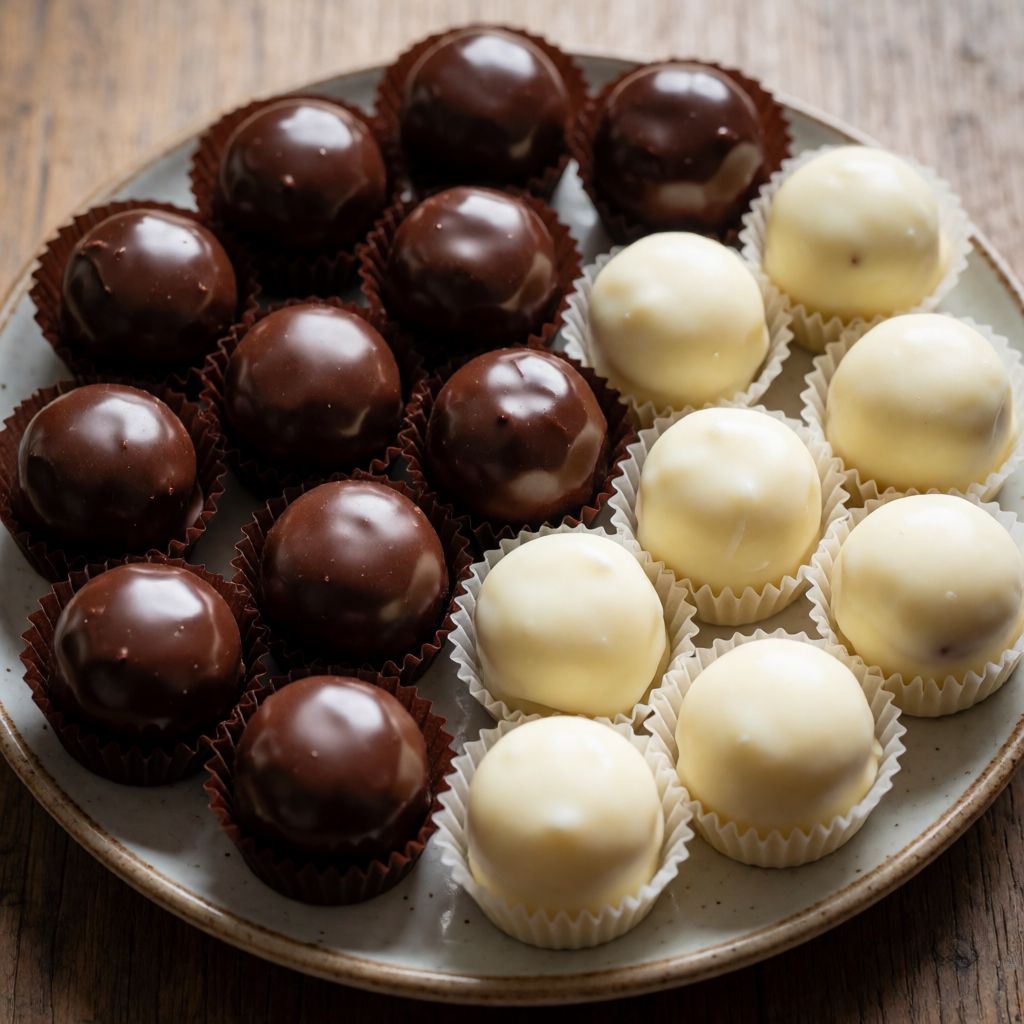
Chocolate Pralines with Filling – 3 Delicious Varieties
Chocolate pralines with three fillings: white chocolate and raspberry, hazelnut praline crunch, and Baileys with milk chocolate.
Labels are worked out automatically from the ingredients and can be wrong. Check the packaging if it matters to you.
Ingredients
- 400 g Dark chocolate
- 75 g White chocolate
- 50 ml Whipping cream
- 2 tbsp Freeze-dried raspberries
- 3 tbsp Sugar
- 2 tbsp Water
- 50 g Hazelnuts
- 150 g Gianduja chocolate
- 100 g Milk chocolate
- 3 tbsp Baileys Irish Cream
- 4 tbsp Whipping cream






Steps
Chop the dark chocolate very finely.
Melt two-thirds of the chocolate in a bowl over simmering water, stirring, up to 50°C (no higher than 55°C). Remove from the heat and stir in the rest of the chocolate – the temperature should drop to 28°C.
Set the bowl back over the simmering water for 10 seconds, stir and check the temperature – repeat until it rises to 31–32°C.
Pour the tempered chocolate into the mould, turn it over and let the excess drip back into the bowl. Scrape the surface of the mould clean with a spatula.
White chocolate and raspberry truffle – 20 pcs. Melt the white chocolate with the cream in a bowl over simmering water, remove from the heat and stir in the freeze-dried raspberries. Let it cool below 32°C before filling the chocolate moulds.
Hazelnut praline crunch – 20 pcs. Heat the sugar and water in a pan until it turns into a golden caramel. Add the hazelnuts and remove from the heat. Tip the caramelised hazelnuts onto a sheet of baking paper and let cool, then chop finely.
Melt the gianduja chocolate in a bowl over simmering water and mix in the finely chopped hazelnuts.
Baileys and milk chocolate – 20 pcs. Melt the milk chocolate with the cream in a bowl over simmering water, remove from the heat, let cool slightly, then stir in the Baileys.
Divide the filling among the chocolate shells in the mould and level the surface. The filling should sit about 1 millimetre below the top of the mould, to leave room for sealing with chocolate.
Spread the tempered chocolate over the filling and let it set. If you like, pop it in the fridge for 10 minutes.
10 minTurn the chocolates out of the mould.
What was changed
Gianduja chocolate replaces Gianduja chocolate here, since this filling needs a soft, melting hazelnut-chocolate paste rather than the chewy nougat sweets sold under that name in the UK.
This is tempering dressed up as three different sweets. Sixty little shells, one shared skeleton: a thin cocoa-butter shell that snaps instead of smears, filled with three different soft centres, sealed, unmoulded. Once you understand why the chocolate gets heated, cooled, and reheated in that odd little dance, the "three varieties" stop being three recipes and become one technique with a new filling bolted on each time.
What decides whether this works is not the raspberry or the Baileys — it's the curve the chocolate's temperature travels. Cocoa butter is a mix of several fat crystal types, and only one of them (form V, if you want the jargon) gives you that glossy, hard, snap-when-you-break-it shell that doesn't melt on your fingers the second you pick it up. Melt chocolate and let it set however it likes, and you get all the crystal types at once — soft, streaky, grey-bloomed within a day. The heat-cool-reheat sequence is you steering the chocolate toward making mostly the one crystal type you want, on purpose, with a thermometer instead of luck.
Dark chocolate is both the shell and the main ingredient of two of the fillings, so buy one you'd eat off a bar — 70% is sound, lower is fine, but "chocolate flavour" compound bars won't temper properly because they're mostly vegetable fat, not cocoa butter, and vegetable fat doesn't crystallise the way you need it to. The white chocolate works the same way: no cocoa butter, no temper, no snap — which is why only the dark gets tempered here, while the white is used purely as a flavour-and-fat base for the truffle filling, melted and left loose.
The thermometer numbers aren't superstition, they're the three crystal-type boundaries: up to 50–55°C melts everything, including the crystals you don't want; dropping to 28°C by seeding in the untouched third of the chocolate reintroduces stable crystals as "seeds" for the rest to copy; nudging back to 31–32°C melts off the unstable types while keeping the stable seed crystals intact. If you don't have a thermometer, there's a rough cue: tempered chocolate dabbed on your lip feels barely cool, not cold, and a smear on a spoon sets matte and hard within a couple of minutes rather than staying tacky.
Freeze-dried raspberries, not fresh, because fresh fruit brings water, and water in a chocolate filling is how you get it seizing, splitting, or growing mould in days rather than weeks — the cream already does the job of softening the ganache, the raspberries are there for sharp flavour and colour without adding liquid. If you can't find them, a reduced raspberry coulis cooked hard enough to drive off most of the moisture is a workaround, but freeze-dried stays truest to the dry-filling logic.
The caramel for the hazelnuts is doing one job: giving crunch and roast flavour that survives being folded into warm, soft gianduja — plain roasted nuts would do the flavour but go soggy and lose their bite once coated in chocolate and left to sit. Watch colour, not a clock: sugar goes from clear to straw to amber to a deep gold that smells faintly of toffee rather than smoke — stop there, because sugar carries on cooking in its own heat even off the hob, and a caramel pushed to "nearly black" is bitter, not deep. Gianduja itself is just chocolate pre-blended with hazelnut paste — Italian economy from the 1800s, when cocoa was taxed and scarce and Turin confectioners stretched it with the region's own hazelnuts; if you can't get it, milk chocolate with a spoon of smooth hazelnut butter worked in gets you close.
Baileys and milk chocolate is the simplest filling and the one most likely to go wrong from impatience: stir the cream in while the chocolate's too hot and the alcohol's sharp edge cooks off along with some of its body; let it cool properly first and the liqueur stays a flavour, not a fume. The 1mm gap you leave under every filling before sealing isn't decoration — it's the only way the lid of tempered chocolate gets a clean, continuous surface to grip, instead of filling oozing out the side when you turn the mould over.
Patience is the real sixth ingredient across all three fillings and the shell alike: rushing the temper gives you bloom, rushing the caramel gives you bitterness, rushing the ganache cooling gives you a filling that weeps oil. None of these failures announce themselves until the next day, which is exactly why people blame "bad chocolate" for a problem that was actually a bad ten minutes.