
 AI photo
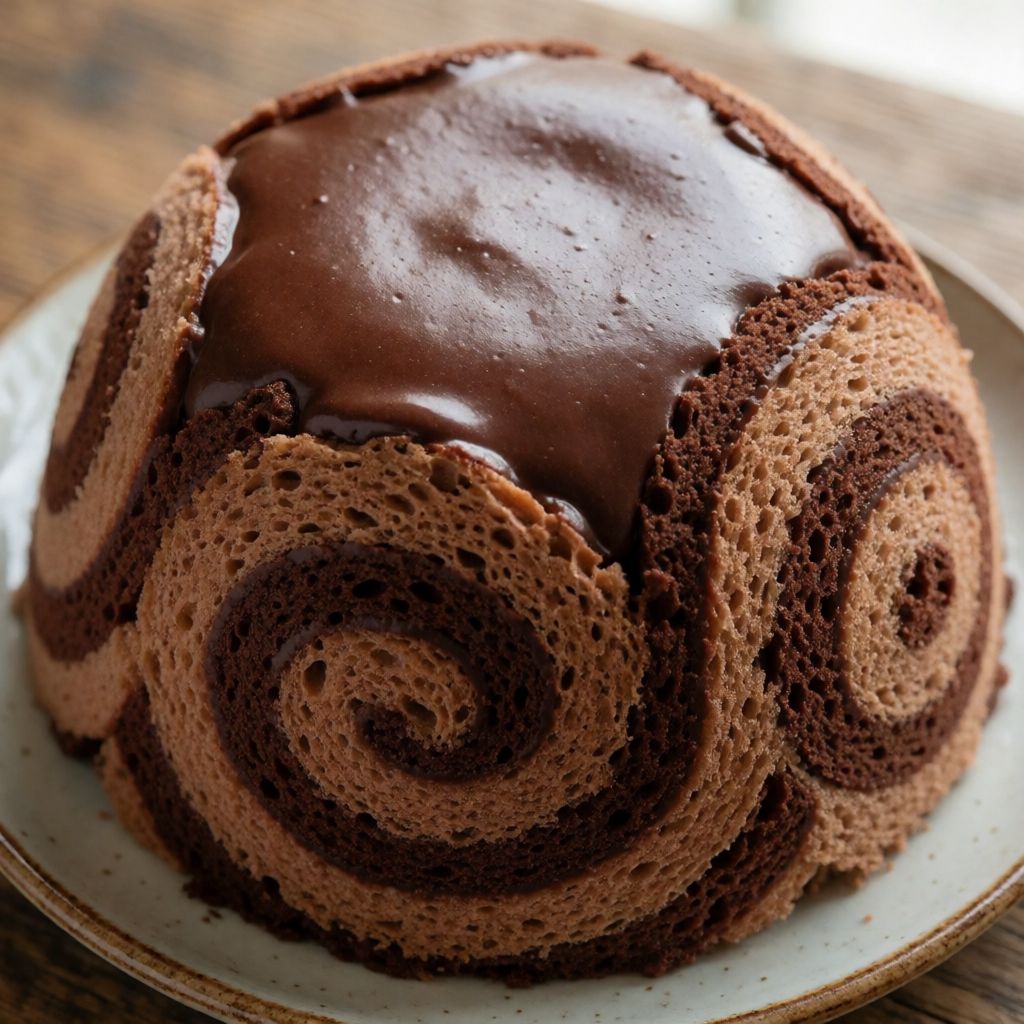
Chocolate Charlotte Royale
A plain sponge roulade spread with a dark chocolate ganache, wrapped around a silky Bavarian cream centre.
Labels are worked out automatically from the ingredients and can be wrong. Check the packaging if it matters to you.
Ingredients
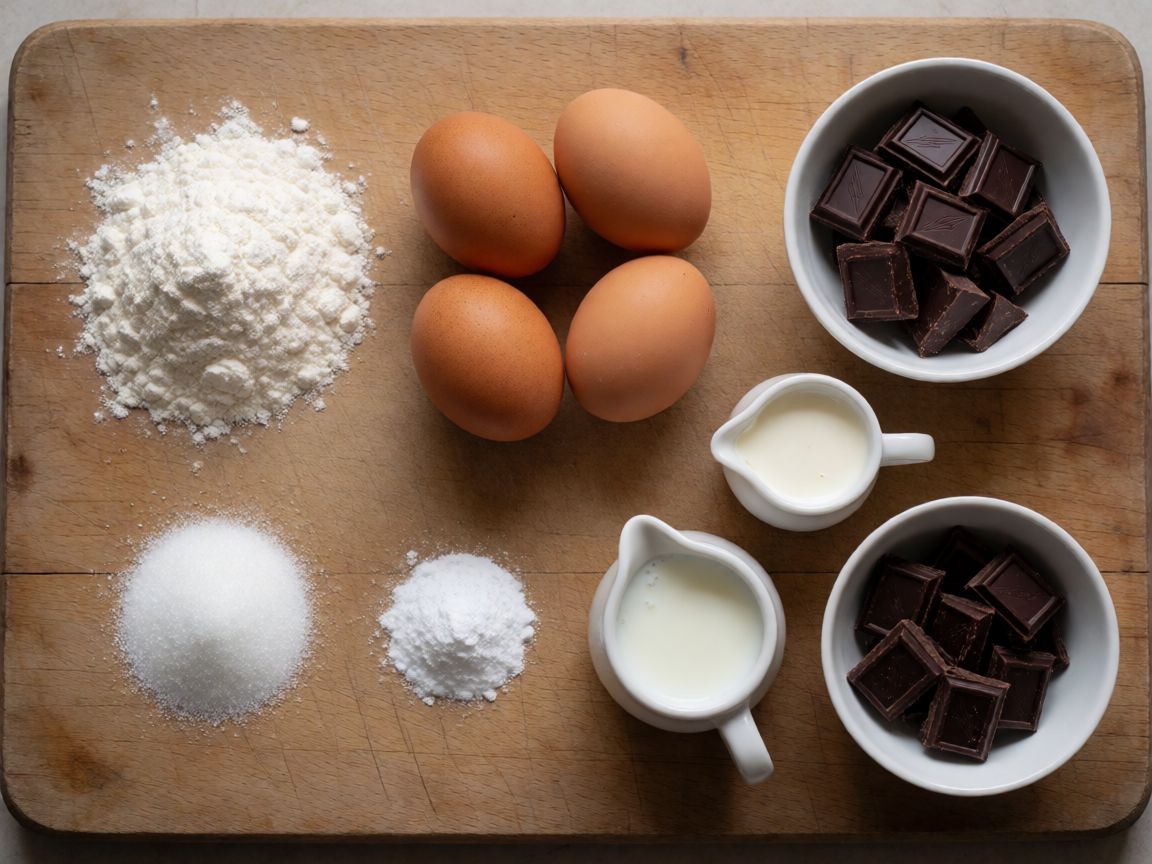
- 90 g Plain flour
- 4 pcs Eggs
- 150 g Caster sugar
- 16 g Baking powder
- 1 pinch Salt
- 120 g Dark chocolate
- 10 g Double cream
- 250 ml Milk
- 180 g Dark chocolate
- 4 pcs Egg yolks
- 150 ml Double cream whipped
- 4 pcs Gelatine about 8 g
- 50 g Caster sugar
- Mixed seasonal berries to taste










Steps
Separate the yolks from the whites and mix the yolks with the sifted flour using a mixer, until the mixture is light and smooth.
Whisk the egg whites to stiff peaks and gently fold them into the yolk mixture with an up-and-down motion.
Pour the batter into a tin lined with baking paper and smooth it out with a spatula.
Bake in a preheated oven at 180°C for 20 minutes.
20 minTurn the sponge out onto a clean tea towel, carefully peel off the baking paper by dampening it with cold water, roll the sponge up and chill it in the fridge.
Bring the cream to the boil and add the roughly chopped chocolate, stirring until completely melted.
Chill the ganache until it thickens slightly, then spread it over the unrolled sponge.
Roll the sponge back up, wrap it in cling film and chill in the fridge for 1 hour.
60 minSoak the gelatine in cold water for about 10 minutes.
10 minBring the milk to the boil with the chocolate broken into pieces and stir until completely melted.
Whisk the sugar with the egg yolks off the heat, then slowly pour in the hot chocolate milk in a thin stream.
Over a low heat, stirring constantly, heat the mixture to 82°C.
Remove from the heat, let it cool slightly, then add the squeezed gelatine and the whipped cream.
Cut the roulade into slices about 2 cm thick and use them to line a glass dome-shaped mould lined with cling film.
Pour the Bavarian cream into the centre and smooth it with a spatula.
Leave to set in the fridge for about 4 hours, then carefully turn out and unmould the cake.
Decorate with mixed seasonal berries, if you like.
A charlotte royale is a chocolate bombe wearing a Swiss roll as armour. You line a dome with disks of chocolate-ganache roulade, fill the cavity with a set chocolate Bavarian cream, chill it until it holds its shape without the mould, and turn it out so it looks like a patchwork of spirals. The whole thing works on one simple trick: a sponge wrapped around cream while warm will crack if you unroll it dry, so you roll it first, chill it cold, then unroll, fill, reroll. Nothing exotic — just respecting what hot flour and whisked egg can and can't do.
What decides success isn't the baking, it's two separate moments of patience. First, the sponge has to be rolled while it's still warm and pliable, because a Génoise-type batter sets its structure as it cools — cold sponge cracks along the roll instead of bending. Second, the Bavarian cream has to be built on an egg-yolk custard cooked gently enough that it stays a custard and not scrambled egg, which is why you stop it dead at 82°C: a few degrees past that and you've got sweet chocolate omelette, not cream.
Some say you need a kazan-style bain-marie setup to cook a custard safely. No — you need a thermometer, or failing that, a wooden spoon: the moment the custard coats the back of the spoon and holds a line when you drag a finger through it, it's done, no matter what the pan is made of. A wide saucepan on your hob, heat kept low enough that you can still talk while stirring, does the job.
The sponge itself is a flourless-adjacent Génoise: egg does almost all the lifting, flour is there mainly to give the crumb something to hang onto. Separating yolks and whites and whisking them apart, rather than whole, is what gives you the fine, dry crumb that can be rolled without weeping — whole-egg sponges hold more water and tear. Fold the whites in gently, up-and-down, not round-and-round: knock the air out here and the sponge bakes flat and dense, and no amount of syrup will save it.
The 180°C bake is the only heat number in this that you don't need to question — it's a thin layer in a wide tin, it cooks through fast, and the 20 minutes is a floor, not a deadline: pull it when it springs back at the touch and the edges have pulled slightly from the paper, not when the clock says so. Dampening the paper before peeling isn't fussiness — dry paper takes crumb with it, wet paper lifts clean, because the moisture softens the starch bond between cake and parchment.
The two chocolates do different jobs and shouldn't be swapped for each other carelessly. The 120 g chocolate in the ganache wants to be eating chocolate, 60–70% cocoa, because it sets at room-fridge temperature into something sliceable, not a smear. The 180 g chocolate in the Bavarian cream can carry a touch more bitterness since it's diluted by milk, cream and sugar — if all you have is one bar in the cupboard, use it for both and just add a pinch more sugar to the custard to balance. Any dark chocolate with no vegetable fat substituted for cocoa butter will set properly; the cheap bars that stay soft in the fridge are cut with palm oil and won't hold a dome shape.
Gelatine here is doing structural work the chocolate alone can't — chocolate sets by cooling fat, which is soft-set and will slump at room temperature; gelatine sets by trapping water in a protein mesh, which is what lets you turn this whole dessert out of its mould onto a plate and have it stand. Soak it in cold water first because gelatine dropped straight into hot liquid clumps on the outside before it can hydrate through — ten minutes of cold soak, then squeeze it out, is what lets it melt evenly into the warm custard.
Whipped double cream folded in at the end does two things: it lightens the texture so the dessert isn't a solid chocolate brick, and it's why you let the custard cool slightly before adding it — fold whipped cream into a hot mixture and it just collapses back to liquid, you've whipped it for nothing. If you don't have double cream to whip, don't use single — it won't hold air at all; whipping cream (35%+ fat) is the real floor.
A dome mould is nice but not sacred — any bowl, lined with cling film, that's roughly the shape you want the finished cake to be will do. The four-hour set is genuinely four hours; gelatine needs that cold, undisturbed time to finish linking up, and checking on it by poking it is how you get a dome with a dent in the side. Berries on top at the end aren't decoration you can skip lightly either — the sharpness cuts the richness, which by this point in the dessert you'll be glad of.