
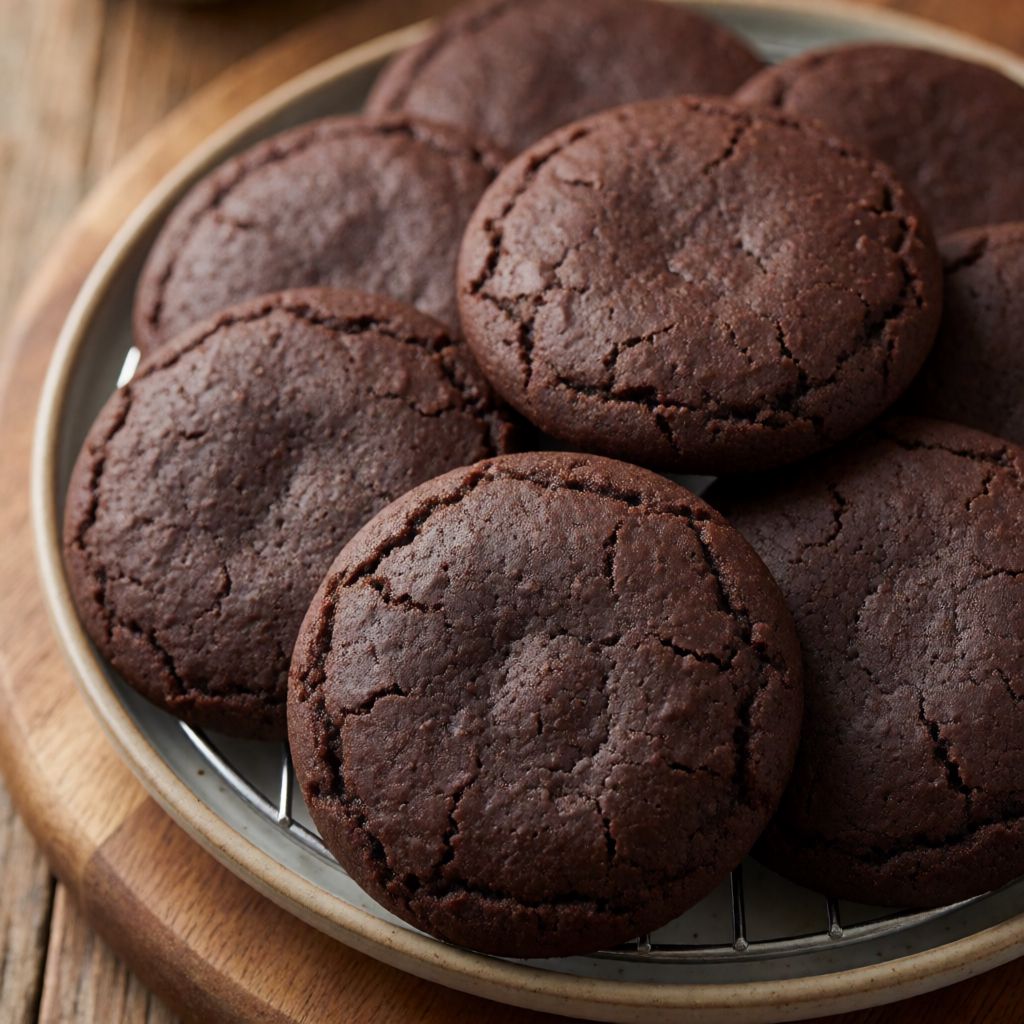
 AI photo
Dark Chocolate Cookies
Soft homemade cookies made with cocoa, melted dark chocolate and chocolate chips.
Labels are worked out automatically from the ingredients and can be wrong. Check the packaging if it matters to you.
Ingredients
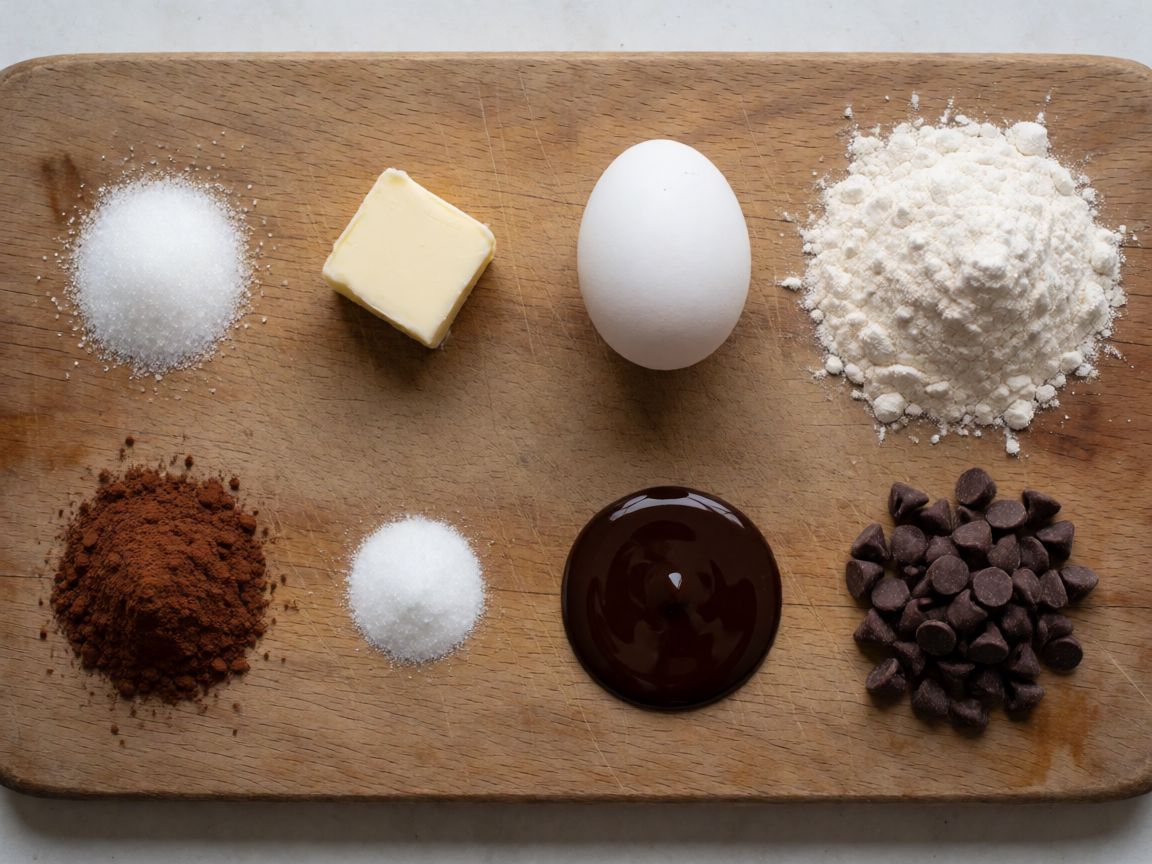
- 80 g Caster Sugar
- 80 g Butter
- 1 pcs Egg
- 150 g Plain Flour sifted
- 30 g Cocoa Powder
- 1 tsp Bicarbonate of Soda
- 100 g Dark Chocolate melted
- 70 g Chocolate Chips






Steps
Take the butter out of the fridge and leave it at room temperature for at least 30 minutes.
30 minIn a bowl, combine the sugar and butter and beat with a mixer until creamy. Add the egg and mix well.
Add the sifted flour and mix in. Stir in the cocoa powder, bicarbonate of soda and melted dark chocolate, and combine all the ingredients.
Add the chocolate chips and knead by hand until smooth.
Shape the dough into balls, flatten slightly, and place on a baking tray lined with parchment paper.
Bake at 180°C.
14 min
This is not really a biscuit, it's a frozen moment between cake batter and fudge — the bake stops it halfway. What decides whether it works is the same thing that decides most baking: not how long it's in the oven, but what you're looking at when you take it out.
The centre should still look slightly wet, slightly glossy, almost unfinished. That's not a mistake — that's the point. A hot cookie keeps cooking on the tray after the oven's off; the outside has already set, and the heat trapped inside finishes the job while it cools. Some say "bake until it looks done" — no, because by the time the centre looks set in the oven, it's already dry by the time it reaches your plate. You're baking for the edges, not the middle. The middle is none of your business yet.
The second thing that decides success you won't find in the method at all — it's in the bag of cocoa powder on your shelf. Bicarbonate of soda doesn't rise on heat alone; it needs something acidic to react against, and that something here is the cocoa. Get the wrong kind and the whole chemistry goes quiet — flat, dense, barely any lift. More on that below, because it's worth getting right before you even switch the oven on.
Butter first, because it causes the most arguments. Thirty minutes at room temperature isn't a suggestion, it's a state: soft enough to bend under a spoon but not shiny, not sweating. Cold butter won't take in air when beaten — it just gets pushed around by the sugar instead of mixing with it. Beat cold butter and sugar and you get a paste, not a cream, and a paste holds no air. That trapped air is your first bit of lift, before the bicarb ever gets involved, so skipping this step isn't saving time — it's trading a light crumb for a dense puck. In a British kitchen in winter, thirty minutes on the counter might not be enough — the room's colder than the recipe assumes. Go by feel, not by the clock on this one.
Sugar and butter beaten together aerate; the egg that follows binds and adds moisture, and its protein is what sets the crumb once heat hits it — without it you'd have a cookie that falls apart on the fork. Flour gives structure, nothing more exotic than that, which is why it goes in before the flavour does — you want the gluten lightly worked, not fought with. Cocoa powder is doing two jobs at once: flavour, obviously, but also acidity. This is the part worth repeating — you need a natural, unprocessed cocoa here, not a Dutch-processed one. Dutch-process is alkalised specifically to taste smoother, and in doing so it loses the acid that bicarbonate of soda needs to fire. Use the alkalised kind and your cookies won't be ruined, exactly — just quieter, flatter, a bit sullen.
Melted dark chocolate and cocoa powder aren't doing the same thing, even though they taste similar. Cocoa powder has none of the fat that chocolate carries — it's all dry solids, concentrated and sharp. Melt real chocolate into the dough and you add back that fat smoothly, which is what gives this cookie its fudge-like give rather than a dry, cakey crumb. Any dark chocolate from 60 to 70% cocoa works for the melted portion — anything higher starts tasting bitter rather than deep, anything lower tips sweet and the texture goes soft. The chocolate chips at the end are a different decision entirely: they're there to survive the oven as solid pockets, giving you a bite that's fudge one second and a clean snap of chocolate the next. If you've only got a bar in the cupboard, chop it roughly instead of buying chips — less tidy, same contrast.
Parchment under the dough isn't about avoiding a wash-up — it slows the heat reaching the base slightly and stops dark cookies going from set to scorched on the bottom while the top's still pale. A domestic oven runs honestly rougher than its dial admits; most are a good 10–15 degrees out from what they claim, fan ovens especially. If your cookies are colouring at the edges well before the time given, trust your eyes over the number on the door, not the other way round.
And once they're out — leave them. This is where patience earns its place as an ingredient rather than a virtue. Move a hot cookie off the tray too soon and the still-liquid centre has nothing to hold it together; it folds in on itself. Give it the few minutes it needs to firm up where it sits, and the fudge sets into something you can actually pick up. Four portions, twenty-ish cookies depending on how generous your balls of dough are — plenty for tea with milk on a Sunday, and they keep their chew for a couple of days in a tin, if they last that long.