
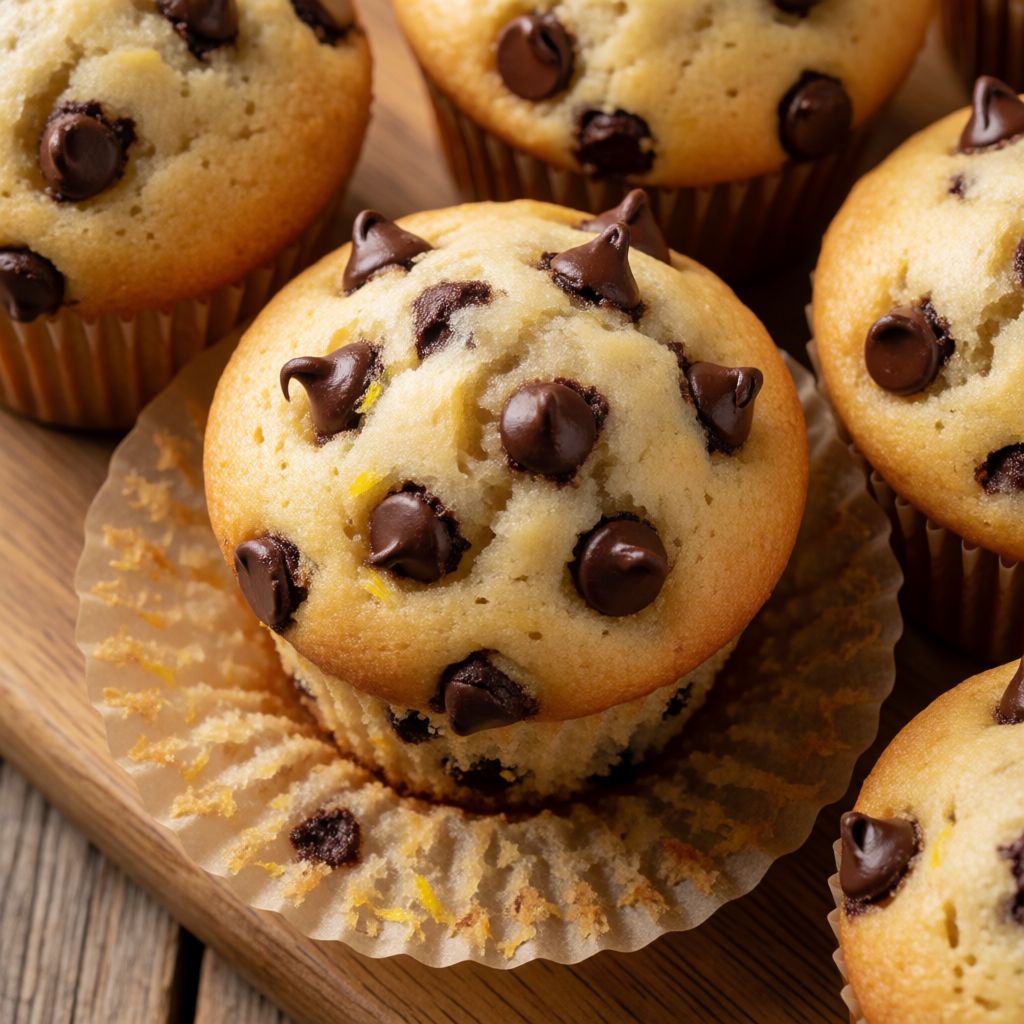
 AI photo
Dairy-Free, Egg-Free Chocolate Chip Muffins
A simple muffin recipe with no butter and no eggs, with chocolate chips folded through the batter.
Labels are worked out automatically from the ingredients and can be wrong. Check the packaging if it matters to you.
Ingredients
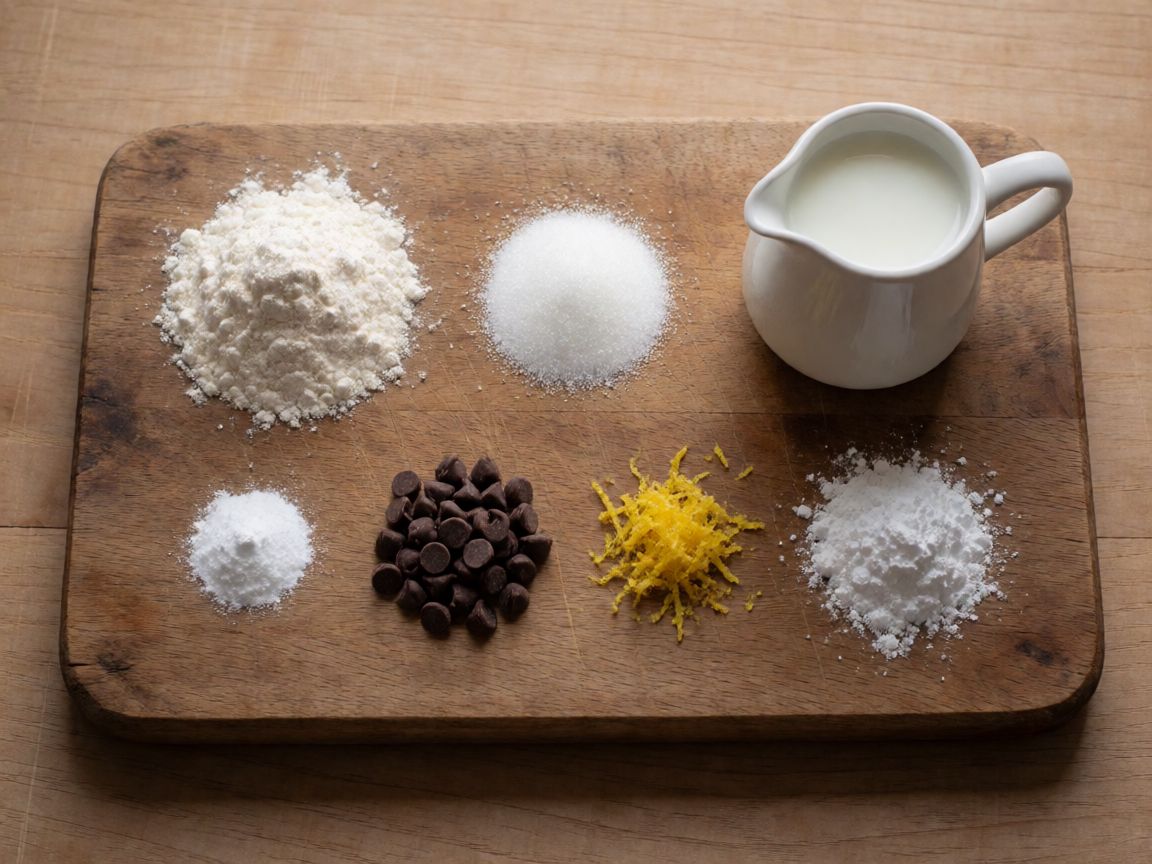
- 240 g Plain flour
- 150 g Sugar
- 200 ml Rice milk
- 16 g Baking powder
- 100 g Chocolate chips
- 1 pcs Lemon zest
- 60 ml Vegetable oil
- 1 pinch Icing sugar for dusting








Steps
In a bowl, sift the flour and baking powder together, add the sugar and mix with a hand whisk.
In another bowl, combine the rice milk, vegetable oil and lemon zest and whisk with a fork until smooth.
Gradually pour the liquid mixture into the flour mixture, stirring constantly to avoid lumps.
Fold the chocolate chips into the batter gently with a spatula.
Preheat the oven to 180°C, choosing the static (conventional) heat setting.
Grease the muffin tin with oil and dust it thoroughly with flour.
Divide the batter among the muffin cups, filling them a little over halfway.
Bake for about 20 minutes, until the tops turn a nice golden colour; check with a wooden skewer.
20 minRemove the muffins from the oven and let them cool slightly until just warm.
Dust with icing sugar and serve.
These are muffins built on a trick rather than a substitution. No egg, no butter, no dairy — and they still rise and hold together, because the whole structure leans on one chemical handshake: baking powder meeting the acid in the batter. Lemon zest isn't here for flavour alone (though it helps) — it's doing a small favour to the leavening, and that's worth knowing before you decide the zest is optional.
What decides whether these work is restraint in mixing, not the ingredient list. You pour liquid into dry and stir "just enough to avoid lumps" — that line in the recipe is the whole game. Flour develops gluten the moment it meets liquid and gets agitated; stir too long, too hard, and you build a dough disguised as a batter. The result isn't a disaster, but it's a tighter, chewier crumb instead of the open, slightly craggy one a muffin is supposed to have. Some say muffins and cakes are mixed the same way — no, because a cake batter is built to be smooth and emulsified over several minutes, a muffin batter is built to be left alone.
Flour is the skeleton, nothing more — plain flour, not self-raising, because the recipe wants full control over how much lift happens and when. Self-raising would add its own baking powder on top of the 16g already measured out, and you'd get either a flat, collapsed dome (too little structure left to hold a double dose of gas) or an oddly bitter, soapy edge from excess raising agent. If plain flour isn't in the cupboard, self-raising works only if you drop the added baking powder to nothing or close to it — not stack the two.
Baking powder is doing the job eggs would normally share with it. Eggs in an ordinary muffin aren't just binding — they trap air when beaten and set into a web of protein when heated, giving structure. Take the egg away and the whole lift has to come from gas bubbles released by the baking powder reacting with moisture and heat, plus whatever help the lemon zest's acidity gives that reaction kick off a little faster. That's why the quantity here, 16g for 240g flour, is generous by normal cake standards — it's compensating for a missing partner, not being careless.
Rice milk and vegetable oil together replace both the dairy and the fat-and-moisture role eggs usually help manage. Rice milk is chosen for being thin and close to neutral — it won't curdle or separate the way a nut milk with more protein sometimes can when it meets acid or heat. If you're out of rice milk, any plant milk with a similarly thin, mild character will stand in — oat milk is the easiest UK supermarket swap, just expect a slightly deeper colour in the crumb since oat milk browns a touch more. Avoid very protein-heavy or very sweetened versions; they change the balance the recipe has already tuned.
Vegetable oil, the recipe is clear, has to carry moisture through baking and keep the crumb from drying out — fat coats flour particles and limits gluten development, which is part of why the muffins stay tender instead of bready. "Any oil with no smell of its own" is the real criterion — sunflower, rapeseed, a light groundnut oil — not olive oil, whose flavour would sit stubbornly on top of chocolate and lemon and fight both.
Sugar at 150g for 240g flour is a fairly standard muffin ratio — sweetness, yes, but also it holds onto moisture as it bakes, slowing staleness. Chocolate chips are chosen over a melted chocolate addition deliberately: solid chips survive the oven's heat as discrete pockets rather than smearing through the batter, which matters more here than in a chocolate cake because there's no egg-rich structure to suspend melted chocolate evenly anyway.
Lemon zest earns its place by what it isn't — it's zest, not juice. Zest gives aromatic oil without adding the extra liquid and acidity a squeeze of juice would, which could throw off the hydration balance that's already been calculated without egg. Greasing and flouring the tin, rather than trusting paper cases alone, is an old habit from a time before non-stick pans were universal and still worth doing in a domestic kitchen where muffin tins vary wildly in how well they release — it's cheap insurance against half your muffin staying behind when you try to lift it out.