
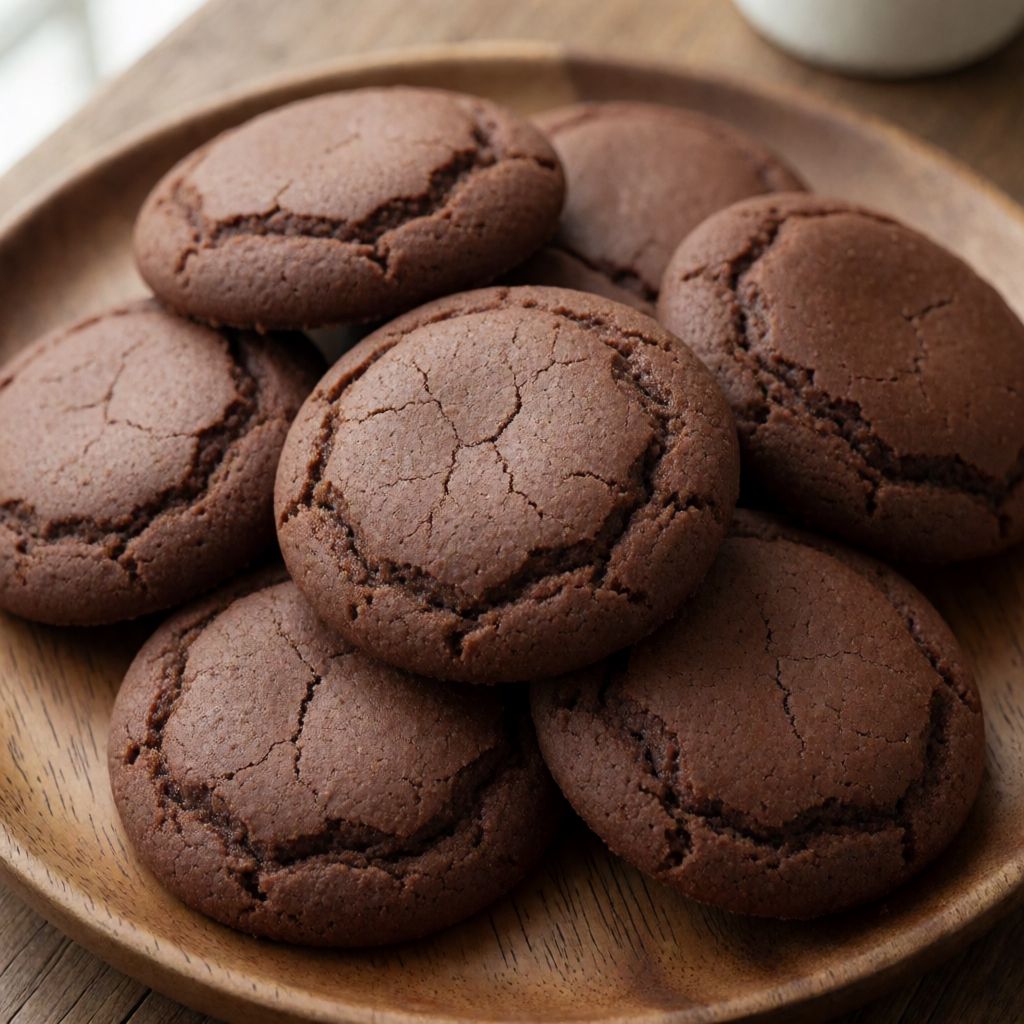
 AI photo
Butterless Chocolate Cookies
Quick chocolate cookies made with vegetable oil instead of butter, ready in minutes.
Labels are worked out automatically from the ingredients and can be wrong. Check the packaging if it matters to you.
Ingredients
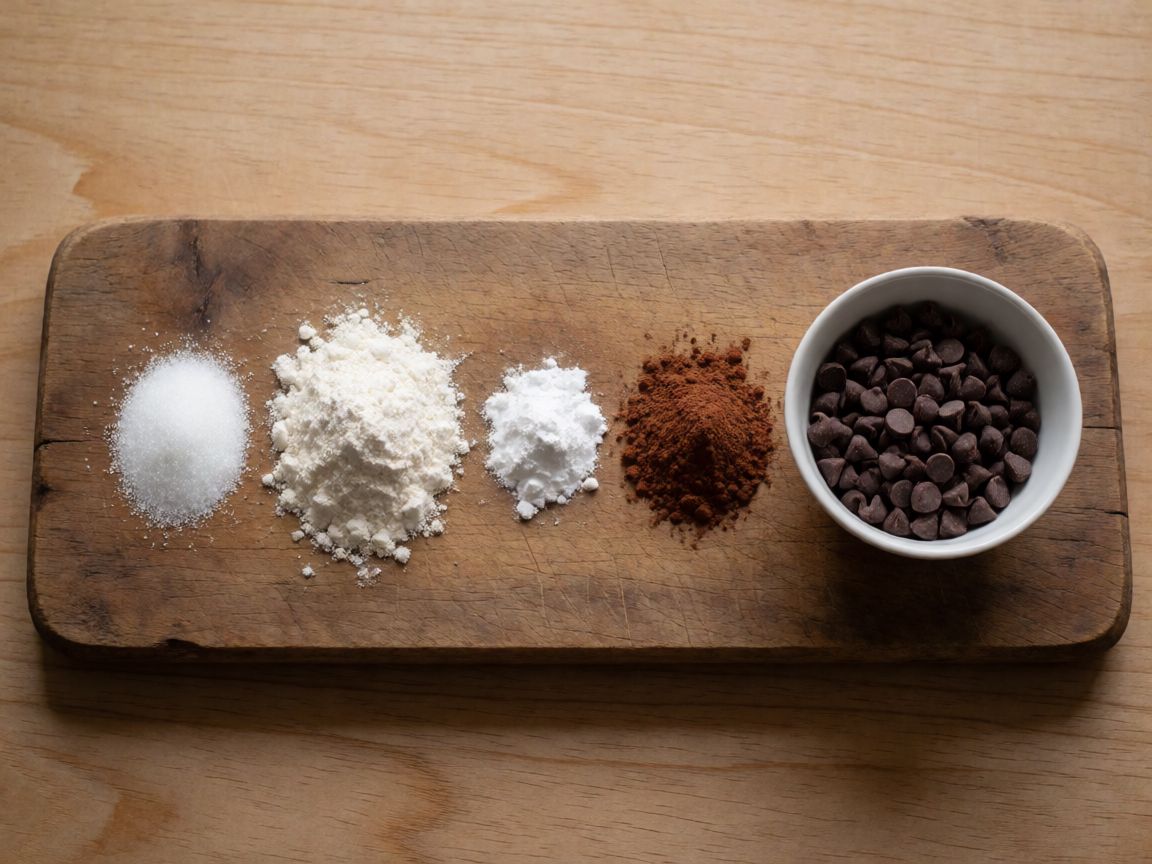
- 50 g Sugar
- 130 g Flour
- 8 g Baking powder
- 20 g Cocoa powder
- 70 g Water at room temperature
- 50 g Vegetable oil
- 100 g Chocolate chips







Steps
Sift the flour, baking powder and cocoa powder into a bowl and mix together. Add the sugar and stir.
Pour in the vegetable oil and room-temperature water, and mix until you get a smooth, lump-free batter.
Add the chocolate chips and stir so they are evenly distributed through the batter.
Line a baking tray with baking paper; using two spoons, form mounds about 3cm in diameter, spacing them apart.
Bake in a preheated fan oven at 170°C for 12 minutes.
12 min
What you've got here isn't really a cookie dough — it's brownie batter, poured into small mounds and baked just long enough to set the outside. No butter, no egg: flour, cocoa and sugar bound only by water, oil and the lift of baking powder. That's why the method says "smooth, lump-free batter" and not "soft dough" — it's wet enough to spoon, not to roll between your palms.
Some say you can't get a proper cookie texture without butter. No — because butter's job here isn't flavour, it's physics: it's about 80% fat and 20% water, and when you cream it with sugar you beat air into those fat crystals, which expands in the oven and lightens the crumb. This recipe skips creaming entirely. There's no mechanical aeration at all — the only thing making these rise is the baking powder reacting with water and heat, releasing gas as it goes. So the texture you get isn't "creamed and fluffy", it's "chemically risen and dense", closer to a brownie's edge than a bakery biscuit. Different animal, not a lesser one.
What decides whether this works is the spread. Oil is liquid at room temperature — it has no structure of its own, unlike butter which is semi-solid and holds a mound's shape until heat melts it. So this batter wants to flatten the moment it hits a hot tray, and the only things stopping it becoming one sheet of cookie are the flour's (modest) gluten and how far apart you space the mounds. That's the real reason for spacing them out — not neatness, but giving each mound room to spread without merging into its neighbour.
Flour here is doing very little structural work — only 130g against a loose wet mix of water, oil and sugar — so sift it properly with the baking powder and cocoa, because cocoa clumps worse than flour ever does, and an un-sifted pocket of cocoa stays bitter and dry in the finished cookie instead of dissolving into the batter. Any plain flour works; there's no need for anything self-raising, because you're already controlling the lift yourself with the baking powder measured separately.
Baking powder, not bicarbonate of soda, because baking powder already carries its own acid alongside the alkali — it doesn't need an acidic ingredient in the batter to react with, it just needs water and heat. That's exactly what it gets here: mixed dry, then triggered the moment the wet ingredients go in, and again more vigorously once the tray hits the oven. Soda would need something acidic — yoghurt, buttermilk, even the natural acidity of non-Dutched cocoa — to do the same job, and this recipe doesn't offer it any, so don't swap one for the other without rethinking the whole batter.
Cocoa powder is flavour and colour, not structure, so your only real choice is natural versus Dutch-processed. Natural cocoa is sharper, a bit more bitter, slightly acidic; Dutch-processed is mellower and darker. Either works with baking powder as the leavener, since baking powder doesn't rely on that acidity anyway — so pick by taste, not by chemistry.
Oil replaces butter outright, and the only real rule for choosing one is that it shouldn't have an opinion about what it tastes like — sunflower, rapeseed, a light groundnut oil, anything neutral. Extra virgin olive oil or a strong nut oil will fight the chocolate rather than carry it. Oil being 100% fat with none of butter's water content is also why this batter is wetter and looser than a butter-based one for the same amount of flour — the water column in the recipe (70g) is making up some of what butter would otherwise bring, and together oil and water behave less like a fat-coated dough and more like a thin, pourable mixture that needs the chocolate chips stirred through quickly before it has a chance to separate.
Chocolate chips: cheap bakers' chips are fine, dark or milk, because their job is to survive the oven mostly whole, giving you pockets of melted chocolate against the cocoa-flavoured crumb rather than blending into one uniform taste. If all you have is a bar, chop it roughly — bigger, uneven pieces behave the same way, just less tidily.
As for the oven: 170°C with a fan is doing two things at once on a domestic setup — the fan keeps the heat moving evenly across a tray that, on most British ovens, runs a touch hotter at the back, so without it you'd get cookies browning unevenly between front and back of the same batch. There's no kazan logic needed here, no clay-oven radiant heat to mimic — just a standard tray, baking paper instead of grease (because this batter is wet enough to stick hard without it), and the patience to let a tray of six to seven small cookies — enough for two each, for three people, or one each for six if you're pacing the tea — sit a few minutes before you touch them. With British tea and milk, these are built for dunking: small, dense, not too sweet against a milky cup, which is really the only test that matters once they're out of the oven.