
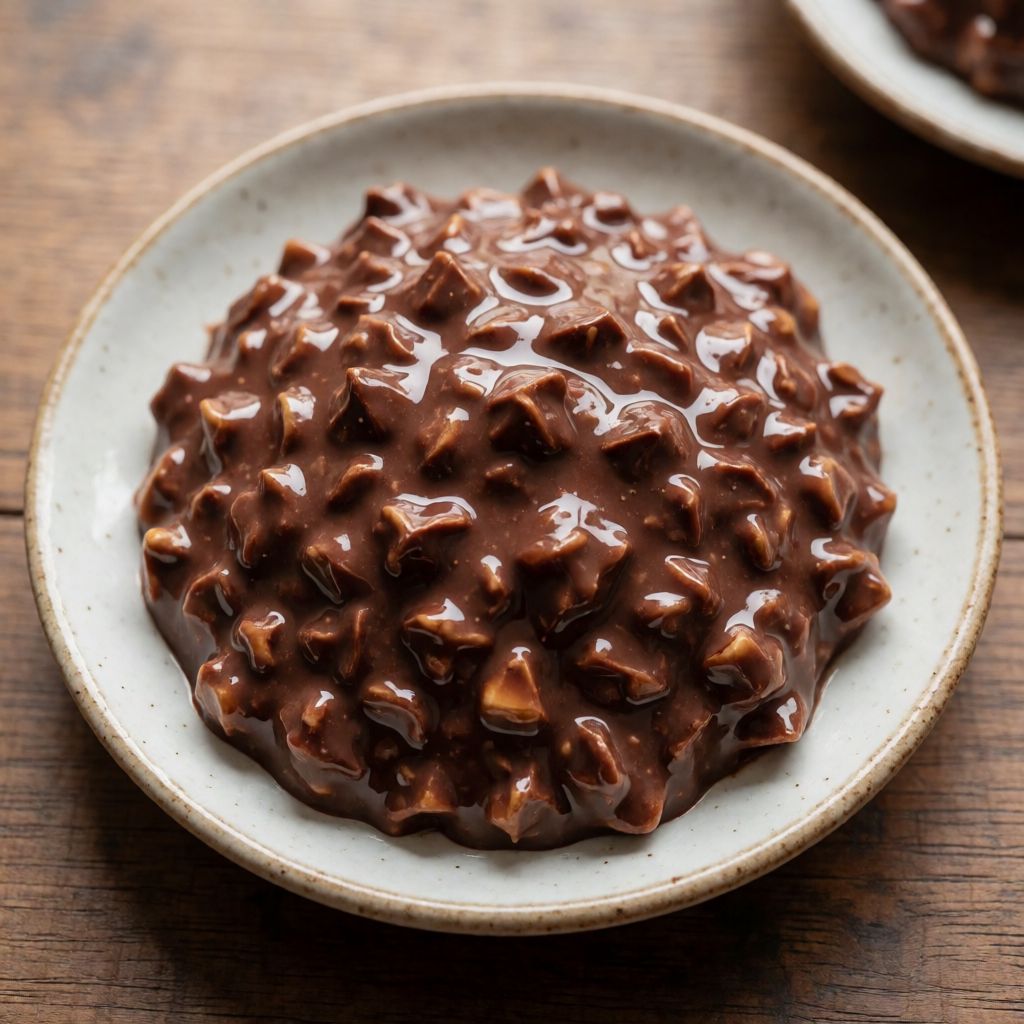
 AI photo
Chocolate Cream with Crunchy Hazelnuts
A rich chocolate cream studded with crunchy caramelised hazelnuts.
Labels are worked out automatically from the ingredients and can be wrong. Check the packaging if it matters to you.
Ingredients
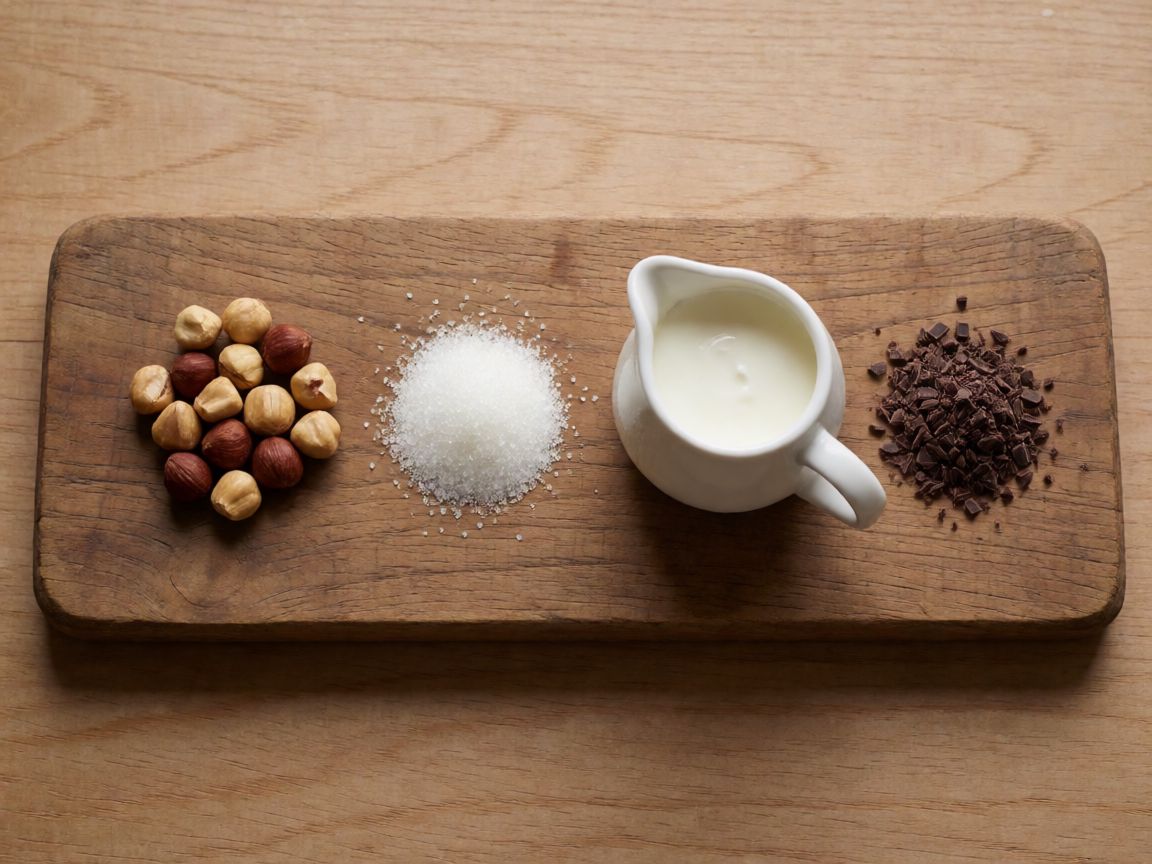
- 100 g Hazelnuts
- 2 tbsp Sugar
- 200 ml Whipping cream
- 150 g Dark chocolate finely chopped

Steps
Slowly melt the sugar in a frying pan, then add the hazelnuts and coat them in the caramel.
Tip the hazelnuts onto baking paper to cool, then chop them finely.
Heat the cream almost to boiling point and pour it over the finely chopped chocolate, stirring well.
Stir the chopped hazelnuts into the chocolate cream and chill for about 1 hour.
60 minStir again, transfer to a jar and sprinkle the remaining chopped crunchy hazelnuts on top.
This is not really a dessert for one person with a spoon — it's a jar of chocolate cream threaded with caramelised hazelnut, closer to a homemade spread than to a pudding. The "1" on the serving line is a clerical slip: a jar this size covers a family's worth of toast on a Sunday or four or five small glasses after the roast.
The whole thing rests on two techniques that have nothing to do with each other and only meet at the end: a dry caramel for the nuts, and a ganache for the cream. Get either wrong and the jar tastes of burnt sugar or of split fat — not of hazelnut and chocolate, which is the only point of making it yourself.
Some say you need a splash of water in the pan or the sugar will seize — no. Dry caramel, just sugar melting and colouring on its own, is the older method and gives a cleaner, more honest nut flavour. It only asks one thing of you: watch it, not the clock. On a modern gas ring it runs from pale gold to bitter black faster than any recipe card admits.
The hour in the fridge is patience, not magic. Cream and chocolate are already an emulsion the second you stir them together — what the cold does is let the cocoa fat set firm enough to hold the hazelnut pieces suspended instead of letting them sink to the bottom of the jar. "Stir again" at the end is the real instruction hiding behind "chill for about an hour": catch it before it's fully set.
Sugar — two tablespoons, alone in a dry pan, exists for one job: becoming caramel and gluing itself to the hazelnuts, not sweetening the cream (the chocolate already does that). Dry caramel colours unevenly if you leave it, because sugar at the rim of a domestic pan always melts before the centre does. The fix isn't a thermometer, it's a wooden spoon and your attention — push the melted edge toward the middle before it's already gone dark.
Hazelnuts — the caramel coat exists to give you a crunch that survives an hour buried in cold cream; raw nuts would just go soft and chewy in there. Criterion for swapping them: any nut with enough oil to toast without drying out, and enough bite to hold under caramel. Almonds or walnuts work on the same logic, peanuts too if you don't mind the detour in flavour. This pairing wasn't invented for taste alone — hazelnut and chocolate together, what Piedmont once called gianduja, came out of a cocoa shortage, with hazelnuts the cheap local thing used to stretch an expensive one. Worth remembering before anyone calls it decadent: it's frugality in a nicer coat.
Cream — 200ml of whipping cream, something near 35% fat, is doing work a lighter cream can't: enough fat to bind with the chocolate's cocoa butter into a ganache that actually sets, rather than a thin chocolate milk that never does. "Almost to boiling" isn't about a number, it's about getting the cream hot enough to melt 150g of chocolate right through in one go. The cue is the first lazy bubbles at the rim of the pan, not a full boil — a boiling cream scorches on the bottom of a thin domestic pan, and you'll taste that burnt edge under the chocolate later and wonder why.
Chocolate — chopped fine matters more than the brand, because an even small size is what lets hot cream melt every piece at the same rate. A few big chunks left whole is how you end up fishing for lumps and over-stirring, and over-stirring is what actually causes a grainy, split-looking cream — not "bad chocolate", which gets blamed far too often. Criterion for choosing it: dark enough to taste of cocoa rather than sugar, meaning toward the higher end of cocoa solids. A couverture gives a glossier set, but an ordinary dark baking bar does the job perfectly well in a flat's kitchen.
No double boiler is needed here, and no kazan logic either. A wide pan for the caramel so the sugar has room to melt evenly rather than pool in the middle, a plate or sheet of baking paper to cool the nuts instead of a marble slab, a jar with a lid instead of anything grander. None of it needs special kit. It needs you not wandering off while there's sugar in the pan.