
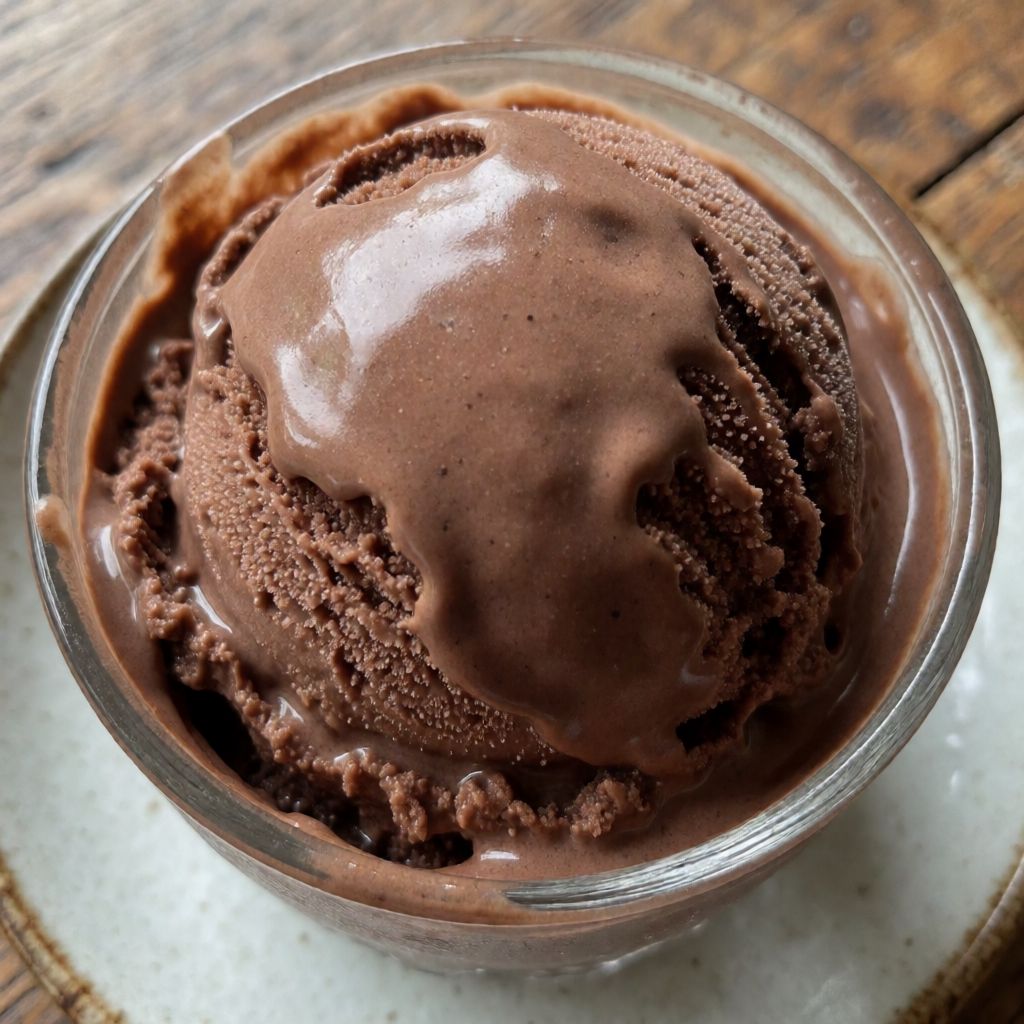
 AI photo
4-Ingredient No-Churn Chocolate Ice Cream
A simple chocolate ice cream made without an ice cream maker, using just four ingredients.
Labels are worked out automatically from the ingredients and can be wrong. Check the packaging if it matters to you.
Ingredients
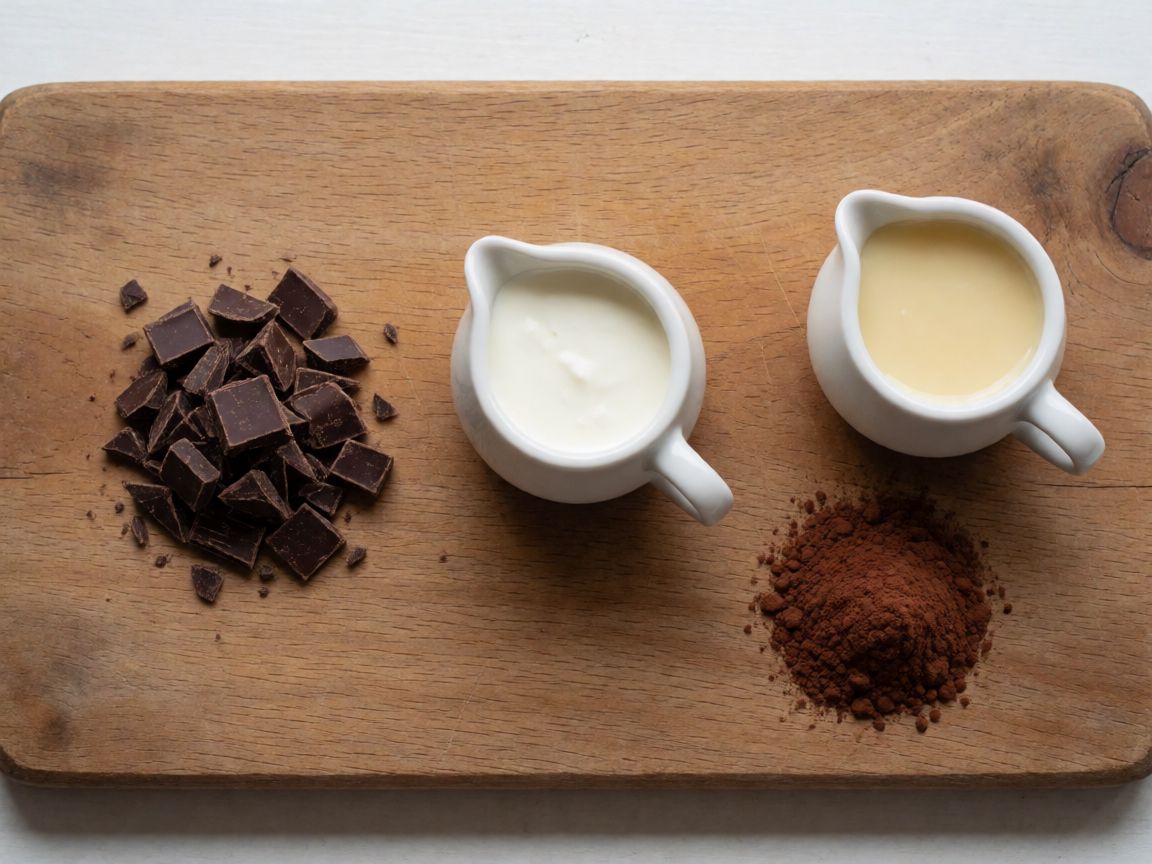
- 70 g Dark chocolate
- 250 ml Double cream
- 200 ml Condensed milk
- 20 g Cocoa powder sifted


Steps
Pour 50 ml of the hot double cream over the chopped dark chocolate and stir until melted. Leave to cool.
Add the condensed milk and sifted cocoa powder, and mix until smooth.
Separately whip the remaining 200 ml of double cream.
Gently fold the whipped cream into the chocolate mixture with a spatula until smooth and even.
Pour into a container and place in the freezer.
360 min
No-churn ice cream is a slightly cheeky name, because it still needs air — it just gets it at a different moment. A real churn's job isn't glamour, it's engineering: a dasher drags through the mix non-stop while it freezes, beating air into the fat and scraping ice crystals off the sides before they grow big enough to feel grainy on the tongue. Take that machine out of the picture and you've got six hours of stillness in a freezer, which is plenty of time for crystals to grow unchecked — unless the mixture already arrives loaded with everything that gets in their way.
That's the whole mechanism behind these four ingredients. Condensed milk is doing more than sweetening: its sugar lowers the freezing point and ties up water, so there's less free water left to turn into coarse ice. The chocolate and the cream it melts into are fat, and fat is what coats air bubbles and stops them collapsing into one solid icy block. The whipped cream folded in at the end is where your churning actually happens — just moved to before the freeze instead of happening during it.
Some say you need an ice cream maker for proper ice cream. No — because the machine's only real job here, keeping air in and crystals small, is done in this recipe by a whisk and some patience, just at an earlier point in time.
Dark chocolate is the backbone, not a flavouring. Melt it with hot cream rather than on its own, because cream's fat and water let it melt smoothly into a ganache instead of seizing into a grainy mess — chocolate hates sudden steam and sudden cold, and a splash of hot cream gives it a gentle, even heat instead of either extreme. Let that ganache cool properly before the next step: fold warm chocolate into whipped cream and the heat deflates the very air you worked to whip in. Any chocolate with a decent amount of cocoa solids and no vegetable-fat fillers will behave the same way — a plain 70% bar is the obvious choice, but a baking chocolate of similar strength works too; a chocolate heavy with sugar and milk powder will throw the balance of sweetness and fat off, since the condensed milk is already carrying plenty of both.
Condensed milk isn't just "sweetened milk" and it isn't interchangeable with evaporated milk, which has no sugar in it at all. Condensed milk exists because, long before refrigeration, boiling milk down and loading it with sugar was how you kept it from spoiling on a long voyage — the concentration and the sugar both work against water and against bacteria. Here that same concentration works against ice: it means there's less raw water sitting around waiting to freeze into big crystals, and more sugar syrup instead, which freezes soft. If you have none, you can approximate it by reducing full-fat milk with sugar over gentle heat until thick, but it takes real time standing over the pan, and it's one of those shortcuts where the shop-bought version genuinely does the job better.
Double cream does two separate jobs in two separate places, and that's worth noticing. The 50 ml heated with the chocolate is there purely as a melting medium — its fat makes a smooth ganache instead of a lumpy one. The 200 ml whipped afterwards is the one actually building structure: only cream above roughly 35% fat whips stiff enough to hold stable air bubbles, which is why double cream and not single cream. Single cream will froth a little and then just sit there, runny, because there isn't enough fat to form the structure that traps air. If you're short, whipping cream (the slightly lighter stuff sold for exactly this purpose) will whip fine too; anything labelled "single" won't.
Cocoa powder is sometimes treated as if it's there for colour, the way you'd add food dye. It isn't — it's there for flavour without water. A square of extra chocolate would add fat you don't need and risk tipping the mixture too firm when frozen; cocoa powder adds pure chocolate taste and almost no extra liquid or fat to upset the freezing point you've carefully built with the sugar. Sift it in, because unsifted cocoa clumps stubbornly in a cold, thick mixture and you'll be chasing little bitter lumps through the whole batch.
On an ordinary kitchen freezer, patience really is an ingredient, not a figure of speech. Six hours is a floor, not a target — judge it by whether a spoon can take a proper curl off the top without the whole thing resisting like a brick. And try not to open that freezer door every twenty minutes to check: a freezer that keeps swinging back up in temperature every time it's opened lets the mixture semi-thaw and refreeze at the edges, which is exactly how small, invisible ice crystals turn into the big, crunchy ones people blame on "freezers just being like that." They're not being like that. They're being opened too often.