
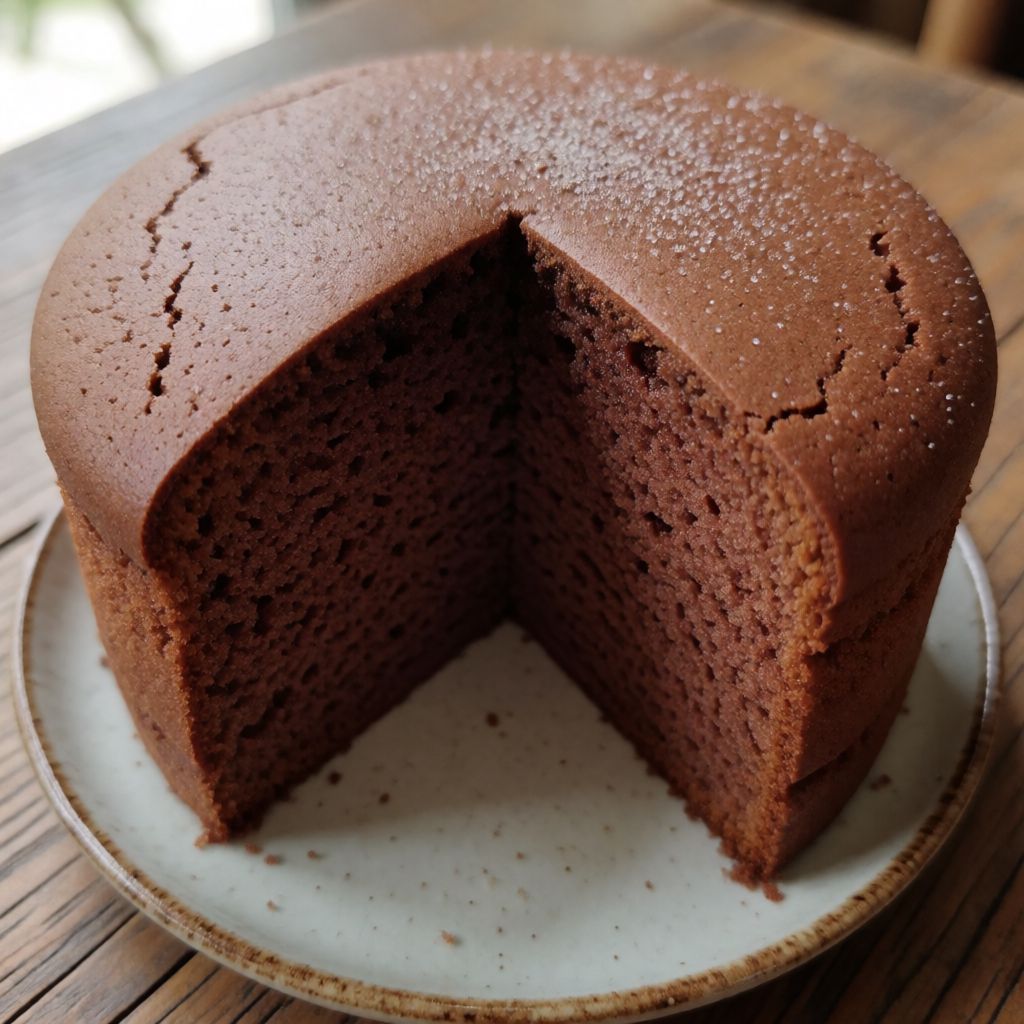
 AI photo
Egg White and Chocolate Cake
A light chocolate cake made with whipped egg whites, finished with a dusting of powdered sugar.
Labels are worked out automatically from the ingredients and can be wrong. Check the packaging if it matters to you.
Ingredients
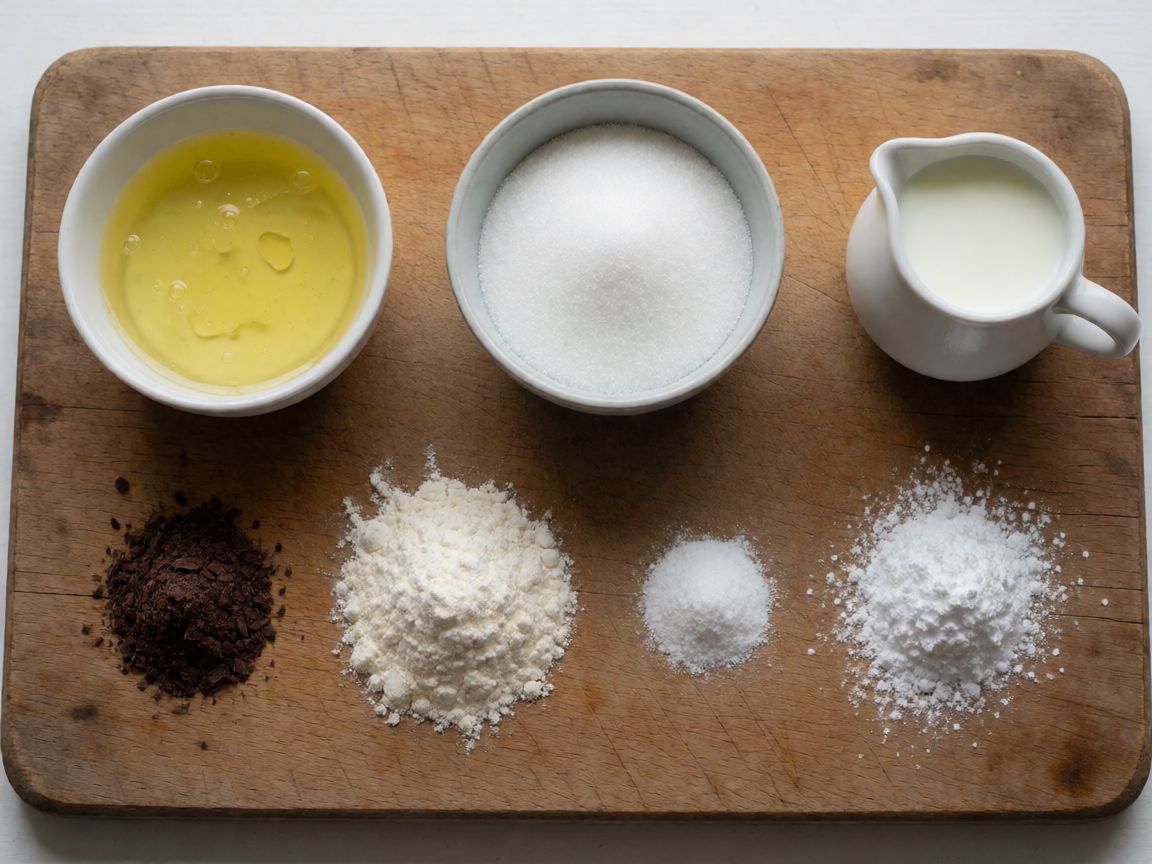
- 200 g Egg whites
- 130 g Sugar
- 100 g Vegetable oil
- 120 g Milk
- 150 g Dark chocolate
- 170 g Plain flour
- 15 g Baking powder
- 2 tbsp Icing sugar for dusting, to taste








Steps
Pour the vegetable oil and milk into a large bowl, add the melted dark chocolate and stir to combine.
Sift the flour with the baking powder and add it to the mixture in small batches.
Whisk the egg whites with an electric mixer until fluffy, then gradually add the sugar.
Gently fold the whisked egg whites into the main mixture, using an under-and-over motion.
Pour the batter into a 22-24 cm tin, greased with butter and dusted with flour.
Bake in a preheated oven at 180°C for 25-30 minutes (fan) or 30-35 minutes (conventional).
30 minCheck with a wooden skewer: if it comes out dry, the cake is ready.
Let the cake cool, dust with icing sugar and serve.
This is a chocolate sponge with no yolks in it at all — just whites, whipped and folded in, doing the lifting that butter and egg yolks usually do together. That's an odd thing to build a cake around, so it's worth saying plainly why it works: whites whipped to a stable foam trap air; baking powder gives that air a second push once the heat hits it. Two lifting mechanisms, not one, because without yolk fat the batter has nothing else holding it open.
What decides whether this cake stands up or sits flat in the tin is the fold, not the whisk. The chocolate-oil-milk base is heavy and slick; the whites are light and fragile. Tip them in all at once and stir hard, and you knock the air straight back out — the whites did their job for nothing. Fold them in gently, scooping from the bottom and turning over, and you keep the bubbles intact long enough for the oven to set them in place.
Some say whip the whites until they're stiff as snow, the stiffer the better. No — because a foam whipped past its peak turns dry and grainy, loses its stretch, and tears instead of folding. You want it soft enough to still move, holding its shape on the whisk but not standing in sharp little peaks. That's the point where it still has give in it.
Start with the whites. Two hundred grams is roughly six to seven eggs' worth, and the reason you're not using the yolks here isn't fashion — it's that yolk fat would weigh the foam down and compete with the oil already in the mix. If you've got yolks leftover from this, that's a mayonnaise or a custard for another day; nothing here wants wasting.
Sugar goes into the whites gradually, not dumped in at the start. Added too early, it can slow the whites from building volume properly; added in stages once they're already foaming, it stabilises the bubbles instead of weighing on them before they've formed. That's the whole reason for "gradually" in the method — it's not a texture note, it's timing.
The oil is there instead of butter because this cake needs to stay soft, including the next day, including cold. Butter sets hard once it cools; oil stays liquid at room temperature, so the crumb stays tender rather than firming up. Use anything with no real smell of its own — sunflower, rapeseed, a mild vegetable oil — because a strongly flavoured oil, olive especially, will sit on top of the chocolate rather than disappearing into it.
The chocolate should be a dark one, something with real cocoa solids in it, not a mild milk chocolate. Milk chocolate brings extra sugar and extra milk fat you haven't accounted for, and the result tastes sweet without tasting of anything. The milk in the recipe is there to loosen the melted chocolate so it combines smoothly with the oil instead of sitting as a separate slick — a small defect, but one that shows up as streaks in the finished crumb if you skip it.
Fifteen grams of baking powder against 170 grams of flour is a lot — more than you'd use in a cake built on creamed butter and eggs together. That's deliberate. With no yolks and no butter doing their usual aerating work, the chemical lift has to do more of the job the whites don't fully cover. Sift it with the flour so it's distributed evenly through the batter rather than landing in one lucky spoonful — an uneven rise, with one side domed and cracked and the other flat, almost always traces back to that.
Icing sugar at the end is cosmetic, not structural — it's there for the look, dusted on once the cake's cool enough that it won't just melt into the surface. If you haven't got any, a little cocoa powder does the same job and suits the cake better anyway. Either way, wait for it to cool properly first; patience here isn't optional, it's the difference between a dusting that sits on top and one that vanishes into a damp cake.