
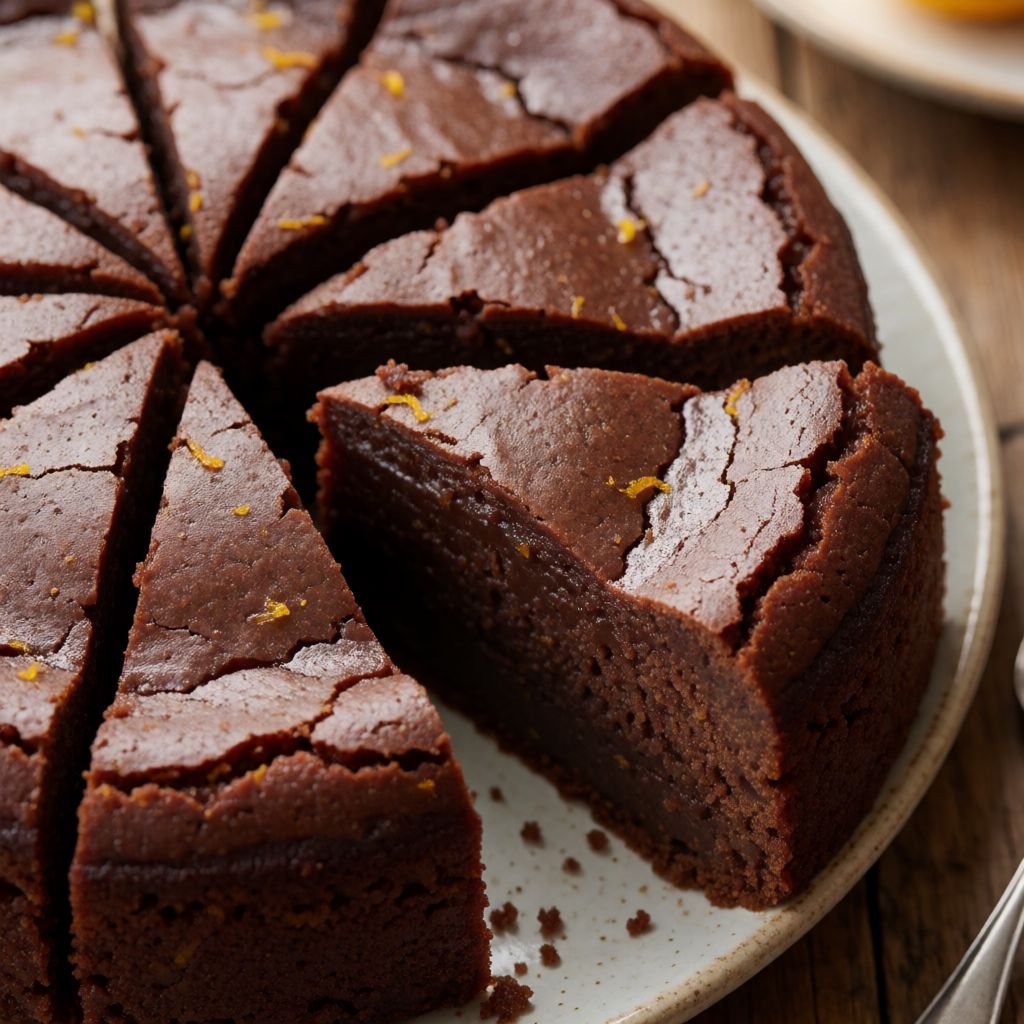
 AI photo
Chocolate Migliaccio
A rich, chocolatey version of the classic baked semolina and ricotta cake from Naples.
Labels are worked out automatically from the ingredients and can be wrong. Check the packaging if it matters to you.
Ingredients
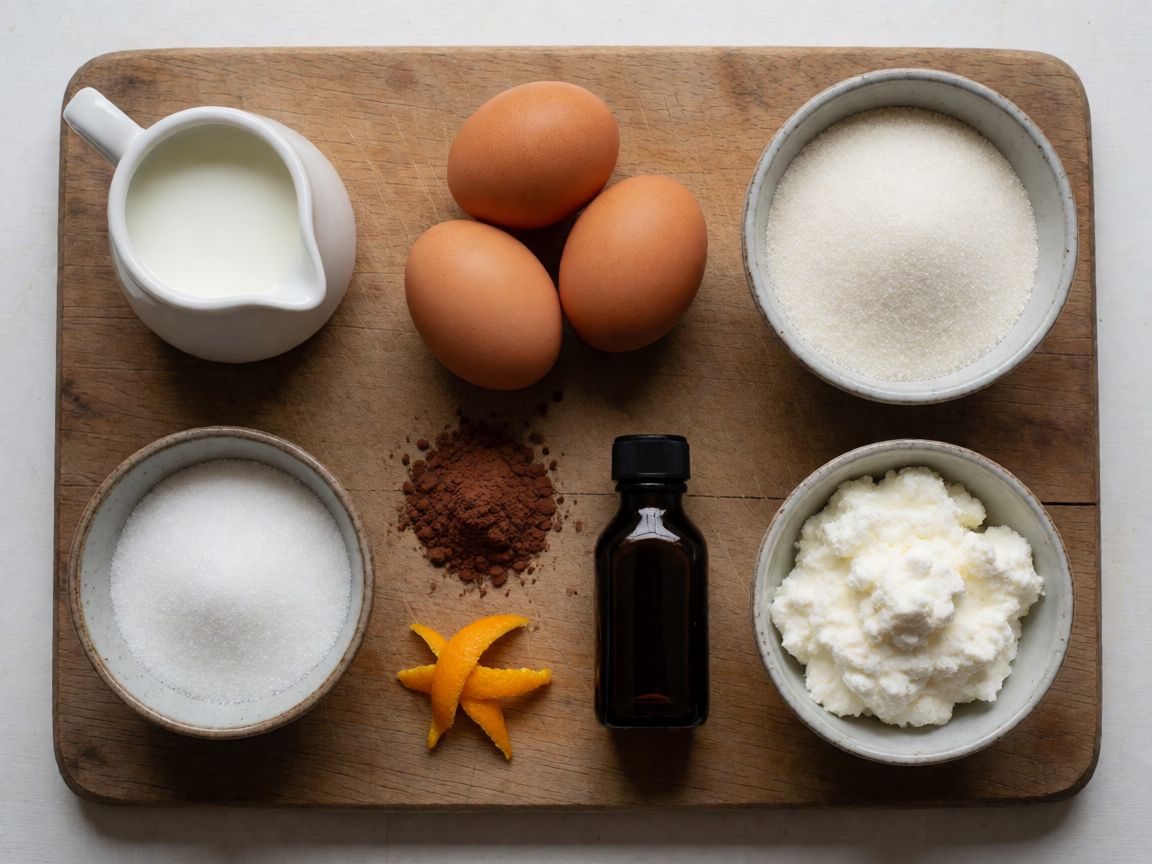
- 500 ml Milk
- 3 pcs Eggs
- 70 g Semolina
- 190 g Sugar
- 20 g Cocoa powder
- 1 pcs Orange zest
- 150 g Ricotta
- 1 tsp Vanilla extract
- 100 g Chocolate chips
- Icing sugar to taste










Steps
Pour the milk into a saucepan, add the vanilla and 50 g of sugar. Place over heat.
When the milk starts to boil, lower the heat and pour in the semolina in a thin stream, stirring constantly.
Cook for a few more minutes, continuing to stir, until the mixture thickens.
Let the semolina cream cool, stirring occasionally.
In a large bowl, beat the eggs, add the remaining sugar and the orange zest.
Whisk the eggs with a mixer until light and smooth.
Add the cooled semolina cream, the ricotta and the sifted cocoa. Mix everything with the mixer until smooth.
Add the egg mixture and stir until you get a dark, smooth and even batter.
Fold in the chocolate chips with a spatula.
Pour the batter into a buttered 22 cm tin.
Bake at 180°C for about 1 hour, checking it is done with a wooden skewer.
60 minLet the migliaccio cool for a few hours.
Dust with icing sugar and serve.
Migliaccio is Naples' answer to what to do with semolina when you don't want another plate of porridge. It's not quite cake, not quite cheesecake, not quite pudding — it sits in its own category, a baked semolina custard bulked out with ricotta and, in this chocolate version, cocoa and chocolate chips. The texture is the whole point: dense but not heavy, wet-looking on the inside even when fully cooked, closer to a baked rice pudding than to sponge.
What decides whether it works is the semolina cream in step 2 and 3. You're not making porridge — you're making a thick paste that will set hard enough to hold its shape once baked but stay moist, because semolina keeps absorbing liquid as it cools, long after it's off the heat. Pour it in too fast and it clumps — the starch grains gelatinise on the outside before the inside gets wet, so you get little hard beads sitting in the mixture that never go away, not in cooking, not in the oven. Pour it in a thin stream while stirring and each grain swells evenly. That's the actual reason for "a thin stream, stirring constantly" — it's not fussiness, it's physics.
Some say you can skip letting the semolina cream cool before adding the eggs, to save time. No — because warm semolina cream will start to cook the egg yolks on contact, giving you little threads of scrambled egg through your batter instead of a smooth one. Cooling isn't optional sitting around; it's the step that keeps the eggs raw until they go into the oven together with everything else.
On ingredients, start with the semolina. This is fine semolina, the pale yellow stuff used for porridge, not the coarse durum semolina sold for pasta — coarse grains take longer to hydrate and will leave grit in a dish meant to be smooth. If you can't find semolina in a UK supermarket (it's usually near the porridge oats, sometimes labelled "semolina pudding"), fine polenta will behave similarly in texture, though it brings its own faint maize taste — acceptable, not identical.
Ricotta is there for moisture and a slight tang, not for flavour you're meant to notice directly. Buy the firmer tub ricotta, drain off any watery liquid sitting on top before you use it — excess water here thins the batter and extends your bake time without you knowing why. If ricotta's not to hand, cottage cheese blitzed smooth is the nearest domestic stand-in; quark works too and is actually closer in moisture content, just slightly sharper.
Cocoa powder: use unsweetened, and sift it as the recipe says — not for ceremony, but because cocoa clumps stubbornly in a wet mixture and unsifted lumps don't dissolve, they just sit there as bitter specks when you cut the slice. Dutch-processed (alkalised) cocoa gives a darker, milder result; natural cocoa is sharper and more acidic. Either works, but don't mix with raising agents expecting a rise — there isn't one here, the eggs and semolina do the structural work, not baking soda.
Chocolate chips should be ones meant to survive baking — they're formulated to hold their shape rather than melt into streaks, which is what you want for texture contrast against the custardy crumb. Chopped dark chocolate bar works too, just expect more melting and marbling rather than discrete chips.
On the oven: 180°C is a genuine setting temperature here, not a vague "medium." Below it and the custard base never fully sets — you'll get a wobbly middle even after an hour. Above it and the outside crusts and darkens while the centre, protected by all that moisture, is still loose. The wooden skewer test matters more than the clock: an hour is your floor, not your answer, because home ovens vary enough in actual temperature (UK fan ovens especially) that a tin's position and your oven's calibration shift things by ten minutes either way. Push the skewer into the centre — if it comes out with wet batter clinging, it needs more time regardless of what the timer says.
The cooling for "a few hours" afterward isn't laziness in the recipe — it's the same mechanism as the semolina cooling earlier, scaled up. The custard keeps firming as it cools; cut it hot and you'll get a slump rather than a slice. This is a make-ahead cake by nature, not by convenience — bake it the night before if you're serving it for a Sunday gathering, and it'll hold its shape far better than if you rush a tea-time slice straight from the oven.