
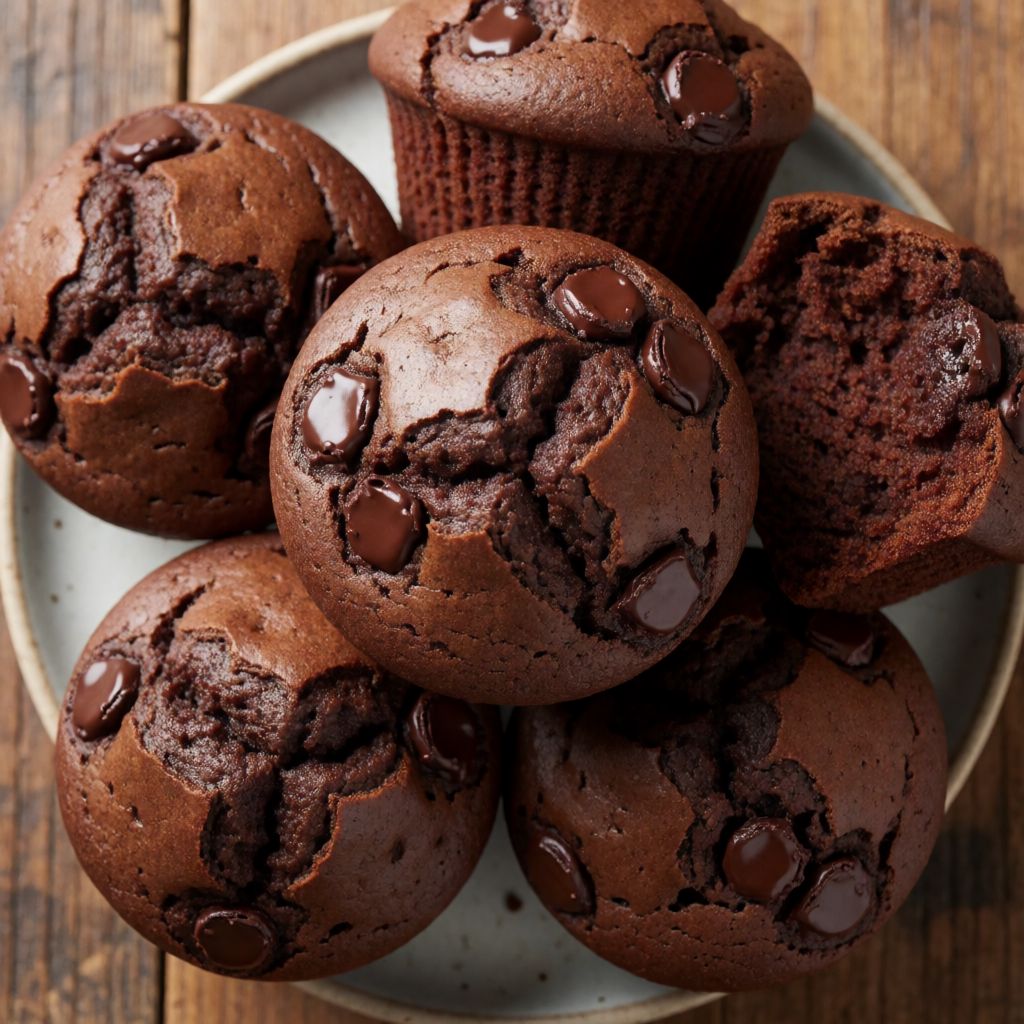
 AI photo
Chocolate Muffins
Rich chocolate muffins made with brown sugar, dark chocolate and cocoa powder.
Labels are worked out automatically from the ingredients and can be wrong. Check the packaging if it matters to you.
Ingredients
- 300 g Plain flour
- 200 g Brown sugar
- 40 g Cocoa powder
- 100 g Dark chocolate
- 1 tsp Baking powder with a few drops of vanilla extract
- 1 pinch Salt
- 100 ml Milk
- 180 g Butter
- 3 pcs Eggs
- 1 pinch Icing sugar for dusting, to taste








Steps
Combine the brown sugar with the melted butter and mix well.
Add the eggs and whisk until smooth.
Add the chopped dark chocolate and cocoa powder, continuing to mix.
Stir in the baking powder, a pinch of salt and the flour.
Pour in the milk and mix all the ingredients together until smooth and even.
Prepare a muffin tin, using paper cases or greasing the tin with butter.
Divide the batter among the cases, filling each about three-quarters full.
Bake at 175°C.
22 minThe finished muffins can be dusted with icing sugar or glaze, or served plain.
What was changed
Baking powder replaces vanilla-flavoured baking powder, which is not available locally.
Chocolate muffins are a mechanism, not a flavour: fat coats flour before liquid arrives, sugar melts and the cocoa butter in the dark chocolate adds its own grease to the mix. That's why the butter goes in melted, not softened — melted butter wraps every grain of flour in fat so gluten strands stay short. Short strands mean a tender, domed crumb instead of a tough, flat one. Overmix after the flour lands and you build long gluten chains anyway, and the muffin turns chewy and sinks in the middle rather than rising into that cracked dome everyone expects.
Some say you need a stand mixer for a proper batter. No — you need restraint, not horsepower. A whisk and a bowl do the eggs-and-sugar stage fine; it's the flour stage where you switch to a spoon and stop the moment you stop seeing dry streaks. The chocolate melts a little from the warm butter and sugar already in the bowl, which is exactly why it goes in before the flour and milk — it needs that residual warmth to soften, not the oven's full heat.
175°C baking in a domestic oven is where the dome forms: the outside sets fast enough to hold shape while the baking powder's gas still has room to push upward in the centre. Go cooler and the batter spreads before it sets — flat muffins, wide not tall. The 22 minutes is a floor, not a verdict. The real test is a skewer or thin knife coming out with a few moist crumbs, not wet batter, and the top springing back when pressed rather than leaving a dent.
Flour and cocoa together are doing two different jobs. The flour is structure — British plain flour has enough protein to hold shape without turning the crumb rubbery, so don't reach for strong bread flour here, it'll fight you. The cocoa powder is colour and bitterness, not fat; that's what the dark chocolate is for separately. Use a cocoa with no added sugar, the plain dark kind in the baking aisle, because the sugar in the recipe is already measured for you — a sweetened "drinking chocolate" powder will throw the balance off and you won't know why the muffins taste flat.
Brown sugar earns its place over white here for two reasons: molasses content holds moisture longer, so the muffins stay soft a day later instead of drying into something you need tea to get down, and it adds a faint caramel note that plain white sugar can't. If you only have white sugar, it will still work — the mechanism of creaming it with melted butter doesn't change — you just lose that extra depth and the keeping quality.
The dark chocolate wants to be real chocolate with a cocoa percentage you'd recognise, chopped roughly rather than grated, because small chunks survive baking and give you pockets of melted chocolate in the finished muffin rather than disappearing entirely into the batter. Chocolate chips sold specifically for baking are bred to resist melting — use them if you want those pockets to hold their shape more distinctly, skip them if you want the chocolate to bleed into the crumb a little.
Three eggs are binding the fat and flour into one emulsion rather than two separate layers — this is why they go in after the sugar-butter mix and get whisked properly smooth before anything dry arrives. Skip an egg and you'll get a muffin that's slightly crumbly and falls apart rather than holding a clean bite.
Milk here is thinning the batter to a pourable, not pipeable, consistency, letting the fat and liquid phases meet properly. Any milk with fat in it works — whole milk gives the best texture, but if you're out, a splash of water with a bit more butter melted in gets you close enough; what you're really after is moisture, not a specific dairy flavour.
Baking powder with a few drops of vanilla is an odd pairing on paper, but it's simply convenience — someone decided to flavour the leavening agent at the point of measuring rather than add vanilla extract separately later. If your baking powder isn't pre-flavoured, add the vanilla with the eggs instead; same result, no mystery to it. And don't be tempted to add extra baking powder hoping for a taller dome — too much and the muffin rises fast, collapses before the structure sets, and you get a sunken crater instead of a crown.