
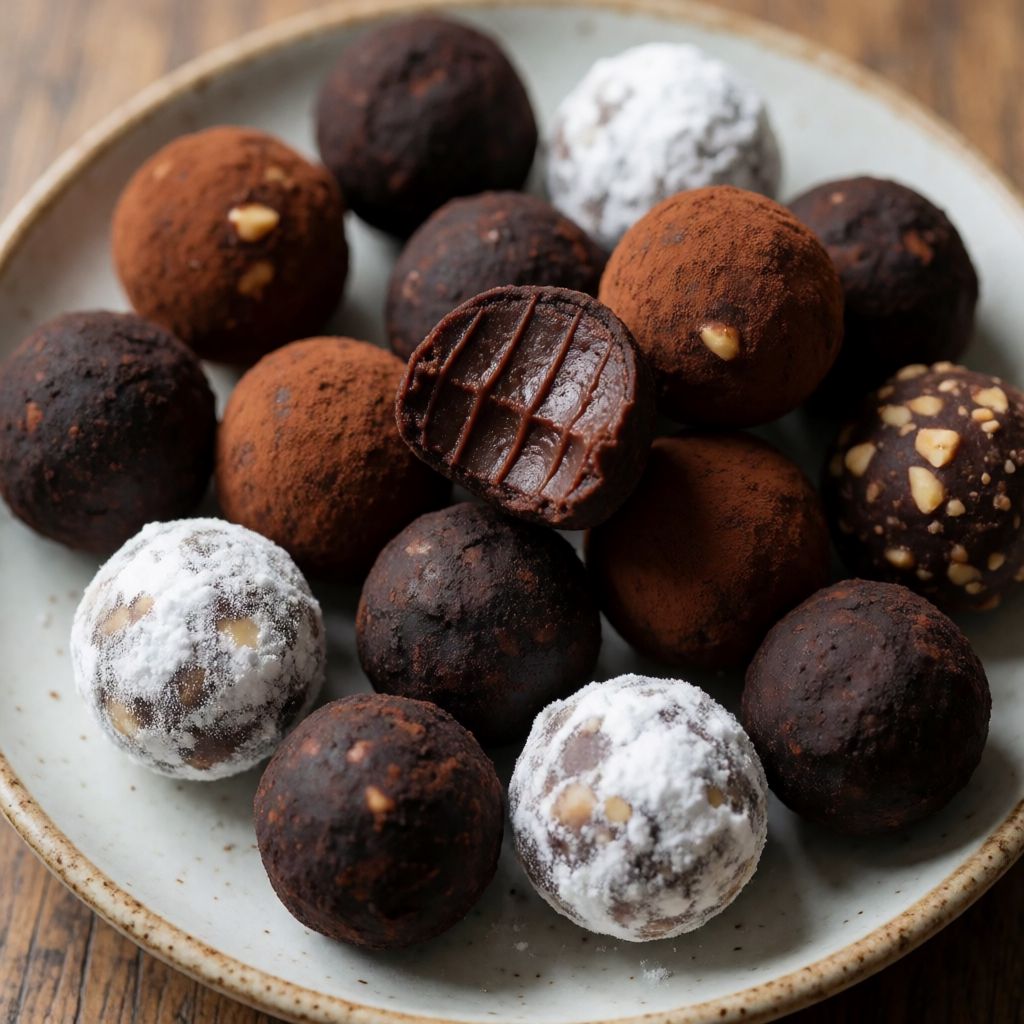
 AI photo
Chocolate Truffles
Rich chocolate truffles rolled in cocoa and icing sugar, with a hazelnut hidden inside each one.
Labels are worked out automatically from the ingredients and can be wrong. Check the packaging if it matters to you.
Ingredients
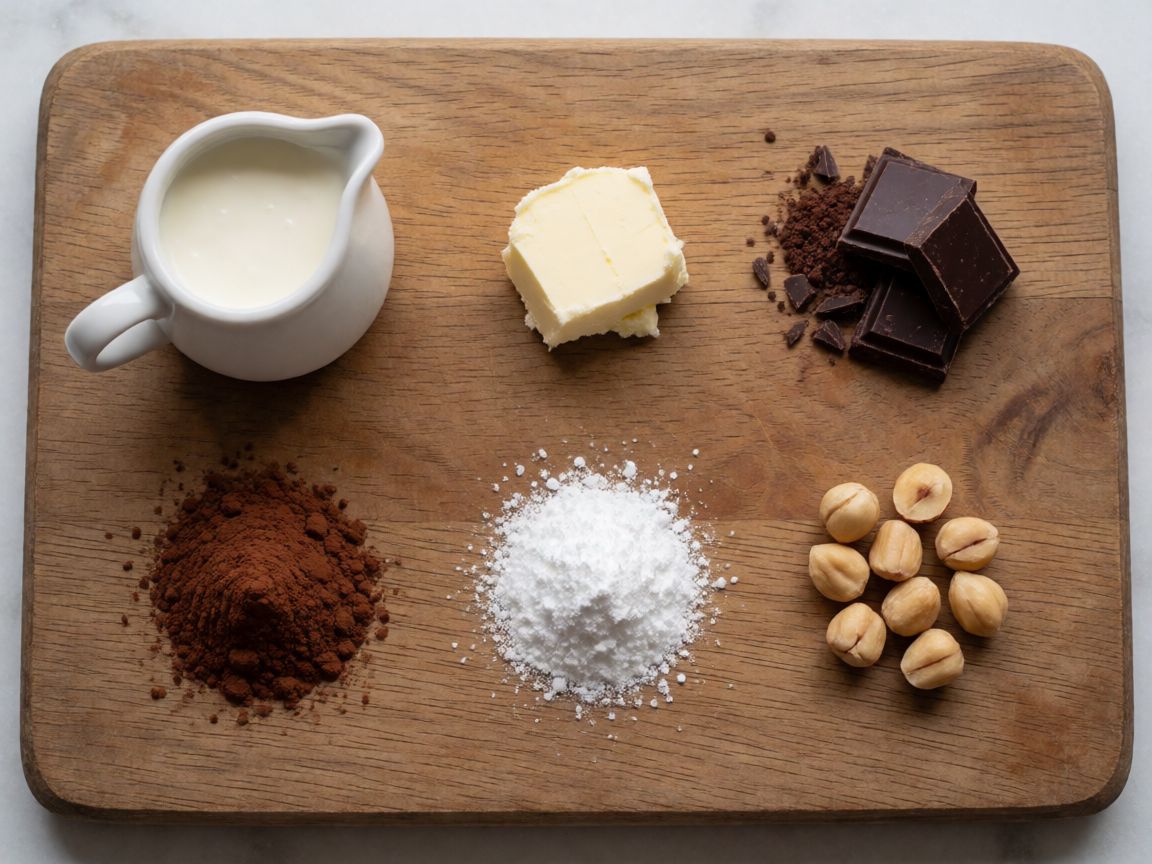
- 100 ml Double cream
- 10 g Butter
- 250 g Dark chocolate
- Cocoa powder to taste
- Icing sugar to taste
- Hazelnuts to taste



Steps
Melt the butter with the cream in a small saucepan over low heat, stirring constantly.
Remove the saucepan from the heat, break in the chocolate and stir until it melts.
Transfer the mixture to a bowl and chill in the fridge for 1 hour.
60 minTake the mixture out of the fridge and leave it at room temperature for a few minutes.
On a plate, mix the cocoa powder with the icing sugar.
Shape the truffles: take a portion, roll it between your palms into a ball, and press a hazelnut inside.
Roll the ball in the cocoa and icing sugar mixture and place it in a paper case.
Serve on a dessert plate or in a decorated basket.
A truffle isn't baked, it's set. What you're making here is a ganache — chocolate melted into warm cream and butter until the three turn into one glossy mass — and then you cool it hard enough to hold a shape and warm it just enough to roll between your palms. Everything that can go wrong with this dessert goes wrong at one of those two hinges: the melting, and the setting.
Some cooks think you can just put cream, butter and chocolate in the same pan and heat the lot together. No — because chocolate doesn't like direct flame. Its structure is cocoa solids suspended in cocoa butter, and push that past a gentle heat and the two un-mix: you get a grainy, oily split instead of a smooth ganache, and no amount of chilling fixes it afterwards. That's why the recipe melts butter into cream first, over heat gentle enough that the cream only trembles at the edge rather than boils, then kills the heat and lets the chocolate melt in the cream's own warmth. The chocolate never sees the flame. That's the whole trick, not a ritual.
On the cream: it has to be double cream, nothing lighter. Double cream carries close to half its weight in fat, and that fat is what lets it marry with melted chocolate into something that will actually set rather than stay loose and spoonable. Single or 'whipping' cream has less fat and more water, and more water in a ganache is exactly what stops it firming — you'd be adding the one thing chocolate can't make peace with in quantity. If double cream isn't in the fridge, a thick full-fat crème fraîche works roughly the same way; skimmed anything does not.
On the chocolate: 250 g of it carrying the whole dessert, so buy one that lists cocoa solids and cocoa butter on the label, not 'vegetable fat' — that second kind is confectionery coating dressed up as chocolate, and it won't set the same way because the fat in it doesn't behave like cocoa butter when it cools. A dark chocolate somewhere around 60–70% cocoa gives you a ganache firm enough to roll and bitter enough that the icing sugar coating has something to argue against; go much higher and the mixture can turn stiff and crumbly rather than yielding, so you'd want a touch more cream to balance it. If you only have milk chocolate, use less cream — it already carries sugar and milk fat, and the usual ratio will leave you with something too soft to shape.
The butter, 10 g against 250 g of chocolate, isn't there to bind — the cream and chocolate do that between them. It's there for gloss and for how the truffle gives on the tongue: butterfat melts at a slightly lower point than cocoa butter, so it's the part that goes first in your mouth, carrying the chocolate's flavour out ahead of the melt rather than leaving it sitting. Leave it out and the truffle still sets; it's just a little duller, a little less silken. Use unsalted if you have the choice, since salted butter will nudge the whole thing savoury in a way a dessert doesn't need, though a pinch of salt deliberately added is an old trick for making chocolate taste more of itself, not less.
Cocoa powder and icing sugar on the plate are a coating, not a flavour you're building — so mix them roughly to taste rather than by a fixed ratio, more cocoa if your chocolate was already sweet, more sugar if it was bitter. Either on its own does a different job: pure cocoa dries the surface and deepens the bitterness on the outside, pure icing sugar just sweetens it; together they do both, and they also solve a practical problem — a just-rolled ganache ball is slightly tacky, and a dry powder coating is what keeps it from sticking to the paper case or your fingers.
The hazelnut in the centre is the one truly optional ingredient, and it's there for two honest reasons rather than tradition for its own sake: it gives the truffle a bit of resistance against the soft ganache, and it lets a modest 250 g of chocolate stretch to more pieces than it otherwise would, because each truffle is a little smaller around its nut. A toasted almond or even a dried cherry does the same job if hazelnuts aren't in the cupboard — the point is contrast, not the specific nut.
On hands: warm palms are the enemy here, more than any step on the page admits. Rolling ganache between genuinely warm hands starts melting it before it's shaped, and you end up with something closer to a smear than a ball. Cool your hands under the tap first if your kitchen's warm, work quickly and decisively rather than fussing over roundness, and don't expect to batch-roll the whole 250 g in one long session without the remaining mixture softening on the worktop — that's not a fault in you, it's just how a fat with a low melting point behaves outside a fridge. Patience here isn't about standing and waiting; it's about not rushing the chill, and about accepting that the last few truffles may need the bowl back in the fridge for ten minutes before they'll roll as cleanly as the first.