
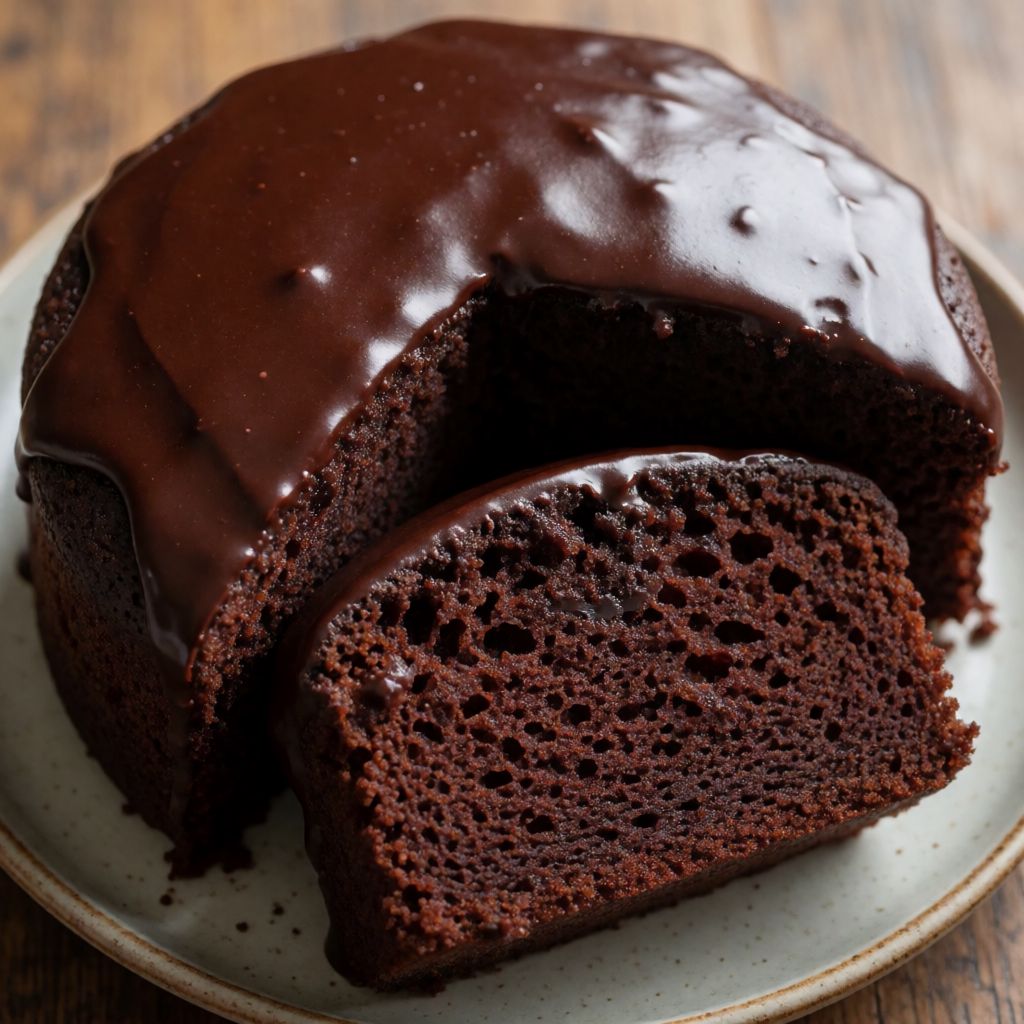
 AI photo
Eggless Chocolate Cake
A simple chocolate sponge made with water and oil instead of eggs and butter.
Labels are worked out automatically from the ingredients and can be wrong. Check the packaging if it matters to you.
Ingredients
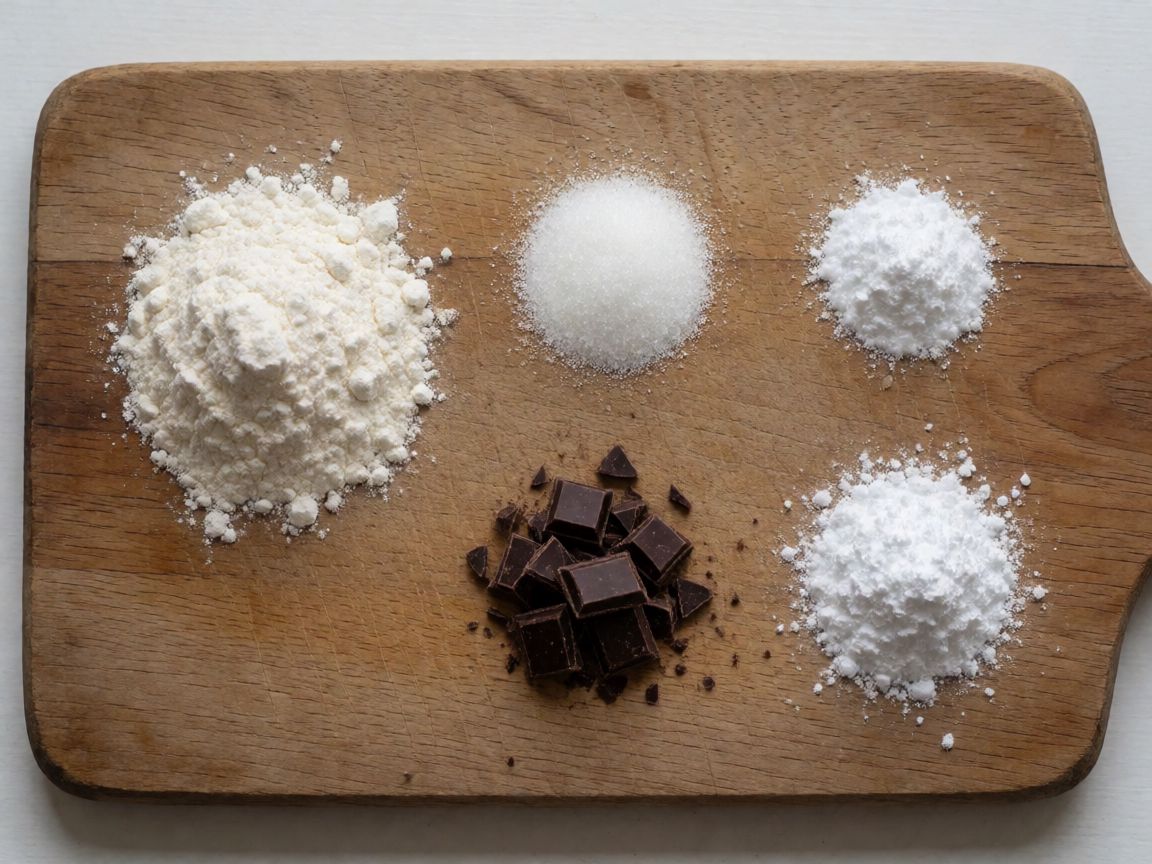
- 300 g plain flour
- 150 g caster sugar
- 16 g baking powder
- 300 g water
- 80 g vegetable oil
- 150 g dark chocolate
- icing sugar to taste, for dusting







Steps
Sift the flour into a bowl, add the sugar and baking powder. Mix the dry ingredients well.
Using a mixer, beat everything to a smooth, even batter, gradually adding the vegetable oil and water.
Melt the dark chocolate in a bain-marie or in the microwave, let it cool, then stir it into the batter. Mix well.
Pour the batter into a 24 cm tin lined with baking paper and bake in a fan oven preheated to 160°C for 45 minutes.
45 minLet the cake cool, dust with icing sugar if you like, and serve.
This is not a chocolate sponge with the eggs taken away and nothing put in their place — it's a different structure altogether, built on two separate jobs that eggs usually do together. In a normal cake, egg protein sets to hold the crumb, and whipped egg traps the air that makes it rise. Here those two jobs are split and handed to different workers: the gluten in the flour does the binding, and the baking powder does the lifting, fizzing CO2 into a wet, oily batter that has no air of its own to start with. That's why this isn't a lighter version of a chocolate cake — it's denser, closer to a cross between a cake and a soft brownie, and that's not a flaw to apologise for.
What decides whether it works is mixing, not whisking. Sift the flour with the sugar and the baking powder first, properly, until you can't find a pocket of raw powder anywhere — a clump of baking powder sitting undissolved in one spot means that spot won't rise while the rest of the cake does, and you get a streak of dense, flat crumb running through an otherwise fine slice. Then the chocolate: melt it, yes, but let it cool before you fold it in. Pour it in hot and you do two bad things at once — you half-cook the batter where the chocolate touches it, and you can knock the baking powder's bubbles out before they've had a chance to set in the oven's heat. Cooled chocolate folds in gently; hot chocolate bullies the batter.
A word on the oven setting, because it trips people up. 160°C fan is not a timid temperature — fan ovens move hot air around the cake constantly, so they cook faster and more evenly than a static oven at the same number. If your oven has no fan, you're looking at closer to 180°C static to get the same effect; the point is even, steady heat reaching the middle of a fairly thick batter without scorching the top crust before the centre has finished rising. A domestic oven thermostat drifts, so an oven thermometer sitting on the shelf is worth more than trusting the dial.
Flour is the scaffolding. Plain flour, sifted, gives you enough gluten to hold the crumb once the baking powder has done its lifting, but not so much that the cake turns tough and bread-like — that's why this isn't a strong bread flour job. If you only have self-raising flour in the cupboard, cut the baking powder back by roughly half, since self-raising already carries its own lift and doubling up gives you a cake that rises fast, then collapses as it cools, leaving a dip in the middle.
Baking powder is doing the work an egg's air normally does, so measure it properly rather than eyeballing a spoon — 16g against 300g of flour is already a generous ratio, and more won't give you a taller cake, it'll give you a bitter, metallic aftertaste and a crumb riddled with holes that then collapses because the structure can't hold gas it was never built to hold.
Sugar here is sweetness first, moisture-keeper second — caster sugar dissolves evenly into a wet batter without the gritty bite coarser sugar can leave. Water and oil together replace the moisture and fat an egg would otherwise bring; oil rather than butter because you want fat that stays liquid and doesn't need creaming — any oil with no smell of its own works, sunflower or rapeseed, not olive, which will fight the chocolate rather than disappear behind it.
Dark chocolate is the flavour, and its cocoa percentage changes the character of the cake more than any other single choice you make — something around 50-70% cocoa gives you a cake that tastes of chocolate rather than of sugar with a chocolate memory. Melt it gently, bain-marie or short bursts in the microwave, and then leave it to cool to roughly room warmth before it goes anywhere near the batter — this is the one place in the recipe where patience is doing real work, not just filling time. Rush that cooling and you lose rise, cut it out and you risk a greasy split where the chocolate seizes against the water in the batter instead of marrying into it.
Icing sugar at the end is decoration, not flavour — dust it only once the cake has properly cooled, because on a warm surface it melts into sticky patches instead of sitting as a fine white layer. It earns its place best alongside a cup of tea with milk, after something like a Sunday roast, when nobody wants a tall, fussy cake — just a dense, honestly chocolate-tasting slice that doesn't need eggs, cream, or an apology to be worth cutting into.