
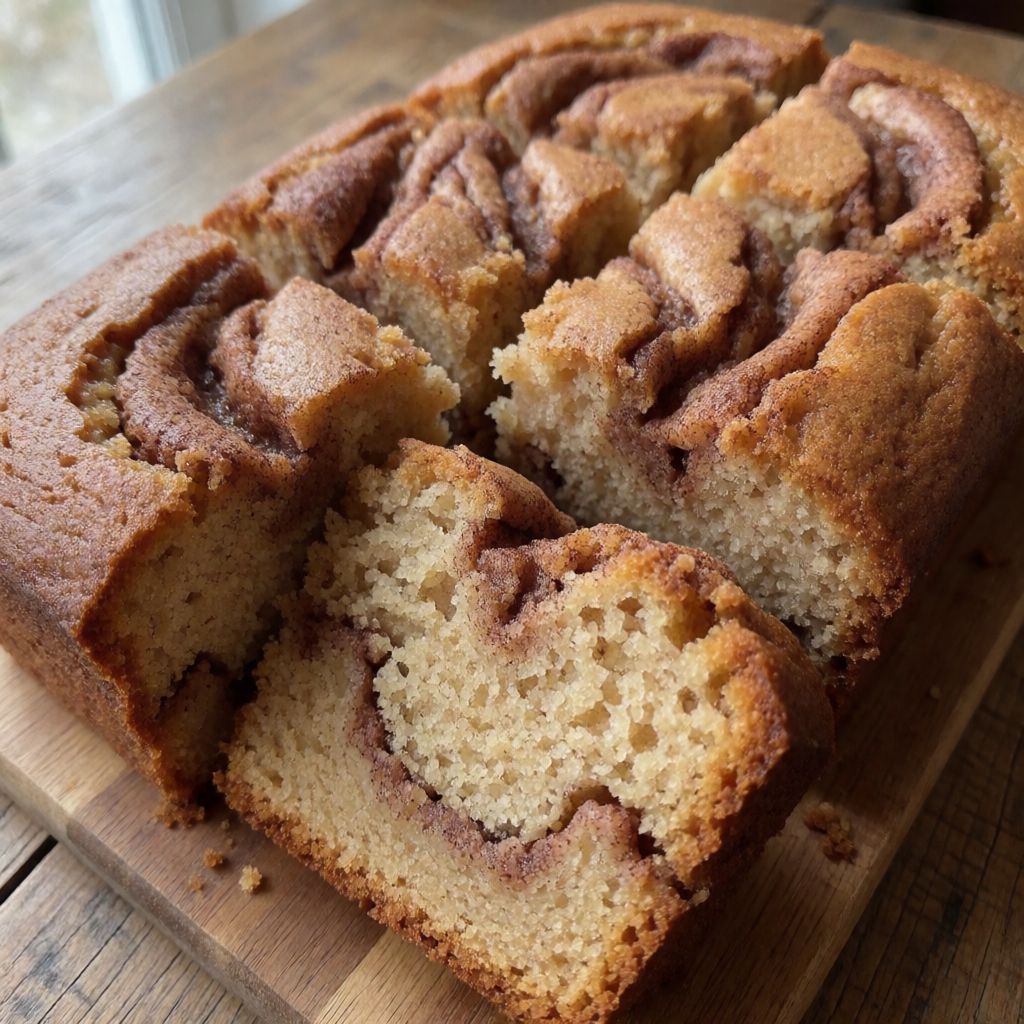
 AI photo
Cinnamon Cake
A soft buttermilk cinnamon cake topped with coffee icing, cut into squares.
Labels are worked out automatically from the ingredients and can be wrong. Check the packaging if it matters to you.
Ingredients
- 400 g Sugar
- 175 g Butter soft, at room temperature
- 1 pcs Eggs
- 500 g Plain flour
- 6 tsp Cinnamon
- 2 tsp Vanilla sugar
- 5 g Cocoa powder
- 1 tsp Baking powder
- 2 tsp Bicarbonate of soda
- 1 pinch Salt
- 600 ml Buttermilk











Coffee Icing
- 100 g Butter soft, at room temperature
- 400 g Icing sugar
- 50 ml Coffee strong, cooled
- 1 tsp Vanilla sugar
- 20 g Cocoa powder


Steps
Beat the sugar and butter for a few minutes until the mixture is light and fluffy, then beat in the egg.
Tip the flour, cinnamon, vanilla sugar, cocoa, baking powder, bicarbonate of soda and salt into a bowl and mix well.
Alternately add about 100ml of the flour mixture and 100ml of the buttermilk to the sugar, butter and egg mixture, continuing until all the ingredients are used.
Spread the batter into a tin (26×36 cm) lined with baking parchment, level it out and bake in a preheated fan oven at 175°C for about 30-40 minutes, until the cake is fully baked through.
35 minCheck with a wooden skewer in the centre of the cake – it should come out with no raw batter on it. Remove the cake from the oven and let it cool completely in the tin.
For the coffee icing: take the butter out of the fridge at least 45 minutes before you need it, so it becomes fully soft. Mix the soft butter with the icing sugar, coffee, vanilla sugar and cocoa until smooth.
45 minIf needed, add a little cold water or coffee to taste to reach the right consistency; if the icing becomes too runny, add more icing sugar.
Spread the icing over the cooled cake and cut into squares.
This is a sheet cake, not a layer cake — batter spread thin into a tray (26×36 cm, so roughly a standard roasting tin) and baked flat, then iced in one slab and cut into squares like a tray bake. That shape is the whole point: more surface, more crust-to-crumb ratio, and it bakes faster and more evenly than a deep tin because heat gets through a shallow layer without drying out the middle before the edges are done. A deep 20 cm sandwich tin with this amount of batter would be a disaster — raw in the centre, burnt at the rim.
What decides whether it works is the buttermilk and the raising agents working against each other on purpose. Buttermilk is acidic; bicarbonate of soda needs an acid to react and produce the gas that lifts the crumb. The baking powder is backup — it's already got its own acid built in, for insurance once the bicarb's acid supply (the buttermilk) runs out partway through mixing. This is why you alternate flour and buttermilk into the batter rather than dumping it all in: you want the acid-base reaction happening gradually, in small bursts, not all at once in a violent fizz that escapes before the cake even hits the oven.
Some say you must sift the flour mixture for a fine crumb — no, because the real job of mixing flour, cocoa, cinnamon, baking powder, bicarb and salt together dry, before it meets any liquid, is to distribute the bicarbonate of soda evenly. Bicarb is sharp and bitter in concentration; a pocket of it unmixed will taste like soap in one bite of your cake. Sifting is just a side effect of doing this mixing properly, not the goal itself.
Sugar and butter first, beaten together — this is creaming, and what you're doing is beating air into the fat, using sugar crystals as tiny blades to cut pockets into the butter. Those pockets are where your rise starts, before the bicarb even gets involved. "Light and fluffy" is the only instruction that matters here — colour goes pale, volume visibly increases. There's no clock for this; a hand mixer and a stand mixer get there at different speeds, so watch the bowl, not the minute hand.
The cinnamon — six teaspoons is a lot, and that's correct for a cake built to taste of cinnamon rather than hint at it, same logic as why it's called Cinnamon Cake and not Vanilla Cake With A Suggestion Of Spice. If your cinnamon's been in the cupboard two years, it's lost most of its oil and you'll taste dust, not spice; buy it in smaller amounts more often, or compensate by using more than the recipe asks.
Buttermilk: what you actually need is an acidic dairy liquid with enough body to loosen the batter. No buttermilk in the fridge — common enough, it's not a UK staple shelf item — then stir a tablespoon of lemon juice or white vinegar into ordinary milk per 250 ml and let it sit five minutes until it thickens slightly. Plain milk alone won't do; it has no acid to wake up the bicarbonate of soda, and your cake will rise less and taste faintly of soda without the buttermilk's tang to balance it.
Eggs: one egg here is structural, not for richness — it's binding fat and liquid into something that won't curdle apart in the tin. There's a real risk of the mixture looking "split" or grainy right after the egg goes in; that's just the egg not yet fully incorporated into the fat, not a failure, and it smooths out once the flour starts going in.
Baking powder and bicarbonate of soda together, rather than one or the other — the bicarb needs buttermilk's acid and gives a fast, strong lift early; baking powder is slower and more self-sufficient, carrying the rise through to the oven. Leave out the baking powder and rely on bicarb alone and you risk the cake rising fast then collapsing once the acid's spent before the structure's set.
Cocoa in the cake itself is only 5 g — a trace, there to deepen the cinnamon-brown colour and round off the flavour, not to make this a chocolate cake. The icing's 20 g of cocoa is doing the real cocoa work, cut against 400 g icing sugar and balanced by bitter coffee so the topping doesn't sit on the tongue as pure sweetness.
Any neutral butter substitute for baking — anything solid at room temperature with no strong flavour of its own — works in the cake itself; a baking margarine is fine. For the icing, though, use real butter if you can: margarine's water content can make the icing split or go greasy rather than holding smooth and glossy.
The skewer test in step five is there because ovens lie — the fan oven's stated 175°C and the thermostat on your own oven rarely agree exactly, and a shallow wide tin bakes faster at the edges than the centre. A clean skewer tells you what the thermometer and the clock can't: whether the middle, the slowest part to set, has actually finished cooking. Cutting into a cake that looks done but isn't is the single most common way to ruin a sheet bake — the crumb collapses, steam escapes, and you're left with a gummy stripe through the centre.
Letting the cake cool completely in the tin before icing isn't patience for its own sake dressed up as virtue — it genuinely is the ingredient here. Icing onto warm cake melts the butter in it, and you get a thin, sliding glaze instead of a spreadable layer that sets with a bit of structure. Tea with milk alongside, cut into squares rather than wedges — that's the tray-bake habit this cake belongs to, built for a crowd and a big pot of tea, not a formal slice on a plate.