Dairy
Buttermilk
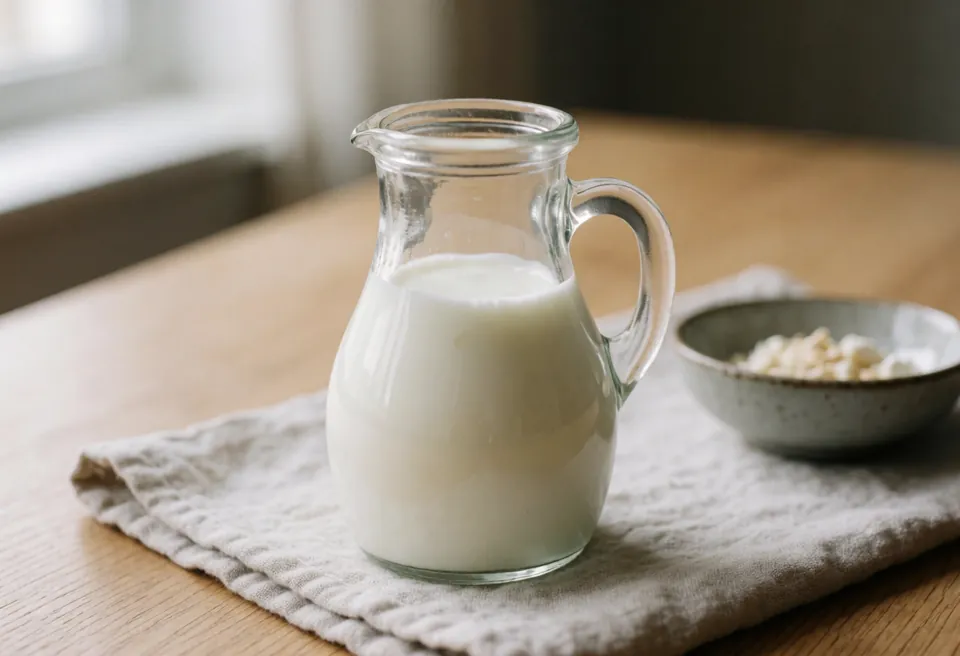
A tangy dairy drink left over from churning butter, enjoyed on its own or used in baking to make dough lighter and fluffier.
43 kcal per 100 g
Nutrition per 100 g
43 kcal
| Protein | 3.5 g |
|---|---|
| Fat | 1.1 g |
| Carbs | 4.8 g |
Source: USDA FoodData Central, 2026-09-21. Per 100 g of product.
Good to know: Buttermilk
Buttermilk confuses people before they even taste it. Real buttermilk, the kind left behind after churning butter, has almost vanished from shops. What you buy today is cultured milk, fermented on purpose, tangy because bacteria have eaten into its sugars and left acid behind. That acid is the whole trick. It reacts with baking soda and makes your pancakes lift, and it gives meat a soft, juicy tenderness if you soak it before frying.
Choose it by nose and by pour. It should smell clean and sour, like yogurt, never sharp or sulfurous. Good buttermilk pours slowly, thick but not lumpy, and clings a little to the glass. If it separates into watery whey and curd in the carton, walk away.
Now, some people say buttermilk is just watered-down cream, weak, unimportant, only good for baking. No! It carries real body and real acidity, both doing work in your dish. Treat it as thin and you skimp on it, or skip it entirely — and your cornbread comes out flat, your chicken comes out tough, missing the tenderness only that acid could give.