
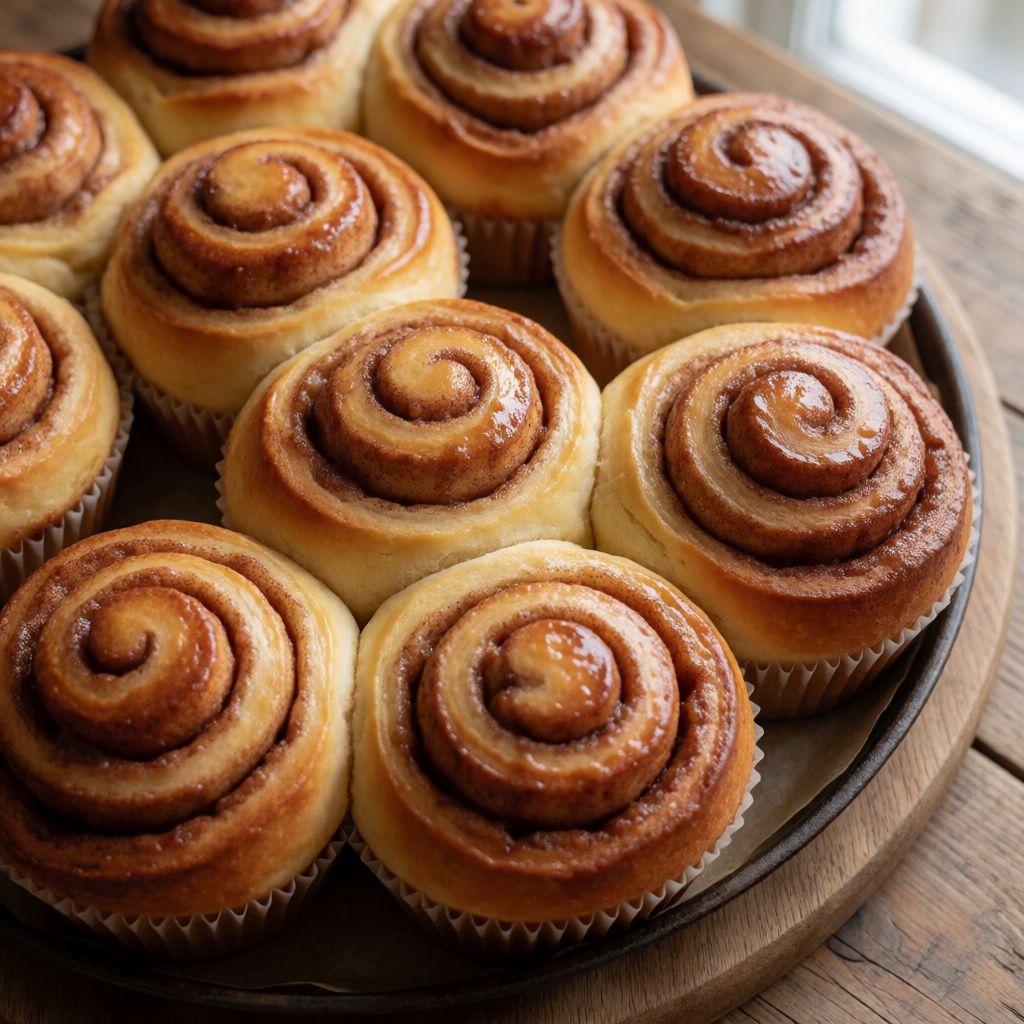
 AI photo
Cinnamon Buns
Soft yeasted buns rolled with a buttery cinnamon filling and finished with a sweet icing.
Labels are worked out automatically from the ingredients and can be wrong. Check the packaging if it matters to you.
Ingredients
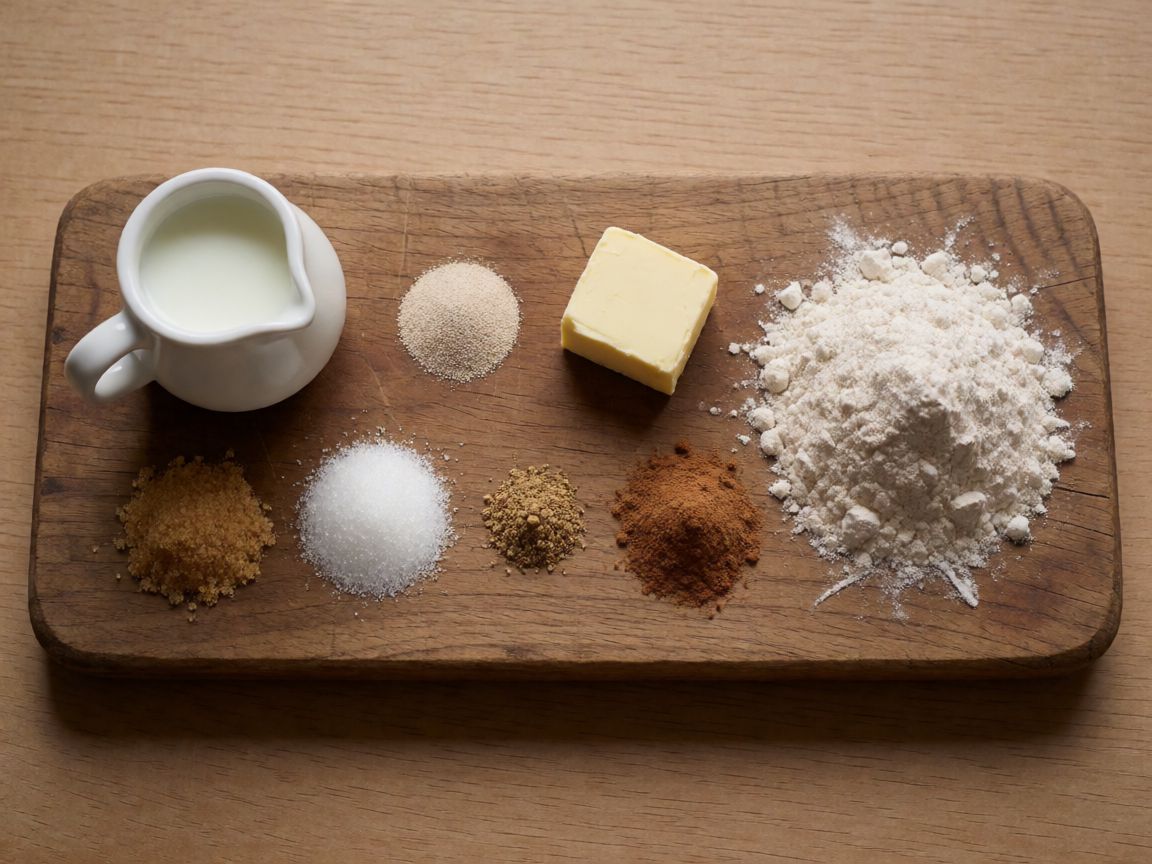
- 150 ml Milk at room temperature
- 20 g Yeast fresh yeast; or use 7g fast-action dried yeast
- 100 g Butter
- 1 tsp Vanilla sugar
- 50 g Caster sugar
- 1 tsp Cardamom
- 1 tsp Cinnamon
- 60 g Wholemeal flour
- 2 pcs Eggs
- 340 g Plain flour
- 0.5 tsp Salt
- 150 g Butter softened, at room temperature
- 100 g Caster sugar
- 75 g Muscovado sugar
- 1 tsp Cinnamon
- 100 g Icing sugar
- tbsp Water as needed













Steps
Stir the fresh yeast into a bowl with the room-temperature milk. Melt the butter over low heat, cool to room temperature and pour into the milk, then whisk in the eggs.
Mix the sugar, vanilla sugar, salt, cinnamon, cardamom and wholemeal flour, add to the wet ingredients and stir until smooth.
Gradually add the plain flour and knead the dough with a mixer for 5-10 minutes. Cover the dough with a towel and leave to rise for 30 minutes.
30 minMix the softened butter, caster sugar, muscovado sugar and cinnamon into a smooth filling for the buns.
Roll the dough into a large rectangle, spread with the filling, leaving the last 4 cm of one edge bare, and roll up into a log.
Cut the log into 1 cm thick slices and place on a baking tray lined with baking paper. Leave the buns to rise for 45 minutes.
45 minStir the icing sugar with water until smooth to make the icing.
Bake in a preheated fan oven at 175°C for about 17 minutes. Cool on the tray and decorate with icing before serving.
17 min
A cinnamon bun is a sugar-butter-spice sandwich folded into dough and then sliced into coins, so that when it bakes, that filling has nowhere to go but to melt, bubble up between the layers and caramelise at the edges. That's the whole trick. The roll-and-slice shape isn't decoration — it's what turns a flat spiral of filling into dozens of thin layers, so every bite gets a bit of soft bread and a bit of sticky, slightly burnt sugar.
What decides whether it works is the dough's temperature at two separate moments, not one. First, when you mix it: the milk, the melted butter, everything needs to be at room temperature, because yeast is a living thing and a hot liquid kills it outright, while a cold one just puts it to sleep for the next hour. Second, when you roll it: the butter filling needs to be soft enough to spread without tearing the dough, but not so soft it's a liquid — if it runs, it runs out of the roll before it ever reaches the oven, and you get a dry bun with a caramel puddle on the tray instead of buns with caramel inside them.
The yeast is the engine, and fresh or dried makes no real difference to the result — fresh is just more alive straight away, so it goes in with the milk directly; dried needs a touch more flour-bound time, which is already built into the kneading and first rise here, so don't feel short-changed using the 7g version. Either way, room-temperature liquid is non-negotiable: yeast works by fermenting sugar and releasing gas, and that process has a window, roughly blood-warm to room-warm. Go above it and you don't slow the yeast down, you kill it, and no amount of extra time will bring a dead culture back.
The butter in the dough gets melted and cooled, not just softened, because you need it liquid enough to distribute evenly through the milk and eggs rather than sit in lumps that later show up as greasy pockets in the baked crumb. The wholemeal flour is a small addition but it's doing real work — it adds a slight nuttiness and a bit more structure from its bran, something plain flour alone doesn't give you; if you haven't got it, use plain flour instead and accept a slightly softer, blander crumb, which is not a disaster, just a different bun.
Cardamom alongside cinnamon is the giveaway that this recipe has Scandinavian roots — Swedish kanelbullar traditionally carry both, because cardamom was once the luxury spice brought in by Baltic trade routes, while cinnamon was the everyday one; together they give a dough that tastes of more than just sugar. If you only have one, use cinnamon and skip the cardamom rather than the other way round — cardamom alone reads as medicinal without cinnamon's warmth backing it up.
For the filling, softened butter means pliable, not melted — press a finger in and it should dent, not sink straight through. This matters because you're about to spread it across rolled-out dough thin enough to tear; a filling that's too firm drags and rips the dough, a filling that's too loose soaks straight in and won't hold its line when you roll. The combination of caster sugar and muscovado sugar isn't fussiness — muscovado carries molasses, which is where the deep, almost toffee-ish note comes from when it caramelises in the oven, while caster sugar keeps the texture from turning gritty. One sugar alone works; both together works better, and if you've only got light brown sugar in the cupboard, that's a fair middle ground.
The bare 4cm strip you leave at one edge when spreading the filling is there so the roll has somewhere clean to seal itself — without it, filling squeezes out of the seam as you roll and the log won't hold together when you slice it, leaving you with buns that unravel on the tray.
For the icing, water stirred into icing sugar is the entire method — add it a teaspoon at a time, because icing sugar takes almost nothing to go from paste to puddle, and a thin icing just runs straight off warm buns and pools underneath, telling you nothing except that you added water too fast.
In a domestic kitchen, a fan oven at 175°C is honest heat for this — hot enough to set the dough and caramelise the sugar at the edges before the inside dries out, which is the real risk with small, thin-sliced buns: they have far less mass than a single large loaf, so they go from underdone to dry in a narrow window. Watch rather than clock-watch past the 17-minute mark — you want the tops golden and the edges just starting to catch darker at the rim, where the sugar's doing its proper work.