
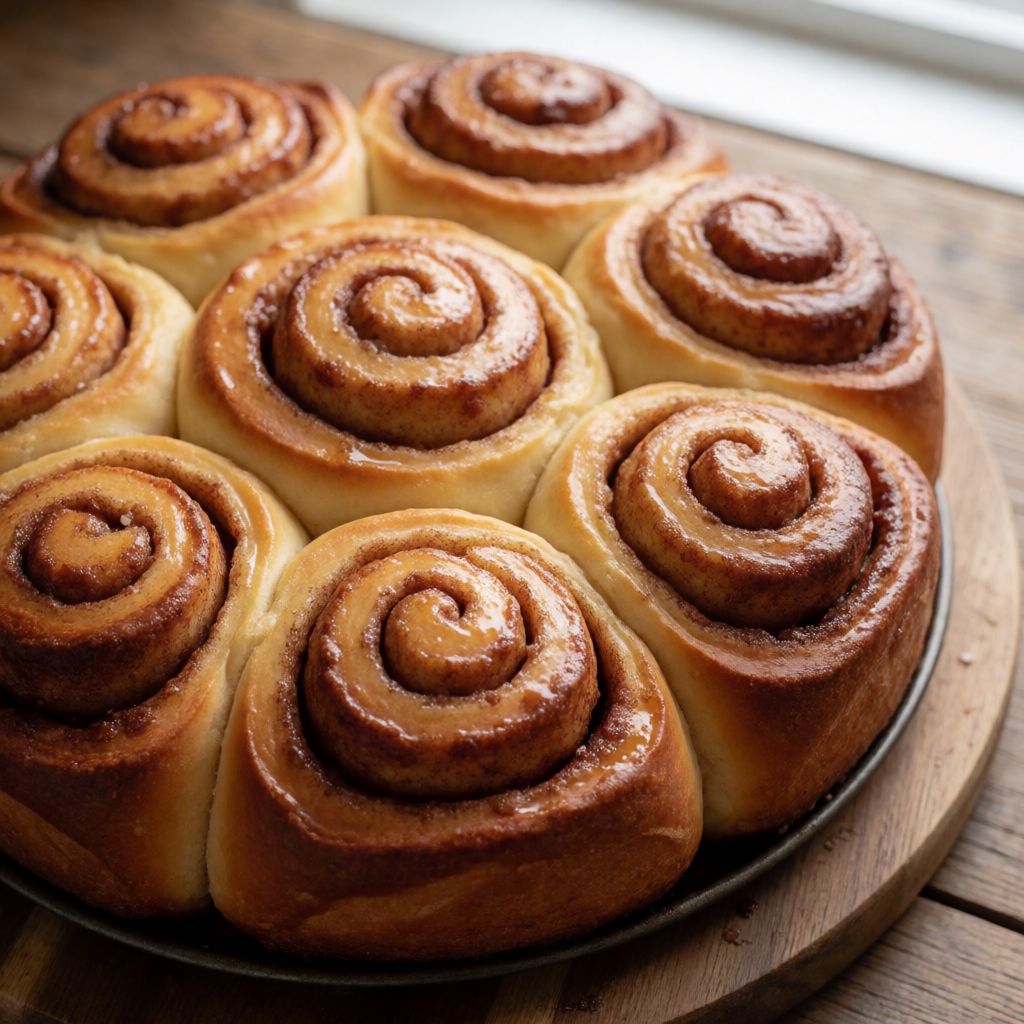
 AI photo
Cinnamon Rolls
Soft, fluffy cinnamon rolls filled with a buttery cinnamon-sugar swirl and topped with a simple icing.
Labels are worked out automatically from the ingredients and can be wrong. Check the packaging if it matters to you.
Ingredients
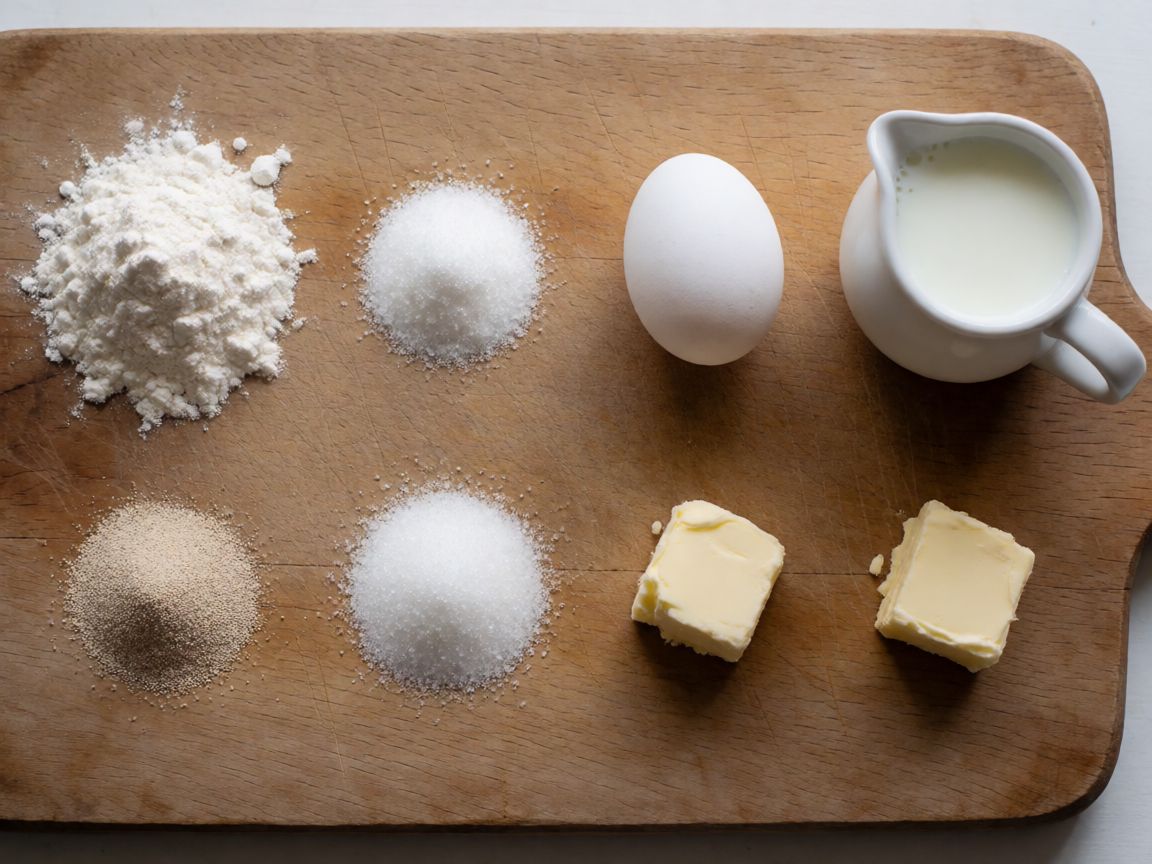
- 300 g Plain flour
- 300 g Plain flour
- 60 g Caster sugar
- 4 g Dried yeast
- 1 pcs Eggs
- 125 ml Water
- 125 ml Milk
- 5 g Salt
- 70 g Butter
- 25 g Butter
- 100 g Caster sugar for the filling
- 1 tbsp Cinnamon
- 100 g Icing sugar
- 3-4 tsp Water for the icing








Steps
In the bowl of a stand mixer, combine the flour, sugar and yeast, fit the dough hook and mix in the egg, milk and water
5 minAdd the salt and continue mixing
5 minGradually add the soft butter and knead until you have a smooth dough
15 minTransfer the dough to a bowl, cover with cling film and leave to rise until tripled in size
120 minRoll out the dough into a 50x40 cm rectangle on a lightly floured surface
Brush the surface with butter and scatter over the cinnamon-sugar mixture
Roll the dough up into a log and slice into rolls a bit thicker than two fingers
Arrange the rolls in a 23x30 cm tin lined with baking paper, cover with cling film and leave to rise
60 minBake in a preheated fan oven at 180°C for 25 minutes
25 minMix the icing sugar with water until thick for the icing
Once the rolls have cooled, decorate them with stripes of icing
A cinnamon roll is a yeast dough rolled thin, smeared with fat and sugar, then coiled into a spiral so that when it bakes, that spiral has to push outward before it can push up. The whole shape of the thing — those ribbons of cinnamon swirling through the crumb — is just geometry doing what geometry does when you roll something tight and then let heat expand it. Nothing mystical. A log of dough, cut into discs, is a machine for turning a flat sheet into a spiral staircase of sugar.
What decides whether it works is almost entirely the first rise, not the oven. This dough triples — not doubles, triples — and that's not a typo or an exaggeration for effect. Yeast needs time to eat through the sugars and throw off enough gas to properly open the gluten network the kneading built. Rush that first prove and you get a roll that's dense and bready, chewy in the wrong way, because the structure never had the chance to blow up into the open, pullable crumb you're after. Some say you can just leave it "until it looks bigger" — no, because "bigger" is vague and your eye lies to you in a warm kitchen. Triple is a number you can actually check: mark the bowl, or eyeball against a known volume, and don't guess.
Flour here is just plain flour, not strong bread flour, and that's deliberate rather than a shortcut. A soft-ish flour with middling protein gives you a dough that's easier to roll out thin without fighting back, and because the enrichment — egg, milk, butter — is already doing structural work, you don't need the extra gluten strength a bread flour would bring. If all you've got is strong flour, it'll still work, just knead a touch less or the rolls come out chewier than you want.
Yeast is only 4g against 300g of flour, which looks stingy until you remember it has two full hours to work in the first rise. Slow yeast, long time, is the trade every enriched dough makes — fat and sugar actually slow yeast activity down, so you compensate with patience rather than piling in more yeast and rushing it. More yeast, less time, gives you a beery, slightly sour edge you don't want in something meant to taste of butter and cinnamon.
The liquid is split between milk and water rather than one or the other, and that's about control, not tradition. All milk makes a softer, richer dough but one that can go slack and sticky; all water gives you more structure but a blander crumb. Half and half splits the difference — enough fat and sugar from the milk to keep things tender, enough plain hydration to keep the dough workable on a kitchen counter rather than a mixer built for commercial batches. If you're out of milk, water with a spoon of extra butter gets you most of the way there; it won't taste identical, but it won't fail.
Salt goes in after the initial mix, not with the flour and yeast from the start, and that's not fussiness — salt tightens gluten and can slow yeast if it touches it directly and early, in a dough where the yeast already has enough working against it with all that sugar and fat. Five grams against this much flour is a seasoning amount, not a preserving amount: taste for it in the dough before you roll, because unsalted dough makes a one-note-sweet roll, sugar with nothing underneath.
For the filling, plain caster sugar rather than brown is worth a second thought — brown sugar's molasses content gives a deeper, almost toffee note, and if that's what you want, swap it; just know it'll also pull more moisture and can make the filling run rather than stay put as you roll. A tablespoon of cinnamon against 100g of sugar is a strong ratio by most standards, which tells you this version wants cinnamon to be the dominant flavour, not a background note — if that's too much for your palate, pull it back, but taste the raw mix first, because it reads weaker dry than it does once it's baked and concentrated.
The icing is water-thinned icing sugar, nothing more, and the "3-4 tsp water" is a range for a reason: humidity and the exact sugar you're using change how much liquid it drinks up. You want it thick enough to sit in a ribbon rather than soak straight into the roll — drizzle it while the rolls are still warm and it vanishes into the crumb instead of sitting as a visible stripe. Let them cool first, properly, hand-on-the-tin cool, not just "not steaming" — that's the whole reason step eleven comes after the rolls have stood. Patience again, at the very end, when it's tempting to skip it because the hard part feels done.
Oven heat at this stage is really about colour and structure finishing together — you're looking for the tops to turn from pale to a proper golden-brown, and for the centre roll, usually the last to cook through in a crowded tin, to spring back rather than feel soft and wet when pressed. A UK fan oven runs a little fiercer than its dial suggests, so if the tops are colouring fast but the middle still gives under a finger, that's the tray position or the oven's own quirks talking, not the recipe — pull them when the whole tray feels done, not just the edges.