
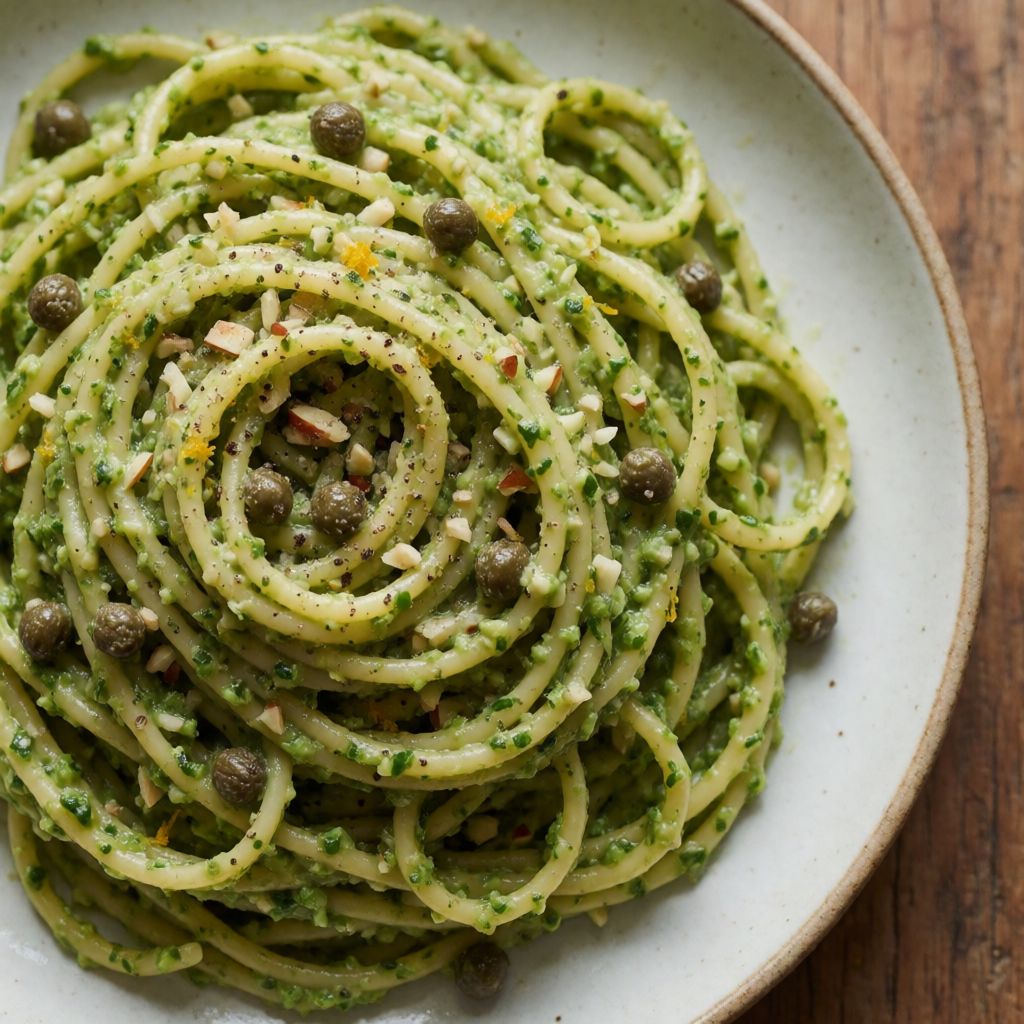
 AI photo
Citrus Pesto
A zesty orange, caper and almond pesto blended with basil and olive oil, tossed with spaghetti.
Labels are worked out automatically from the ingredients and can be wrong. Check the packaging if it matters to you.
Ingredients
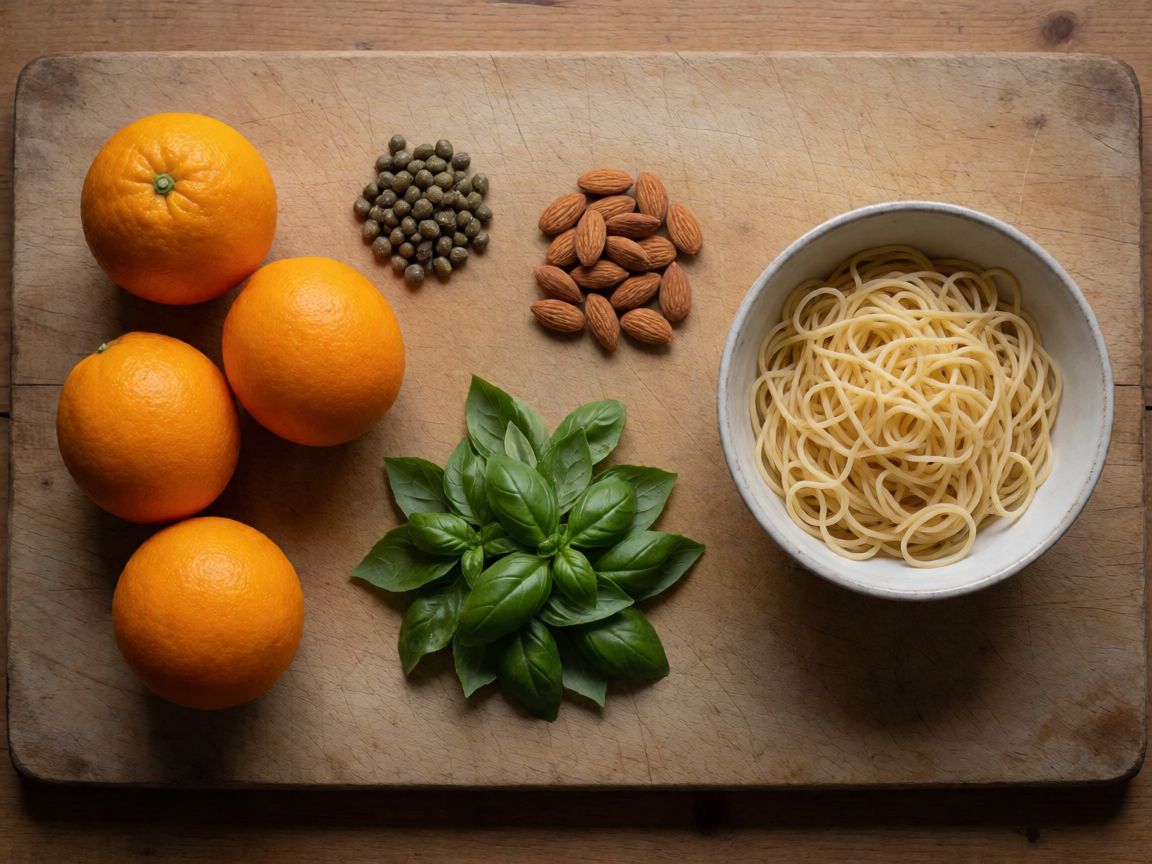
- 4 pcs Orange
- 40 g Capers
- 180 g Almonds
- 20-25 pcs Basil leaves fresh leaves
- 1 pinch Salt
- Black pepper to taste
- 400 ml Olive oil
- 250 g Spaghetti








Steps
Peel the oranges, removing the skin and white pith, remove any pips and cut into segments.
Bring a pot of water to the boil and season with salt.
Cook the spaghetti according to the time on the pack.
Soak the capers in warm water.
Put the capers, orange segments, basil leaves and olive oil into a blender and blitz until smooth.
Drain the spaghetti and toss with the sauce.
Season with more salt and olive oil to taste if needed.
Serve sprinkled with freshly ground black pepper.
Forget what you think pesto means. The word just means "pounded" — crushed to a paste. Genoa gave us basil, pine nuts, garlic and parmesan, and people now treat that as gospel. It isn't. It's one answer to a simple question: what do you pound together to coat pasta without cooking anything? This dish gives a different answer — orange instead of basil doing half the work, capers standing in for the salt a cheese would normally bring, almonds for body instead of pine nuts. Same idea, different pantry.
What decides whether this works is bitterness, and it's decided at the orange, not the blender. Any white pith or membrane left on those segments carries naringin, the compound that makes marmalade taste the way it does — bitter by design there, unwanted here. Cut it away properly and the orange reads as sweet-sharp. Leave scraps of it and the whole sauce turns medicinal, and no amount of salt or oil will talk it back.
Second thing: salt control. Capers come to you already salted or brined — that's how they're kept, not how they're meant to taste straight out of the jar. Soaking them isn't a formality, it's you taking the seasoning decision back from the preserving process. Skip it and the sauce salts itself whether you want it to or not.
Start with the oranges, because the knife work there is the whole game. What you're doing is a supreme cut — slicing the peel and pith off in one motion so you're left with bare flesh, then lifting segments out from between the membranes rather than just cutting through the fruit. It takes longer than it looks like it should. Don't rush it; sloppy segmenting is the single most common reason this sauce tastes bitter, not the oranges themselves. Use ordinary sweet eating oranges, not the thick-skinned Seville ones that turn up in UK shops in January for marmalade — those are bred to be sharp and bitter, the opposite of what you want sitting next to salt and oil.
Capers are flower buds, pickled in salt or a vinegar brine because fresh they're unremarkable and don't keep. The soak in warm water isn't washing them, it's pulling that preserving salt back out into the water so what lands in the blender is caper flavour without caper's full salt load — you add the salt back in afterwards, on your own terms, which is why the recipe tells you to taste and adjust at the end rather than trust a fixed amount. No capers in the cupboard? Finely chopped green olives do a similar job — same brininess, same little pop of acid.
Almonds are there for the same reason pine nuts are in the Genovese version: fat and body. Basil and oil alone give you something thin and slick that slides off the pasta rather than coating it; ground nuts turn it into something with weight, something that stays put. Buy them whole, not pre-ground — ground almond oxidises fast and can carry a faint staleness that you'll taste right through the orange. If pine nuts are what you've got, or cashews, or hazelnuts — any nut with enough oil in it to turn creamy when crushed will do the job. Pine nuts are traditional here mostly because they were what grew wild and cheap around the Mediterranean groves; in a UK shop they're the expensive option, no shame in swapping.
The 400ml of olive oil looks like a lot against four oranges and a handful of capers, and it is — because this sauce never sees heat. There's no pan reducing it, no simmer marrying the flavours together. The oil is doing all the carrying: it's what lets orange, caper and almond sit together as one sauce rather than three separate tastes fighting on the plate. That means the oil's own flavour matters more here than in a dish where it's just cooking medium. Use a fruity, not-too-aggressive olive oil — if yours tastes rancid or flat, the whole sauce will too, and no fix at the end covers that over. If you want to mute the olive flavour and let the orange lead entirely, use any oil with no character of its own — a plain sunflower or rapeseed — but know you're trading away some of what makes this taste the way it does.
Spaghetti rather than a short shape isn't arbitrary: a long strand picks up a loose, oily sauce by twirling it round itself, where a short tube would just let the sauce pool at the bottom of the bowl. Cook it to where it still has resistance in the bite — bend-not-snap is the wrong test for pasta, you want it firm enough to push back against your teeth, because it's not going back into any heat after this. It sits in a raw sauce, so whatever texture it has when it leaves the pot is the texture you eat.