
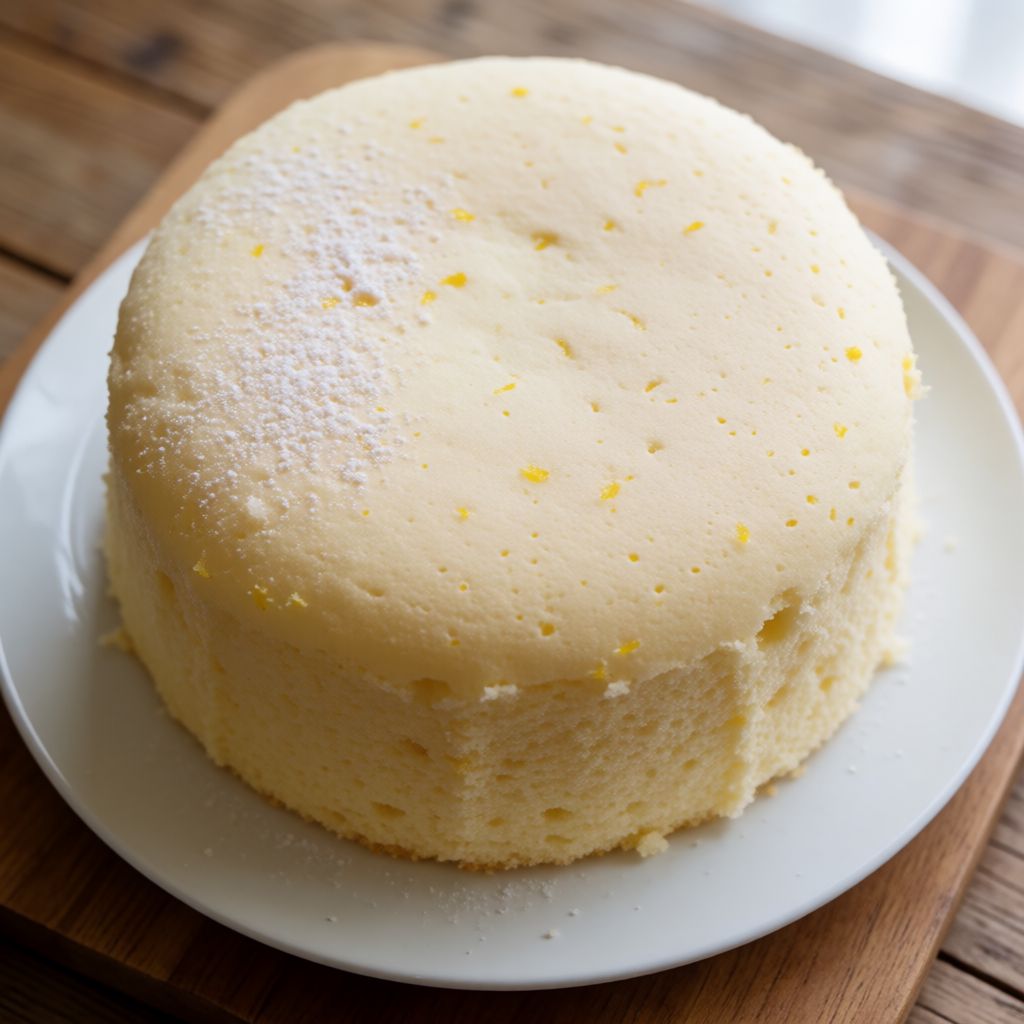
 AI photo
Cloud Cake
A light Ukrainian sponge cake made with potato starch, flavoured with lemon zest and dusted with icing sugar.
Labels are worked out automatically from the ingredients and can be wrong. Check the packaging if it matters to you.
Ingredients
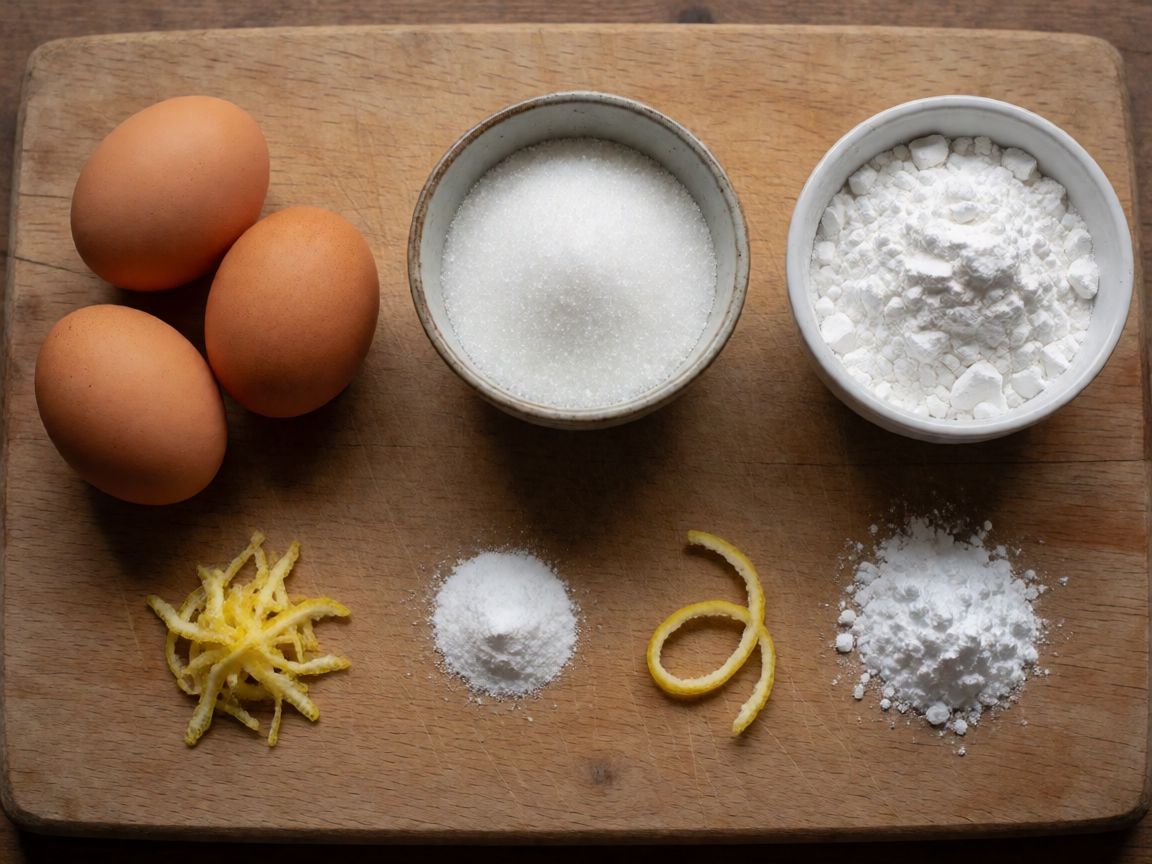
- 3 pcs Eggs
- 130 g Caster sugar
- 90 g Vegetable oil
- 200 g Potato starch
- 15 g Baking powder
- 1 pcs Lemon zest
- 20 g Icing sugar for dusting






Steps
In a bowl, using a mixer, beat the eggs with the sugar until pale, creamy and increased in volume.
Continuing to beat, pour in the vegetable oil in a thin stream.
Add the lemon zest from a well-washed lemon for fragrance; if preferred, it can be replaced with vanilla extract.
Sift in the potato starch and baking powder, then gently fold with a spatula until combined.
Pour the batter into a tin greased with butter or oil and dusted with starch or flour.
Bake in a preheated fan oven at 175°C for 40 minutes.
40 minIf your oven has no fan function, bake at 180°C for 5–10 minutes longer.
7 minBefore removing the cake, check it is done using a wooden skewer.
Serve generously dusted with icing sugar.
This is a flourless sponge, and that one fact decides everything else about it. There's no flour in the whole bowl — potato starch stands in for it — which means there's no gluten to build structure the way an ordinary cake relies on. The lift here comes from somewhere else entirely: whipped eggs. Three eggs beaten with sugar until they triple in volume and leave a ribbon when you lift the whisk — that foam is the actual engine. Baking powder is backup, not the main event; it just holds open the air pockets the eggs already made.
Some say a cake needs flour for structure, or it collapses. No — because starch sets perfectly well around egg foam on its own, and arguably better, since there's nothing stiff and elastic to toughen the crumb. What a flourless sponge is actually vulnerable to isn't the missing flour, it's you knocking the air back out after the eggs did the work. Pour the oil in too fast and the foam deflates the way a soufflé sulks if you slam the oven door. Stir the starch in with any force and you'll watch a cloud turn into a flat, rubbery disc.
So the whole recipe is really two jobs: build the foam properly, then don't wreck it. Everything after — the sifting, the gentle folding, the slow stream of oil — exists only to protect that first five minutes of beating. Get that right and the oven barely has a say; it just sets what you've already built.
Eggs: three of them, and they're not a minor ingredient here, they're the leavening system. Let them come to room temperature before you start — cold eggs whip slower and never hold as much air, so you'd be fighting the cake's one real mechanism from the start. Three eggs sets the scale of this cake honestly: it's modest, feeding six with a thin wedge each, not a tall showpiece. Don't double the recipe in the same bowl expecting double the lift; a bigger mass of foam is harder to beat evenly and easier to deflate when folding.
Caster sugar, not granulated, because its finer crystals dissolve into the egg foam almost as fast as you beat them in. Coarser sugar takes longer to dissolve and can tear at the bubbles you're trying to build. The sugar isn't just sweetness — it's part of what stabilises the foam, binding water so the structure doesn't weep later.
Oil has one job description: no smell of its own. Sunflower, light rapeseed, groundnut — anything neutral works. Olive oil fights the lemon and turns faintly bitter once baked, so leave it for other things. The reason it goes in as a thin stream while the mixer keeps running is the same logic as making mayonnaise — you're building an emulsion gradually into the egg foam, not dumping fat onto air bubbles and crushing them flat. Butter would set solid once cooled and stiffen the crumb; oil stays liquid at room temperature, which is why this sponge stays soft the next day too.
Potato starch does what flour normally does — gives the batter something to set around — but without gluten's elasticity, which is exactly why the texture reads as cloud rather than bread. If you've only got cornflour, it'll substitute fine; the crumb comes out a touch denser, less airy, but it won't fail. Sift it with the baking powder together so the leavening is evenly distributed rather than sitting in one pocket of the batter and misfiring in one corner of the tin.
Fifteen grams of baking powder looks generous for this amount of starch, and it is — because there's no gluten network to hold air on its own, so the powder is doing more structural work here than in a flour-based cake. It's still insurance, not the engine; it can't create volume that wasn't whipped in first, it only keeps what's already there from collapsing while the starch sets.
Lemon zest only from a lemon you've actually scrubbed — the zest carries whatever's sprayed on the skin along with the oil you want, so wash it properly or you're flavouring the cake with wax. Vanilla is a fair swap if citrus isn't to taste. On the oven: a fan oven moves hot air past the cake constantly, so it cooks faster and more evenly at a lower number; without a fan the heat is more radiant, slower to reach the centre, which is why it wants a touch more heat and a few extra minutes to catch up — not because the cake is different, because the oven's mechanism is. Either way, trust the skewer over the clock: it should come out dry, not just clean-looking on the surface while the centre still clings wet.