
 AI photo
Cocoa Crepes
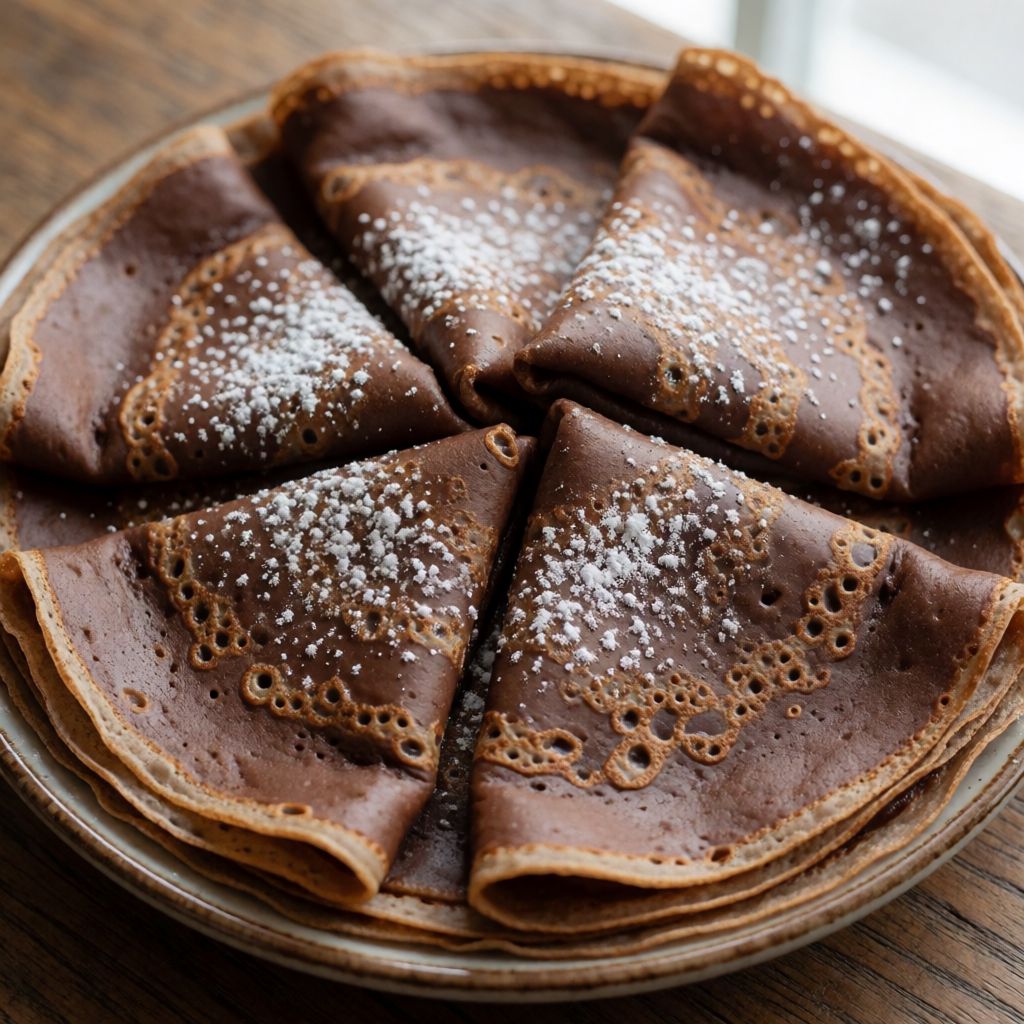
Soft cocoa crepes folded into triangles and dusted with icing sugar.
Labels are worked out automatically from the ingredients and can be wrong. Check the packaging if it matters to you.
Ingredients
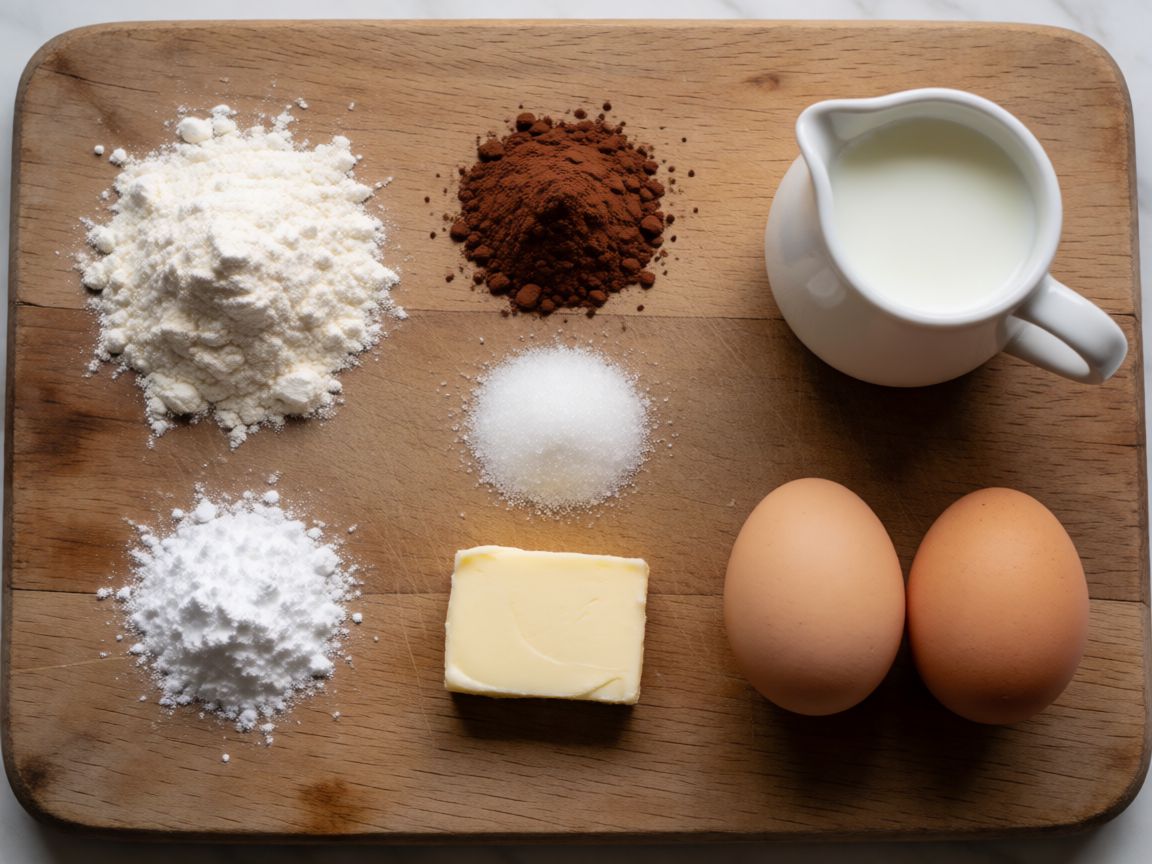
- 120 g Plain flour
- 40 g Cocoa powder
- 50 g Caster sugar
- 300 ml Milk
- 2 pcs Eggs
- 1 pcs Butter a pat, for greasing the pan
- Icing sugar to taste







Steps
In a large bowl, combine the flour, cocoa powder and sugar, mix well, then pour in the milk in a thin stream.
Beat the eggs in a separate bowl and add them to the batter.
Cover the bowl with cling film and chill in the fridge for 30 minutes.
30 minTake the batter out and mix it well again.
Melt the butter in a frying pan.
Pour a ladleful of batter into the centre of the pan and tilt it so the batter spreads evenly.
Fry the crepes on each side until golden.
Let the crepes cool slightly.
Spread your chosen filling over the crepe, then fold it in half, and again into a triangle.
Dust with icing sugar on top.
This is a crêpe, not what the English call a pancake on Shrove Tuesday — thinner, no raising agent, held together by egg protein alone. The cocoa makes it look like a crêpe and taste like dessert, but it changes nothing about how the batter behaves except one thing: it hides your usual cue for doneness. With a plain crêpe you watch for gold. Here everything is already brown, so you have to switch senses — watch the edges instead. When they lift on their own and curl very slightly away from the pan, and the surface has gone from wet-shiny to matte, it's ready to flip. Colour will not help you; texture will.
What decides whether this works is the batter, not the pan. It has to pour like single cream, not ladle like porridge. Flour on its own soaks up milk predictably; cocoa powder is starchier and thirstier, so a batter that looks right straight after mixing can turn into glue twenty minutes later in the fridge. That's exactly why you mix it again before frying — not habit, correction. If you skip that second stir, your first crêpe comes out thick and rubbery and every one after gets better, because you never diagnosed the real fault: the batter needed loosening, not more skill from you.
Flour here is doing structural work, not flavour work — any plain flour with moderate gluten is fine, you're not building bread, you don't want strength, you want it to set into a thin skin and stop. Self-raising would be a mistake: any lift in a crêpe just makes it tear when you fold it into a triangle, because a crêpe's whole job is to stay flat and pliable.
Cocoa powder: use the plain unsweetened kind, not drinking chocolate, which already carries sugar and milk powder and will throw off your ratios and burn faster in the pan because of the extra solids. Natural versus Dutch-processed matters more in baking where it reacts with a raising agent — here there's none, so pick on bitterness and colour alone, whichever you'd happily drink as hot chocolate.
Caster sugar dissolves into the batter cleanly because the crystals are small; ordinary granulated will mostly do the same job but can leave the faintest grit if your milk is very cold, so let it sit at room temperature a minute first if that's what you've got.
Milk wants fat to brown properly and to carry flavour — whole milk is right. Semi-skimmed works, you just lose a little richness; a plant milk works too, so long as it isn't one of the very watery ones, since the batter needs that body to hold the cocoa in suspension rather than letting it sink.
Eggs are the only thing actually holding this together — there's no flour-and-water paste doing the binding, it's egg protein setting in the heat that turns liquid batter into a sheet you can lift. Two UK medium-to-large eggs are enough for this amount of liquid; go much smaller and the crêpe tears when you try to fold it, not because you cooked it wrong but because there wasn't enough protein to set.
Butter in the pan is for flavour and for the thin brown lace you sometimes see at the crêpe's edge — that's milk solids catching, not a fault. Use it in a thin film, wiped rather than pooled, because a crêpe sits in a near-dry pan; drown it in butter and you fry instead of set, and the batter won't spread thin, it'll bead up at the edges. Any neutral oil with no smell of its own will substitute if you're avoiding dairy, you just trade that faint butter-brown edge for nothing — no loss worth mourning, no gain worth claiming either.
Icing sugar at the end is cosmetic, but it's cosmetic with a reason: its fineness means it melts into the warm crêpe in seconds rather than sitting as grit, which caster or granulated would do. Dust it after folding, not before, or it just dissolves into the filling and you've wasted the gesture.
A short word on why this dish exists in a British kitchen at all: thin batter crêpes were cheap, fast dessert for households without an oven free for baking — a frying pan and a few eggs went a long way, long before anyone called it French elegance. The English pancake on Shrove Tuesday comes from the same economic root, using up eggs and fat before Lent. The cocoa version is a later, richer cousin — the mechanism underneath, egg setting a thin starch sheet in a hot pan, hasn't changed at all.