
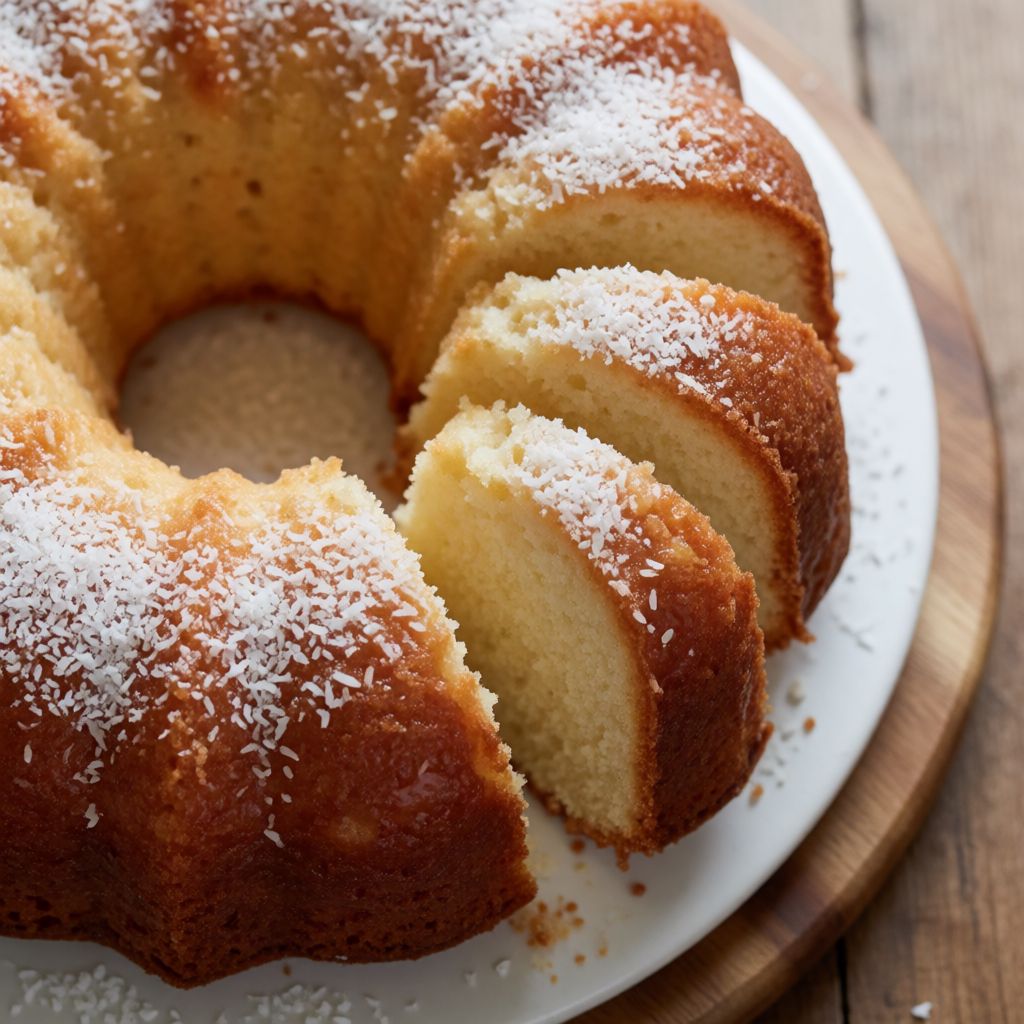
 AI photo
Coconut Bundt Cake
A soft coconut-flecked bundt cake, baked until golden and fragrant with vanilla.
Labels are worked out automatically from the ingredients and can be wrong. Check the packaging if it matters to you.
Ingredients
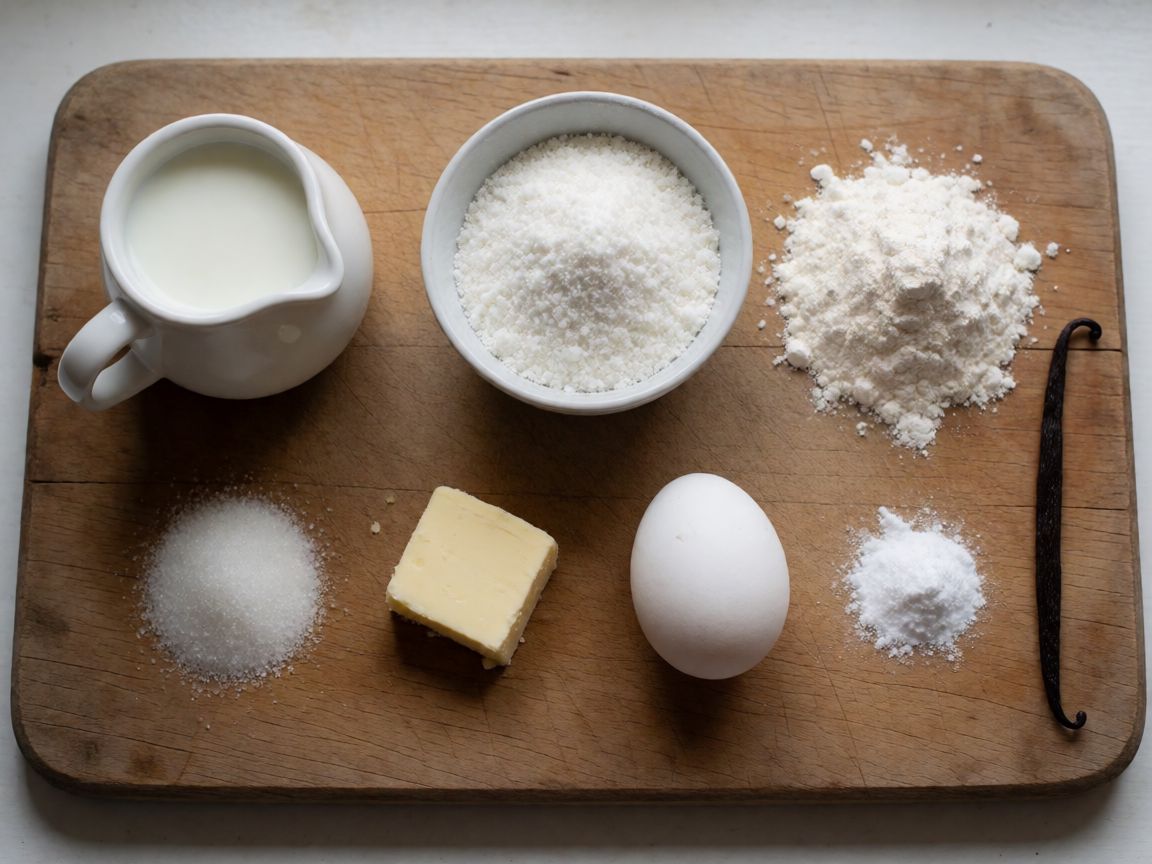
- 250 ml Milk
- 200 g Desiccated coconut
- 180 g Plain flour sifted
- 180 g Caster sugar
- 60 g Butter
- 1 pcs Egg
- 16 g Baking powder
- 1 pcs Vanilla pod
- Icing sugar to taste








Steps
Melt the butter in a bain-marie.
Warm the milk in a small saucepan, without letting it boil, adding the vanilla pod.
Combine the sifted flour, sugar, baking powder and desiccated coconut in a separate bowl.
Stir the melted butter into the egg, then gradually pour in the cooled milk.
Combine the contents of both bowls and mix well until smooth.
Pour the batter into a bundt tin, buttered and dusted with flour beforehand.
Bake in an oven preheated to 180°C.
45 minCheck that it is cooked through with a wooden skewer.
Dust with icing sugar if you like, and serve.
A coconut bundt cake is really a question of ratio: flour gives it structure, coconut gives it body, and the two of them fight for the same water. Get that fight wrong and you get either a rubbery ring or a cake that collapses into damp crumb the moment you turn it out. The whole recipe is built around keeping that fight even.
Desiccated coconut is dry and thirsty — it will pull moisture from everywhere it can, including out of the egg and butter, unless you give it its own supply. That's what the warmed milk is for. Not to cook anything, just to carry heat into the vanilla pod so the pod gives up its flavour, and to arrive at the mixing bowl soft and ready to be drunk up by all that coconut instead of fighting the flour for it later in the oven.
Some say you should toast the coconut first for more flavour. No — not here. Toasting dries it further, and a bundt tin is an unforgiving shape: tall, narrow, heat coming from the sides before the centre knows anything is happening. A drier coconut in that shape means a drier middle by the time the outside sets. Leave the toasting to garnish, if you want it, after baking.
The bundt shape itself is not decoration. It's a ring because a ring has no cold, dense centre — every part of the batter is close to a hot metal wall, which is exactly what a tall, coconut-heavy batter needs, since coconut insulates and slows the crumb's own cooking from the inside.
Milk, 250 ml, warmed not boiled: the limit matters, because milk that boils starts to skin and slightly curdle, and that skin will show up as flecks in your crumb and change how it binds the coconut. Warm is enough to pull the vanilla's oils into the liquid and to soften the coconut when it goes in with the dry mix. If you have no vanilla pod, a teaspoon of real vanilla extract stirred into the warm milk does the same job — just add it off the heat, since the alcohol in extract cooks off and takes the scent with it.
Desiccated coconut, 200 g: this is not a garnish ingredient here, it is structural, roughly half the flour's weight. Choose unsweetened desiccated coconut — fine, dry, white strands, not the sweetened shredded kind sold for tropical drinks, which carries sugar and extra moisture that will throw off the whole balance you're building with the milk.
Flour, 180 g, sifted: sifting isn't fussiness, it's about air and evenness — it breaks up any compacted lumps so the baking powder distributes through the whole mass rather than pocketing in one spot, which is a real cause of a cake that rises unevenly, domed on one side.
Sugar, 180 g caster: caster because it's fine enough to dissolve into the egg-butter-milk mixture without grit; granulated will work but needs more stirring, and a slightly less smooth crumb is the price.
Butter, 60 g, melted in a bain-marie: the bain-marie (a bowl over simmering water, which is the honest UK-kitchen version — no kazan, no special gear) keeps the butter from scorching or separating, which would leave greasy patches in the finished cake. Any neutral fat with no smell of its own can stand in — a mild sunflower oil, for instance — though butter here is doing double duty, carrying its own flavour alongside the coconut, so a swap trades richness for convenience.
One egg, one baking powder measure of 16 g: that's a generous amount of raising agent for a cake this size, and it has to be — dense coconut and a tall ring shape both resist rising, so the recipe compensates with more lift rather than less. Don't halve it thinking it's a typo.
On checking doneness: "45 minutes" is where to start looking, not where to stop. A wooden skewer pushed into the thickest part of the ring is the only honest test — it should come out with no wet batter clinging, crumbs at most. Pull it too early because the clock says so and you'll get a sunken middle once it cools, since a bundt's narrow walls mean the centre is always the last place to finish. An ordinary domestic oven runs uneven too — if yours runs hot at the back, turn the tin halfway rather than trust the dial blindly.
Getting it out of the tin is where coconut cakes are lost more often than in the oven. Butter the tin properly into every groove, then dust with flour and tap out the excess — this isn't about the cake sticking generally, it's about coconut specifically catching in the ridges of a patterned tin and tearing away rather than releasing clean. Let it rest a few minutes once out of the oven before turning out, not forever — too long and the steam trapped against the tin starts to soften the crust you've just built.
And have a little patience waiting for it to cool before you dust icing sugar over it — do it while warm and the sugar just melts into a sticky film instead of sitting as a visible dusting. That's not a rule for rules' sake, that's just sugar meeting heat.