
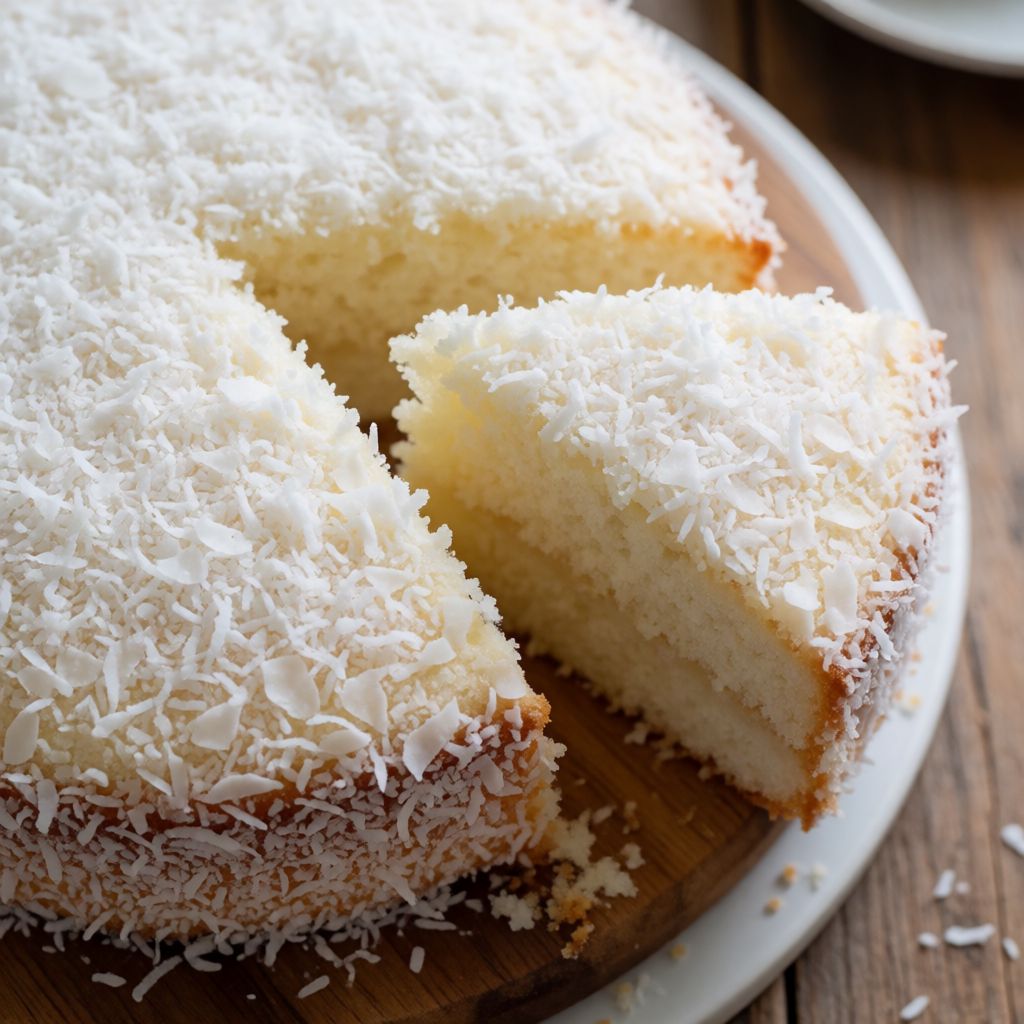
 AI photo
Coconut Cake
A simple coconut cake made with desiccated coconut, lovely with a cup of tea.
Labels are worked out automatically from the ingredients and can be wrong. Check the packaging if it matters to you.
Ingredients
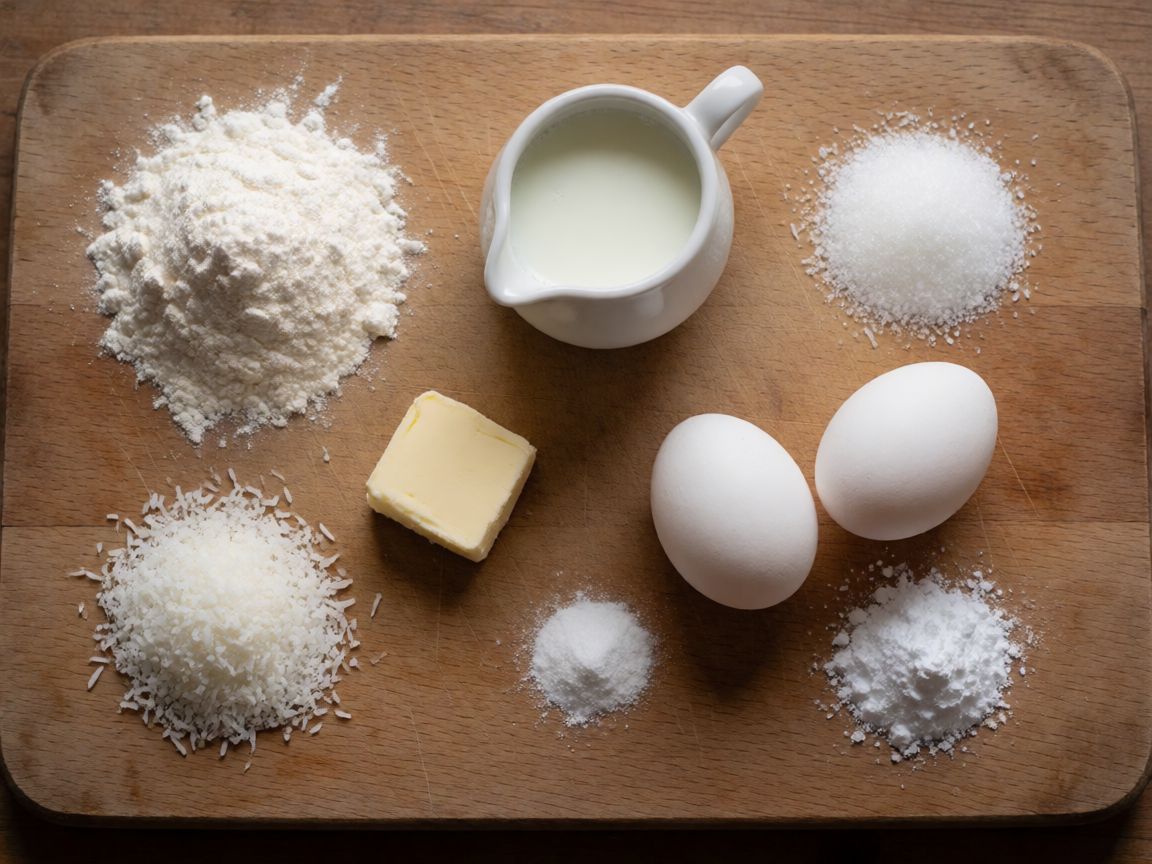
- 360 g Plain Flour
- 250 ml Milk warm
- 250 g Caster Sugar
- 160 g Desiccated Coconut
- 160 g Butter
- 2 pcs Eggs
- 15 g Baking Powder
- 2 tbsp Icing Sugar for dusting, to taste







Steps
Sift the flour into a bowl and stir in the sugar and baking powder.
In a separate bowl, whisk the eggs while slowly pouring in the warm milk in a thin stream.
Melt the butter in a small saucepan or in the microwave (770W) and add it to the egg and milk mixture.
Pour this mixture into the bowl with the flour and mix thoroughly.
Add the desiccated coconut and work it into the batter.
Pour the batter into a 26–28 cm tin, greased with butter and dusted with flour.
Bake the cake at 180°C for 40–50 minutes.
45 minRemove the cake from the oven and, once cooled, dust with icing sugar if you like.
Call this what it is: a coconut tea loaf dressed up as a cake. It isn't a sponge, and it won't behave like one, because nothing here gets whisked into a foam. The lift comes entirely out of a tin of baking powder — 15 g is a lot for 360 g of flour, almost double what a light sponge would need — and that's deliberate, because the batter is heavy with melted butter and coconut and has nothing else to make it rise.
Some say a cake needs the butter and sugar creamed together to come out light — no, because this one skips that step entirely and still lifts, just differently: dense, moist, close-crumbed, more loaf than cloud. Don't fight that by over-beating the batter once the coconut goes in; you'll knock out the little gas the baking powder has started making and you'll get something tighter than you wanted. Fold it in, don't work it.
The part that actually decides whether this succeeds happens before the oven: whisking the eggs while pouring in warm milk in a thin stream. That's tempering, the same reason you don't dump hot stock straight into egg yolks for a custard — a sudden rush of warmth scrambles egg protein into little curdled threads instead of blending smooth. Thin stream, steady whisk, and you get one even liquid that will carry the baking powder's bubbles evenly through the crumb instead of unevenly, which is why some coconut cakes come out with air pockets in one corner and a soggy streak in another.
Flour here is just scaffolding — sift it with the sugar and baking powder so the leavening is distributed through the whole mass, not sitting in one pocket that'll blow a hole in your crumb. Plain flour, nothing fancy; don't swap in self-raising, because then you've got two leavening agents fighting each other and no way to know how much lift you're actually getting.
The milk's job is to carry fat and sugar into the egg and to be warm enough that the butter you melt afterward doesn't seize back into lumps the second it hits a cold liquid. Warm, not hot — hot milk straight onto whisked egg is how you get the scrambled threads I mentioned. Any milk with some fat in it will do the job; skimmed milk gives you a drier, less forgiving crumb, and a plant milk works in a pinch but the cake loses some of its moistness, because dairy fat is doing real work here, not just flavour.
Caster sugar dissolves into that warm egg-milk mixture fast and clean, which is the point — it's fine enough not to leave grit. Granulated will mostly work but give it longer in the whisk, and don't swap in icing sugar for the bake itself, it's cut with starch and will throw the structure off; save icing sugar for what it's named for, dusting the cooled top.
Desiccated coconut is doing more than flavour — it's bulk, and it's fat, and it's a sponge that pulls moisture out of the batter as it bakes, which is exactly why it goes in last, folded rather than beaten, and why you don't want to over-mix once it's in: coconut seizes a loose batter into something stiffer than you want fast. Buy it fresh and smell it before you use it — coconut carries its own oil, and that oil turns, giving you a faint rancid, soapy note that no amount of sugar on top will cover. Fresh grated coconut is a reasonable swap but it carries extra moisture, so you'd want to pull back the milk slightly to compensate.
Butter goes in melted, not creamed, because — as above — this cake isn't built on trapped air from beating fat and sugar together. Any fat solid at room temperature with no smell of its own will do the job: unsalted butter is the honest choice because it lets you control salt rather than inherit whatever the manufacturer put in; a flavourless margarine will work structurally but you'll taste the absence of butter, which is its own kind of flavour.
The tin gets buttered and floured for a plain mechanical reason: coconut carries sugar, sugar caramelises against hot metal, and a cake with a caramelised coconut skin welded to an ungreased tin tears itself apart coming out. And the icing sugar waits until the cake is cold, because dust it warm and the sugar meets the moisture rising off the crumb and turns to a sticky glaze instead of a clean white dusting — patience here isn't sentiment, it's the only thing standing between a dusted cake and a damp one. Eight people, one cake, good with the kind of tea that's gone milky and a slice cut thick enough to survive a Sunday afternoon.