
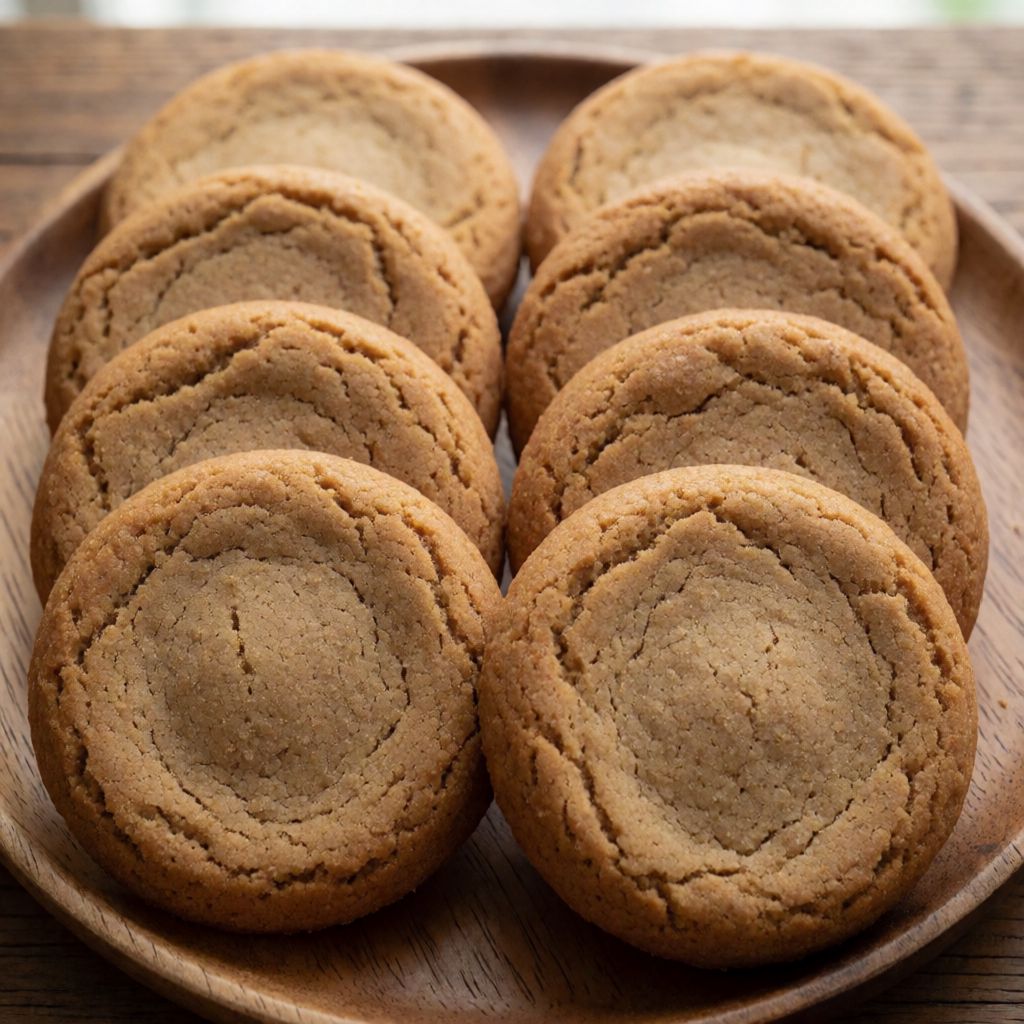
 AI photo
Coffee Biscuits
Soft coffee-and-cocoa biscuits with a hint of espresso, lovely alongside a cup of tea.
Labels are worked out automatically from the ingredients and can be wrong. Check the packaging if it matters to you.
Ingredients
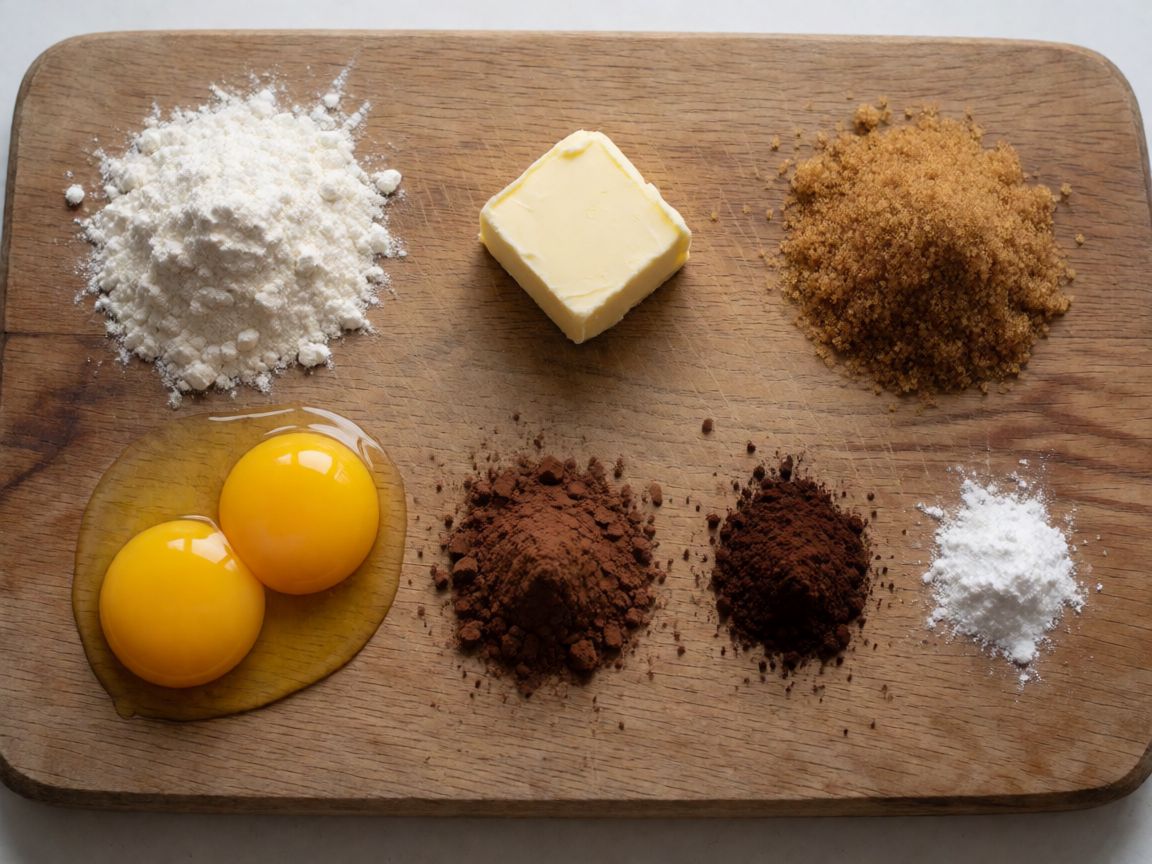
- 300 g Plain Flour
- 150 g Butter softened
- 100 g Brown Sugar
- 2 pcs Egg Yolks
- 5 g Cocoa Powder
- 10 g Instant Coffee
- 5 g Baking Powder







Steps
Using an electric mixer, beat the softened butter in a bowl, then add the brown sugar.
Continue beating while adding the egg yolks, cocoa powder and instant coffee; mix well.
Sift the flour and gradually add it to the mixture along with the baking powder.
Mix with a spatula until the dough comes together into a smooth, even ball.
Transfer the dough onto a work surface and knead by hand until smooth.
Cover with plastic wrap and chill in the refrigerator for at least 1 hour.
60 minLine a baking tray with baking paper and shape the dough into oval biscuits (about 25g each).
Make a shallow cut down the centre of each biscuit with a sharp, non-serrated knife.
Bake in the oven at 180°C for 10-15 minutes.
12 minLet cool.
This is a short, crisp, coffee-dark biscuit — the kind you make to have with tea, not to eat warm and gooey like an American cookie. It is built on the same bones as a shortbread: a lot of fat, very little liquid, barely any egg. What decides whether it stays crisp instead of turning into a chewy puck is how you handle that fat and how little you work the flour once it goes in.
The method starts with beating soft butter, not melted butter — that distinction is the whole first act. Butter at room temperature traps air when you beat it; melted butter can't hold a bubble, it just sits there greasy. That trapped air, plus the small hit of baking powder later, is the only lift this biscuit gets. There's no whisked egg white here, and that's deliberate — whites bring structure and chew, yolks bring only richness and colour. Leave the whites for an omelette tomorrow.
Once the flour and baking powder go in, the job changes from beating to barely mixing — a spatula, then a brief knead by hand just to bring it together. Some people think more kneading means a smoother, better biscuit. No — flour meets liquid and starts building gluten the moment they touch, and gluten is what makes bread chewy and biscuits tough. You knead only until it's one piece, nothing more.
Chilling for at least an hour isn't there to save you time later — it's there to let the butter go properly solid again after all that beating, and to let the flour finish drinking in whatever moisture it's going to drink. Skip it and you get biscuits that spread flat and thin in the oven, because warm, soft dough with this much fat has nothing holding its shape until the heat sets it — by which point it's already run. Patience here is not decoration, it's the thing standing between a neat oval and a puddle.
The cut down the centre does real work too. As the biscuit heats, the little baking powder lift and the steam from the butter want somewhere to go. Without a planned line, they find their own — a ragged crack wherever the dough is weakest, different on every biscuit. Score one clean cut and you're choosing where it breaks, so they all open the same way and bake evenly either side of it.
On the flour: plain, not strong or bread flour. Strong flour means more gluten-forming protein, and more gluten here fights against "short" — you'd get something closer to a tough little scone. Plain flour with low protein is why this stays crumbly rather than elastic. Sift it, not for superstition, but because it breaks up any clumps that would otherwise sit as a dry pocket inside the dough.
Butter should be the kind with no strong flavour of its own fighting the coffee and cocoa — unsalted is cleaner, salted is fine if you cut nothing else salty into the day. Margarine will cream in a similar way but carries more water, and water here means spread and chew instead of snap, so it's a downgrade, not a swap. Brown sugar brings a little molasses note and a little extra moisture retention — caster sugar plus a spoon of treacle gets you close if that's what's in the cupboard.
The cocoa and the instant coffee aren't there to flavour separately — they're one bitter, dark note split across two ingredients because neither alone gives quite the same roundness. Use a fine instant coffee or espresso powder so it blends into the fat rather than sitting as grit; a coarse granule that won't break down under beating is the usual reason coffee biscuits end up with little hard specks in them. Baking powder is doing a small job, not a cake's job — just enough lift so the biscuit isn't flat and hard as a cracker. More won't make it fluffier, it'll just make it crumble oddly at the edges.
On a domestic hob there's no kazan issue here, it's the oven that needs honesty: 180°C is a conventional setting. If yours is fan-assisted, that's roughly 160°C fan, middle shelf, because fan ovens push heat harder and faster onto a tray this thin. Three hundred grams of flour and the rest of it gives you dough enough for around twenty-four biscuits at 25g each — plenty for six people to have four apiece with a pot of tea, which, fed into this recipe's own logic, is really what it was built for.