
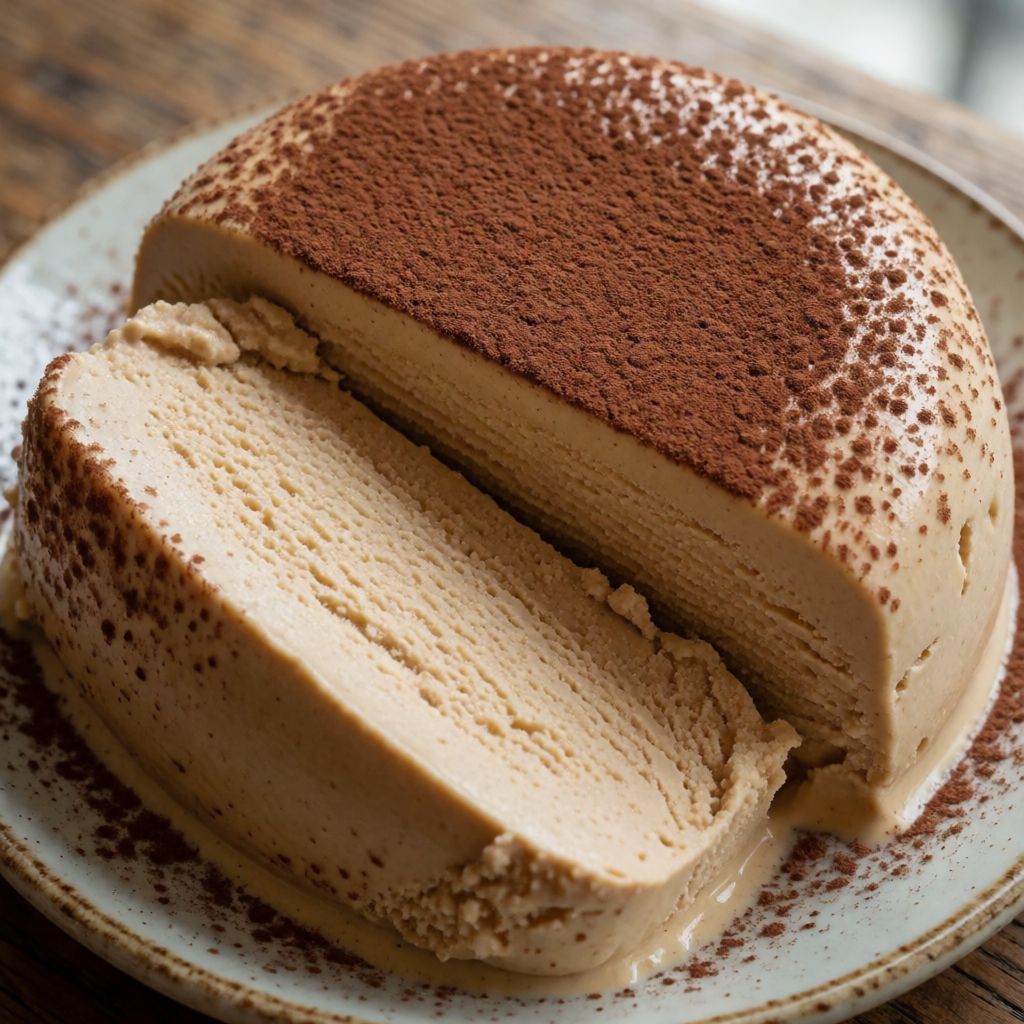
 AI photo
Coffee Semifreddo
A creamy frozen coffee dessert, Italian in origin, finished with a dusting of cocoa.
Labels are worked out automatically from the ingredients and can be wrong. Check the packaging if it matters to you.
Ingredients
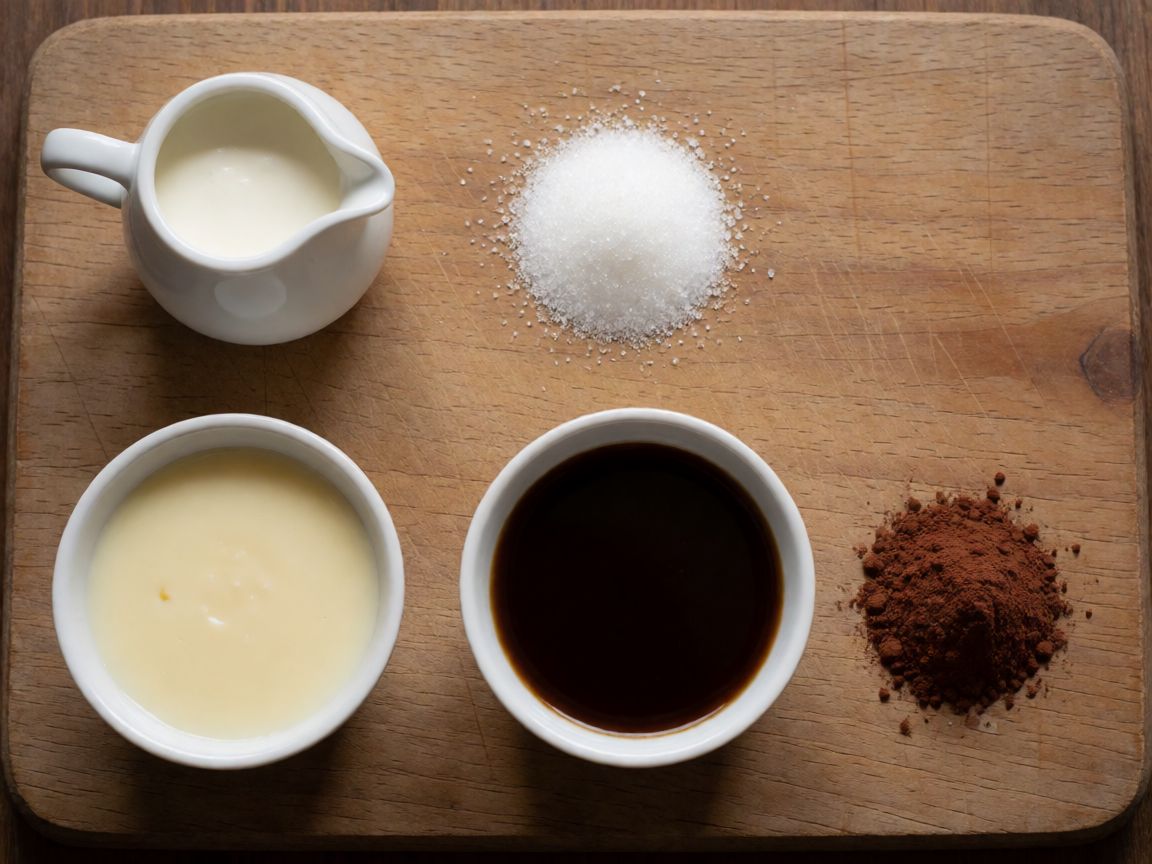
- 500 ml Double Cream
- 60 g Caster Sugar
- 175 g Condensed Milk
- 50 ml Strong Brewed Coffee cooled to room temperature
- Cocoa Powder to taste





Steps
Combine the cream with the sugar and whisk with an electric mixer until thick and fluffy.
In a separate bowl, mix the condensed milk with the brewed coffee and stir well.
Pour the coffee mixture into the whipped cream and gently fold the two together until smooth.
Line a 26x10cm loaf tin with cling film (use two layers if needed).
Pour the mixture into the tin, smooth the surface, and place in the freezer.
Freeze for at least 4 hours.
240 minIf you like, dust with cocoa powder before serving the coffee semifreddo.
Semifreddo means "half-frozen" — not a technical term, just plain Italian for what it is: cream stiffened with air, frozen just enough to slice, never hard enough to need a spoon fight. No custard base, no eggs cooked slowly over a water bath, no ice cream machine churning out air as it freezes. The air is already in there, beaten in with the whisk, long before the freezer does its work.
That's the mechanism worth understanding: a liquid full of fat and water would set rock-hard and icy, like a brick of frozen milk, if nothing stopped the water molecules finding each other and locking into big crystals. Two things stop that here — the air bubbles whipped into the cream, which break up the structure and keep it soft, and the sugar from the condensed milk, which lowers the freezing point and slows the whole business down. No churning needed, because the whisk already did the churning's job before the cold ever got involved.
Some say you need an ice cream maker for anything frozen and smooth — no, because the machine's only job is to beat air into a mix while it chills. You've already beaten the air in with a hand mixer in a warm kitchen, before the cold starts. The machine is a shortcut for bases that start runny. Yours starts thick — you've just done the steps in a different order.
Double cream is non-negotiable in character, though not in brand — something at or above 48% fat, the kind that holds its shape when whipped. Lower-fat creams don't carry enough fat to build a stable foam; it stays loose, and a loose foam can't support itself once frozen — it collapses into exactly the icy block you were trying to avoid. If all you've got is a cream labelled nearer 35%, it will whip, just less confidently — judge it by the shape it holds on the whisk, not by a clock.
Caster sugar dissolves faster than granulated simply because the crystals are smaller — a texture question, not a magic one. No caster in the cupboard, no problem: a few seconds of granulated sugar in a blender does the same job, or just give the cream longer with the whisk so it has time to dissolve properly. Undissolved sugar in a frozen dessert turns up later as grit on the tongue, and nobody thanks you for it.
Condensed milk is doing two jobs at once — sugar and dairy both, already thickened by slow reduction before it ever reached the tin. It's the reason this version skips the classic Italian base of egg yolks whisked with sugar over gentle heat: condensed milk brings sweetness and a custardy weight without cooking anything, which matters in a kitchen where running a bain-marie on a weeknight isn't realistic. Short of it, whisked egg yolks and sugar warmed gently until they thicken will do the same structural job — but that's a different risk altogether, scrambled eggs if you look away, and the whole point of using condensed milk is that it asks nothing of your attention.
The coffee wants to be at room temperature before it meets the cream for a plain physical reason: a warm liquid poured into a cold foam melts the fat structure exactly where it lands, and the air you worked for collapses on contact. Make it strong — proper espresso, or a couple of teaspoons of instant dissolved in as little water as you can manage — because those 50ml are the only coffee flavour the whole dessert will ever get. Diluted into 500ml of cream, anything weaker just disappears.
Lining the tin with cling film isn't about hygiene, it's about getting the block out in one piece afterwards. A frozen brick welded to aluminium comes out in pieces, not slices — two layers matter if the tin has dents or seams the film can slip into. It costs thirty seconds against an hour of frustration later, the same reasoning as flouring a cake tin.
On the freezer: four hours is a lower bound, not a promise. A restaurant blast freezer gets to minus thirty in no time flat; an ordinary British fridge-freezer, with its small drawer already half full of peas and bread for the week, works slower and less evenly. Push the tin to the back, away from the door where the temperature swings most, and judge it by feel through the cling film — it should give slightly under a finger, not sink, the way a rested joint of lamb gives rather than a raw one.
Cocoa at the end is seasoning, not decoration — any unsweetened cocoa does the job, the cheap tin from the baking aisle included. Dust it cold, right before serving, because warmth makes it clump and lose the point of being a dry, bitter line across all that sweet cream underneath.